



Ventilation & Odor Control Kits
Manage airflow and reduce unwanted plant odours with ventilation and odour control kits from Hydro Experts. Suitable for DIY growers and professional hydroponic setups across Australia, these fan and carbon filter combinations help extract warm, humid air while filtering odours before air leaves your growing space.
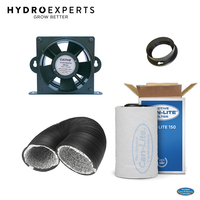
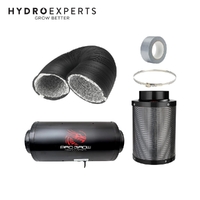
Explore Standard Fan & Carbon Filter kits and Silenced Fan & Carbon Filter kits to suit different growing environments and noise requirements. Choose from combinations featuring brands such as Can-Fan, Can-Filter, Mountain Air and Pro Grow Australia. Kit contents vary, so check each listing for included ducting, controllers and installation accessories.
Choosing the right grow tent ventilation kit involves more than matching duct diameters. Your tent or room dimensions, grow light heat, moisture levels and duct layout all influence the airflow required. Match the inline exhaust fan with a carbon filter rated for the intended operating airflow, allowing for resistance from the filter, ducting and bends.
For growing spaces near living areas, consider a silenced inline fan and compatible speed controller. A suitably sized system operating at a lower speed can help reduce noise while maintaining effective extraction. Whether you need a compact grow tent exhaust kit or ventilation for a larger hydroponic room, Hydro Experts offers options to help you build a more controlled growing environment.
Ventilation & Odor Control Kits by Category
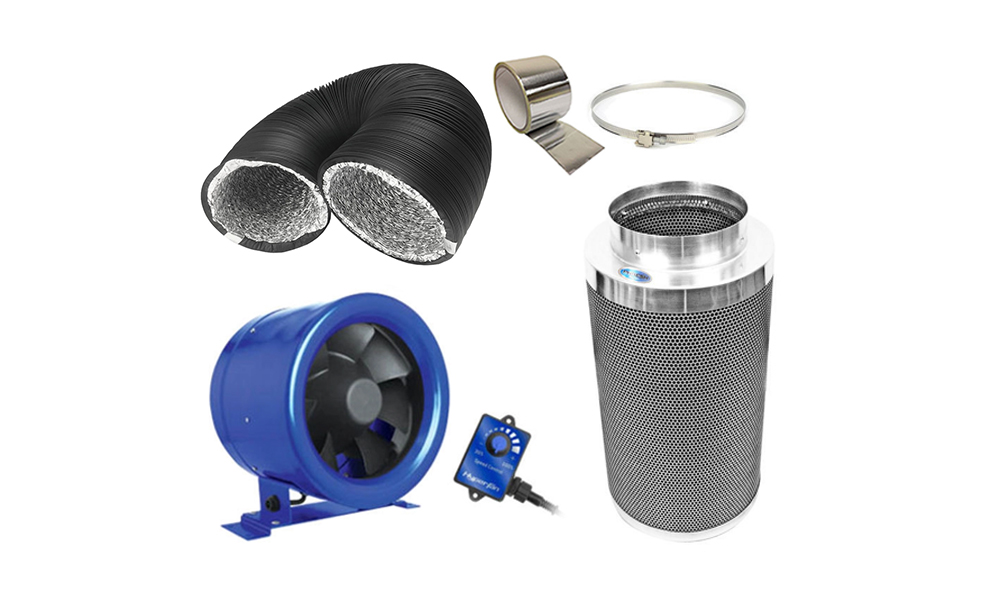
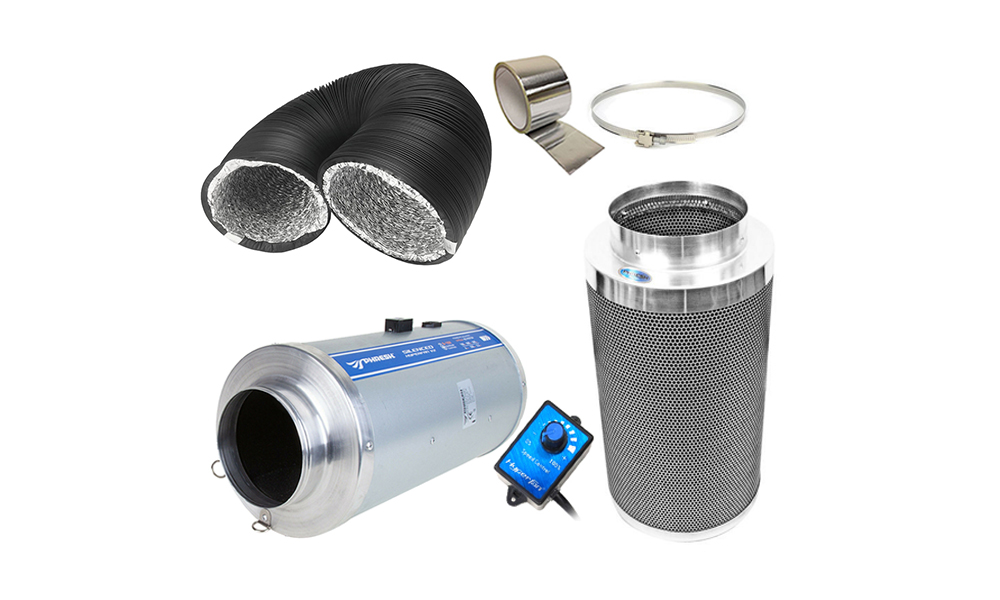
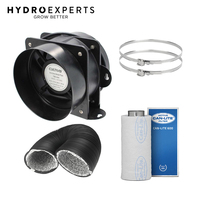
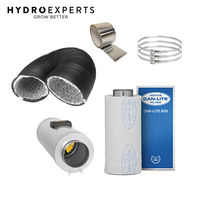
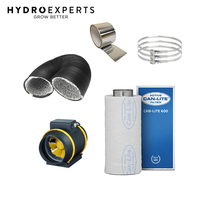
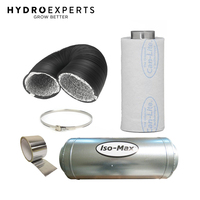
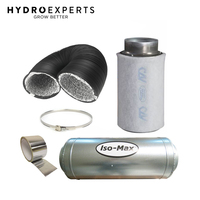
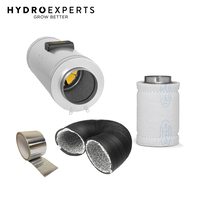
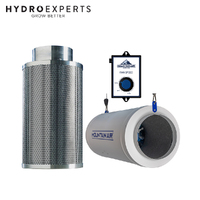
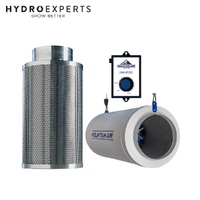
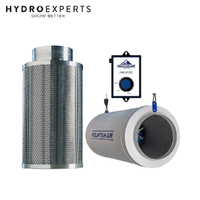
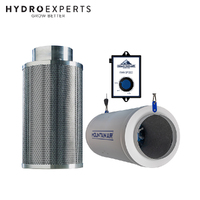
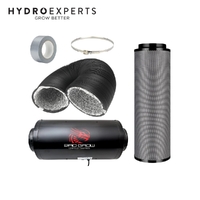
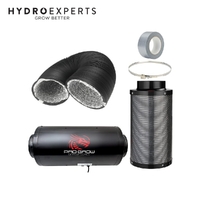
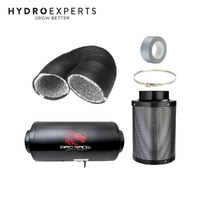
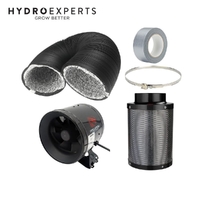
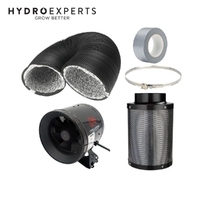
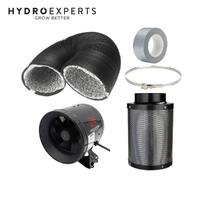
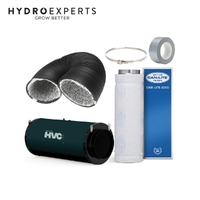
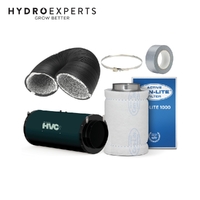
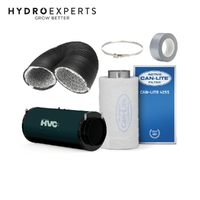
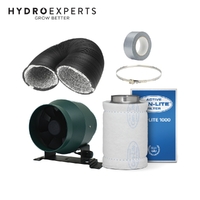
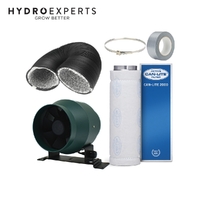
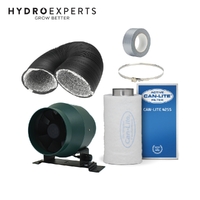
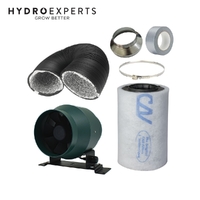
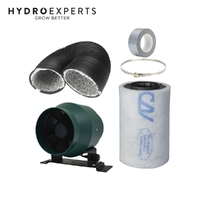
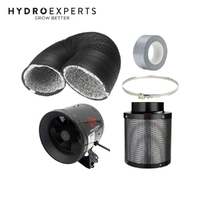
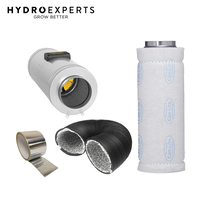
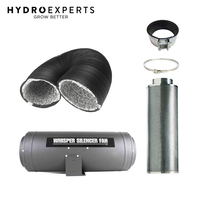
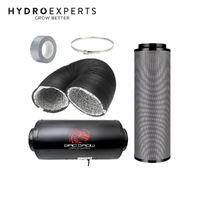
12" EP Whisper Silencer Fan 1530CFM + Mountain Air Carbon Filter 300x1000MM + 5M Duct
5 Related Content Found


Temperature
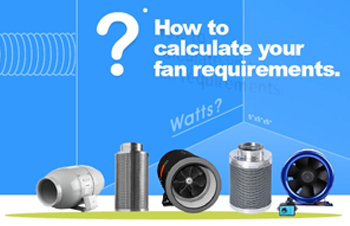
Calculating Fan CFM Requirements
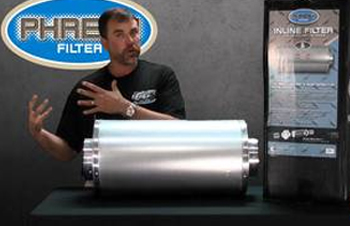
Phresh Filters and Pressure Drop

How do I choose the right size fan and carbon filter?
Start by calculating your growing space volume: length × width × height in metres. Multiply this by your target air changes per hour to estimate the airflow required in cubic metres per hour (m³/h). For example, a 1.2 × 1.2 × 2 metre tent has a volume of 2.88 m³. Using one air change per minute as an initial planning guide gives 172.8 m³/h before accounting for heat, moisture and system resistance. This is a starting estimate, rather than a guaranteed requirement for every setup.
Next, select a fan that can deliver the required airflow against the resistance of your filter and ductwork. Match the connection sizes and keep the actual operating airflow within the carbon filter manufacturer's recommended exhaust range. Where available, use the fan performance curve and filter pressure-drop data rather than relying only on the fan's maximum airflow rating.
Which type of fan do I need for a grow tent or grow room?
A mixed-flow or centrifugal inline exhaust fan is generally a suitable choice when extracting through a carbon filter and ducting. Select a model with enough pressure capability to maintain airflow through the complete system. Small booster fans may struggle with restrictive filters or longer duct runs. An internal circulation fan helps move air around plants but performs a different job from an exhaust fan.
Should I choose an AC fan or an EC fan?
An AC fan can be a practical choice for a basic setup, particularly when it offers suitable fixed-speed or manufacturer-approved speed settings. An EC fan uses an electronically commutated motor and generally offers greater energy efficiency and finer speed adjustment, making it useful for ventilation that runs for long periods or responds to changing conditions. Check controller compatibility before purchasing, as AC and EC fan controllers are not interchangeable.
What is the quietest grow tent ventilation option?
For lower noise, look for a silenced fan with an acoustic housing, enough airflow capacity to operate below maximum speed, and a compatible controller. A silenced EC fan is worth considering, but the quietest choice depends on the specific model and installation. Compare sound ratings measured under equivalent conditions. Short, generously sized duct runs, gentle bends and vibration-isolating mounts can also help reduce noise.
Where should I install the fan and carbon filter?
A common arrangement places the carbon filter near the top of the grow tent, connected to an inline fan that draws air through the filter and discharges it through ducting. Follow the manufacturer's installation instructions, support the equipment securely and seal connections to prevent unfiltered air bypassing the carbon. Provide sufficient intake openings so replacement air can enter as the exhaust fan operates.