


Complete Setup Guide for Hydroponic Herb Farming in Australia's Climate
By Hydro Experts | 28 October 2026
Set up a hydroponic herb garden in Australia: choose NFT, DWC or drip systems, manage EC, pH, lighting, airflow and summer heat, and follow a simple maintenance routine.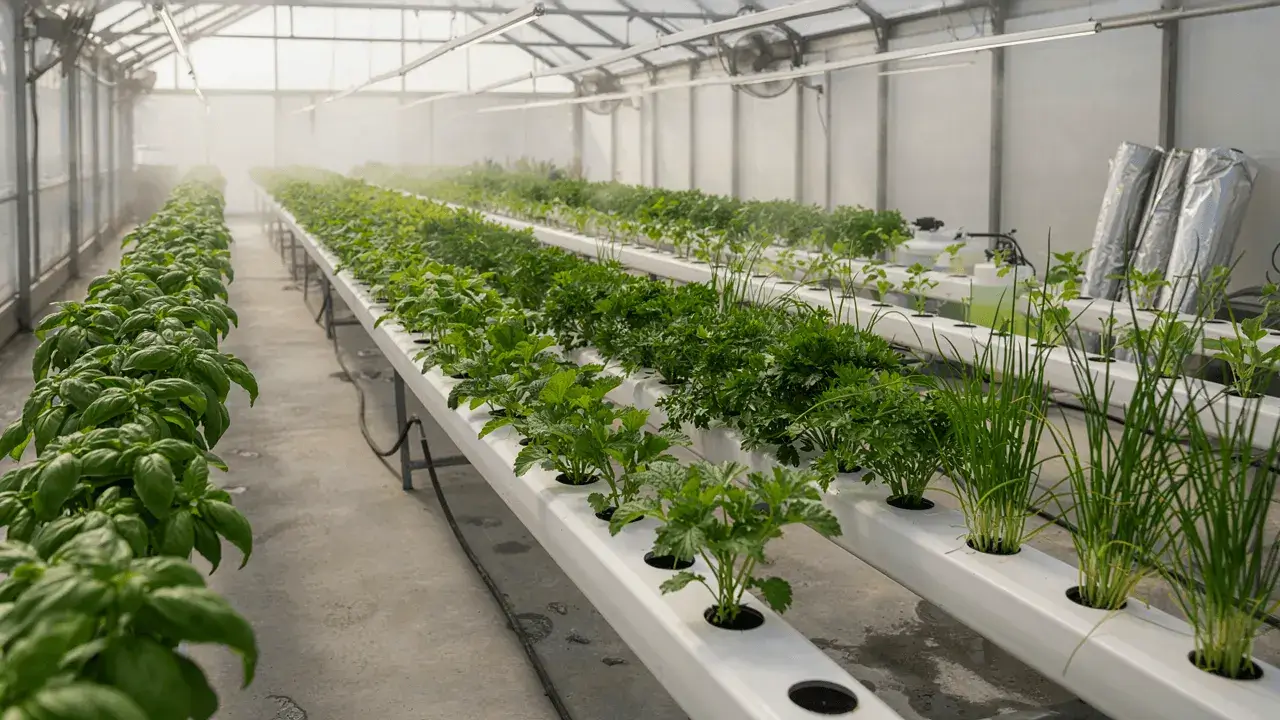
Fresh herbs are well suited to hydroponic growing. Basil, mint, coriander, parsley and chives can thrive in systems that deliver water and nutrients directly to their roots, without the need for traditional garden beds.
For Australian growers, the main challenge is choosing a system that suits the herbs being grown and managing temperature through changing seasons. A setup that works well in a mild climate may struggle during a hot summer, especially when nutrient solution heats up or plants lose moisture faster than their roots can replace it.
This guide covers the equipment, growing systems, nutrients, lighting, airflow and maintenance needed to set up a productive hydroponic herb garden in Australia.
Quick Insights: Hydroponic Herb Farming Setup in Australia
Growing herbs hydroponically in Australia requires a suitable growing system, balanced nutrients, adequate lighting and reliable temperature management. The key is to match growing conditions to each herb and prepare for seasonal heat.
- Best growing systems: NFT and DWC are practical for compact herb gardens, while drip-fed systems offer flexibility for larger growing areas.
- Suitable herbs: Basil, mint, coriander, parsley and chives can grow hydroponically. Consider their different temperature, moisture and space requirements before combining them.
- EC levels: An EC of around 1.0–1.8 mS/cm is a useful starting range for many culinary herbs. Adjust according to the crop, growth stage and nutrient manufacturer's instructions.
- pH range: Many herbs grow well between 5.5 and 6.5, with 5.8–6.2 serving as a practical starting target for mixed herb systems.
- Essential equipment: Prepare a reservoir, suitable pumps and tubing, growing channels or pots, growing medium, pH and EC meters, and air stones for conventional DWC systems.
- Indoor lighting: Use suitable grow lights when natural sunlight is insufficient. Match light intensity and fixture placement to the herbs being grown.
- Australian summer management: Protect reservoirs from direct sunlight, monitor nutrient solution temperature, maintain reliable water delivery and use ventilation and shade to reduce heat stress.
- Humidity and airflow: Provide gentle, consistent airflow around plants to reduce stagnant conditions and manage excess humidity.
- Maintenance routine: Check pumps, water levels and plant health daily. Monitor pH and EC regularly, inspect roots and clean the system between growing cycles.
- Common problems: Yellow leaves, wilting, algae, weak growth and premature coriander flowering can result from nutrient, lighting, temperature or water-management issues.
1. Choose the Right Hydroponic System for Herbs
The best system depends on the number of plants, available space, budget and whether you plan to grow herbs for household use or regular production.
Nutrient Film Technique (NFT)
NFT systems circulate a shallow stream of nutrient solution through channels, allowing plant roots to access water, nutrients and oxygen.
They can suit compact herbs such as basil, coriander, parsley and chives. Multiple channels also make it possible to grow several plants in a relatively small footprint.
However, NFT systems depend on reliable water circulation. During a pump failure or power outage, roots can dry out quickly, particularly in hot weather.
Deep Water Culture (DWC)
In DWC, roots extend into an oxygenated nutrient reservoir. Air pumps and air stones supply oxygen to the water.
DWC can work well for herbs in small home setups, although reservoir temperature and oxygen levels need attention. Warm nutrient solution holds less dissolved oxygen, making summer management particularly important.
Drip-fed systems
Drip systems deliver nutrient solution to individual plants through irrigation lines. Herbs grow in a medium such as coco coir, which supports roots while holding moisture.
This approach offers flexibility for different pot sizes and can suit larger growing areas. You need to monitor irrigation delivery, drainage and nutrient build-up in the growing medium.
Which system should you choose?
For a small indoor herb garden, a compact NFT or DWC kit can be a practical starting point. For larger production, compare channel systems, drip irrigation and the maintenance each requires.
Explore Hydro Experts' hydroponic systems to compare available equipment.
Building an NFT setup? Browse NFT channels and parts. Planning a DWC reservoir? Read Kratky vs DWC: aeration vs no aeration (hydroponic basil), or see how commercial trough systems work and how to replicate them at home.
2. Select Herbs That Suit Your Climate and Setup
Different herbs have different temperature, moisture and nutrient requirements. Choose varieties that suit your growing conditions rather than trying to grow every herb under the same settings.
| Herb | Growing considerations |
|---|---|
| Basil | Likes warmth and good light. Protect it from extreme heat and cold. |
| Mint | Grows vigorously and benefits from enough space to contain its spreading roots and foliage. |
| Coriander | Often performs better in cooler conditions. Heat can encourage premature flowering. |
| Parsley | Grows relatively slowly and benefits from consistent moisture and moderate temperatures. |
| Chives | Compact and suitable for smaller growing systems with adequate light. |
If you plan to grow several varieties in one system, choose herbs with broadly compatible requirements. A shared reservoir makes nutrient management easier, but it also means you cannot independently adjust the solution for every plant.
For a commercial herb operation, start with a small trial of your intended varieties before expanding production.
Building an setup for hydroponic tomato farm? Explore our Best Setup Guide for Hydroponic Tomatoes in Australia.
3. Set Up the Essential Equipment
A reliable hydroponic herb system needs more than a growing tray and nutrient solution. Each component plays a role in keeping roots healthy and maintaining consistent growing conditions.
- Reservoir: Holds the nutrient solution. Choose a size that suits the number of plants and makes routine cleaning and refilling manageable. An opaque reservoir helps limit algae growth.
- Growing channels, pots or trays: Support the plants and provide room for root development. Match the system to the herbs' mature size.
- Water pump and tubing: Move nutrient solution through systems that require circulation or irrigation. Check flow rates and inspect tubing for blockages. Browse water pumps and pipes and fittings.
- Air pump and air stones: Required for conventional DWC setups to oxygenate the nutrient solution. See air pumps and air stones.
- Growing medium: Depending on the system, this may include starter plugs, clay pebbles or coco coir.
- Grow lights: Indoor growers need suitable lighting when natural light is insufficient. Choose lights appropriate for the growing area and adjust their height and intensity according to the manufacturer's instructions.
- pH and EC meters: Measure nutrient solution acidity and electrical conductivity, helping you manage nutrient concentration.
- Fans and ventilation: Help manage heat, humidity and airflow around the plants.
Hydro Experts stocks hydroponic testing meters and pH equipment for monitoring the growing solution.
4. Manage Nutrients, EC and pH
Hydroponic plants rely on the nutrient solution for essential minerals. Using the correct formulation and measuring its concentration helps prevent feeding problems.
What EC should herbs have?
EC, or electrical conductivity, indicates the concentration of dissolved salts in the nutrient solution. Different herbs and growth stages need different nutrient strengths.
For many culinary herbs, an EC around 1.0–1.8 mS/cm can be a useful starting range, but this is not a universal target. Basil may tolerate a stronger solution than young coriander seedlings, and source water can affect the final reading.
Start with the nutrient manufacturer's instructions and adjust based on the crop, growth stage and plant response. Avoid increasing EC automatically when growth slows. Heat stress, poor lighting, root damage and incorrect pH can cause similar symptoms.
What pH should herbs have?
Many hydroponic herbs grow well within a pH range of approximately 5.5–6.5. A target around 5.8–6.2 is a reasonable starting point for many mixed herb systems, provided it suits the nutrient programme.
Check pH regularly, calibrate your meter as recommended and make small adjustments. If you grow several herb varieties in one reservoir, select a target that suits the main crop and monitor the plants for signs of stress.
Choose a suitable nutrient formula
Use a complete hydroponic nutrient designed for edible plants and appropriate for leafy growth. Follow the manufacturer's mixing instructions, particularly when using two-part nutrients.
Measure EC after mixing, then check pH. Do not mix concentrated nutrient components directly together unless the product instructions specifically permit it.
Browse Hydro Experts' hydroponic nutrients to compare available nutrient products.
Learn more in the guides to EC for hydroponics, pH up and down products and pH and EC pen calibration and maintenance.
5. Choose the Right Lighting for Indoor Herbs
Outdoor growers can use natural sunlight, but indoor systems often need supplementary or full-spectrum grow lights.
The amount of light required depends on the herb, variety, growth stage and light intensity. Basil generally needs strong light for compact growth, while coriander may benefit from conditions that avoid excessive heat and stress.
When choosing grow lights, consider:
- The size of the growing area and how evenly the light spreads.
- Light intensity and the recommended distance from plant tops.
- Power consumption and heat output.
- Whether the fixture suits the humidity and conditions of the installation.
- Adjustable output for seedlings and established plants.
Avoid placing lights too close to the canopy. Excessive intensity or heat can damage leaves, while insufficient light can produce thin stems and weak growth.
Set a consistent lighting schedule suited to the crop. Plants need a suitable dark period as well as light, so running lights continuously is not a shortcut to better growth.
See how to read a grow light spec sheet and how high to hang your grow light at each stage of plant growth.
6. Manage Australian Summer Heat
Summer conditions can quickly expose weaknesses in a hydroponic setup. High air temperatures increase plant water demand, while warm nutrient solution holds less dissolved oxygen.
Protect the reservoir
Keep nutrient tanks out of direct sunlight and use opaque containers. Check the solution temperature during the hottest part of the day, especially if the system sits in a greenhouse, shed or sun-exposed patio.
For DWC, maintain reliable aeration and consider active cooling if the reservoir repeatedly overheats. For NFT and drip systems, inspect pumps, tubing and emitters to ensure the roots continue receiving water.
A water chiller and a thermometer can help you manage and monitor solution temperature.
Improve ventilation
Good airflow helps reduce heat and humidity around the canopy. Indoor growers can use suitable fans and extraction to remove warm air, while greenhouse growers may need ventilation and shade cloth.
Shade should reduce excessive summer heat without cutting light so much that plant growth suffers. Adjust it to the local conditions and the herbs being grown.
Adjust monitoring during heatwaves
During hot weather:
- Check reservoir temperature and water levels more frequently.
- Monitor EC because water loss can concentrate dissolved nutrients.
- Inspect leaves for wilting, scorching or curling.
- Check that pumps and irrigation lines are working correctly.
- Avoid making large nutrient changes while plants are heat-stressed.
If the nutrient solution becomes too warm, adding more nutrients will not solve the underlying problem. Address temperature, oxygenation and water delivery first.
Read understanding the temperature challenge in Australian hydroponics, the benefits of water chillers for hydroponics and how oxygen and water flow affect hydroponic growth.
7. Control Humidity and Airflow
Herbs need adequate moisture, but persistently high humidity and stagnant air can encourage disease.
Place fans to move air gently around the canopy rather than continuously blasting individual plants. Avoid crowding herbs so tightly that leaves remain damp and airflow becomes restricted.
In enclosed growing spaces, ventilation may need to remove both heat and moisture. Monitor humidity alongside temperature, particularly when growing dense basil or mint canopies.
Good airflow also helps plants develop stronger stems, but it cannot compensate for poor irrigation, unsuitable temperatures or inadequate light.
For enclosed spaces, see the grow room and hydroponic ventilation basics guide, and browse thermometers and hygrometers and dehumidifiers.
8. Establish a Simple Maintenance Routine
A consistent maintenance schedule helps catch problems before they affect the crop.
Daily
- Check pumps, irrigation and aeration.
- Inspect plants for wilting, yellowing or pest activity.
- Check the water level and look for leaks.
- Monitor temperature during hot weather.
Several times a week
- Measure pH and EC, adjusting as needed.
- Inspect roots and growing channels for blockages or algae.
- Check that emitters and air stones are distributing water or air evenly.
Between crops
- Remove old roots and plant debris.
- Clean reservoirs, trays and reusable components according to the equipment instructions.
- Inspect tubing, pumps and fittings before restarting.
- Recalibrate meters and replace worn components when necessary.
Avoid topping up with concentrated nutrient solution without checking EC. Plants absorb water and minerals at different rates, so measurements help you decide whether to add plain water, nutrient solution or a fresh mix.
Troubleshoot blockages with the guide to preventing and troubleshooting clogged drip lines.
9. Common Problems in Hydroponic Herb Farming
- Yellow leaves: Possible causes include nutrient imbalance, pH problems, poor root health or natural leaf ageing. Check measurements and inspect the roots before changing the nutrient formula.
- Wilting in hot weather: Check water delivery, reservoir temperature and root condition. Plants may be losing moisture faster than they can absorb it.
- Algae in the reservoir: Reduce light exposure by covering reservoirs and exposed solution. Clean the system between crops.
- Weak, stretched growth: Indoor plants may need more suitable light or better light distribution. Check fixture height and growing conditions.
- Coriander flowering too early: Heat and plant maturity can trigger bolting. Try a more suitable variety, cooler growing conditions or a planting schedule that avoids the hottest period.
- Slow growth across several varieties: Review light, nutrient strength, pH, root health and temperature together. Changing one measurement without checking the rest can make the problem harder to identify.
Final Checklist: Building Your Herb System
Before planting, make sure you have:
- A hydroponic system suited to your herbs and growing space.
- A reservoir and reliable pump or aeration equipment.
- A complete hydroponic nutrient formula.
- Working pH and EC meters.
- Suitable lighting if natural light is insufficient.
- Fans or ventilation for heat and humidity management.
- A plan for keeping nutrient solution cool during summer.
- A regular routine for monitoring, cleaning and harvesting.
Start with a manageable number of plants and record your pH, EC, temperature and harvest results. Once you understand how your herbs respond to local conditions, you can refine the system and expand with greater confidence.
FAQs
NFT and DWC systems can suit compact home herb gardens, while drip-fed systems can offer more flexibility for larger growing areas. The best choice depends on the herbs, available space, budget and how much maintenance you can manage.
An EC around 1.0–1.8 mS/cm can be a starting range for many culinary herbs, but requirements vary by crop and growth stage. Follow your nutrient manufacturer's guidance and adjust based on measured EC and plant response.
Many herbs grow well around pH 5.5–6.5. A target near 5.8–6.2 can work for many mixed herb systems, but check the nutrient instructions and monitor your plants.
Protect the reservoir from direct sun, maintain reliable water delivery and aeration, improve ventilation and monitor nutrient solution temperature. Check EC more frequently during heatwaves because water loss can concentrate nutrients.
Yes, if the herbs have broadly compatible nutrient and environmental requirements. Basil, parsley and chives may work together in a mixed system, but heat-sensitive coriander may need different conditions. Separate reservoirs offer more control when crops have different needs.