



NFT Trough Systems: How Commercial Setups Work at Home
By Hydro Experts | 15 July 2026
See how commercial NFT trough systems deliver efficient, consistent hydroponic growing at scale—and learn how to replicate the same principles in a practical home setup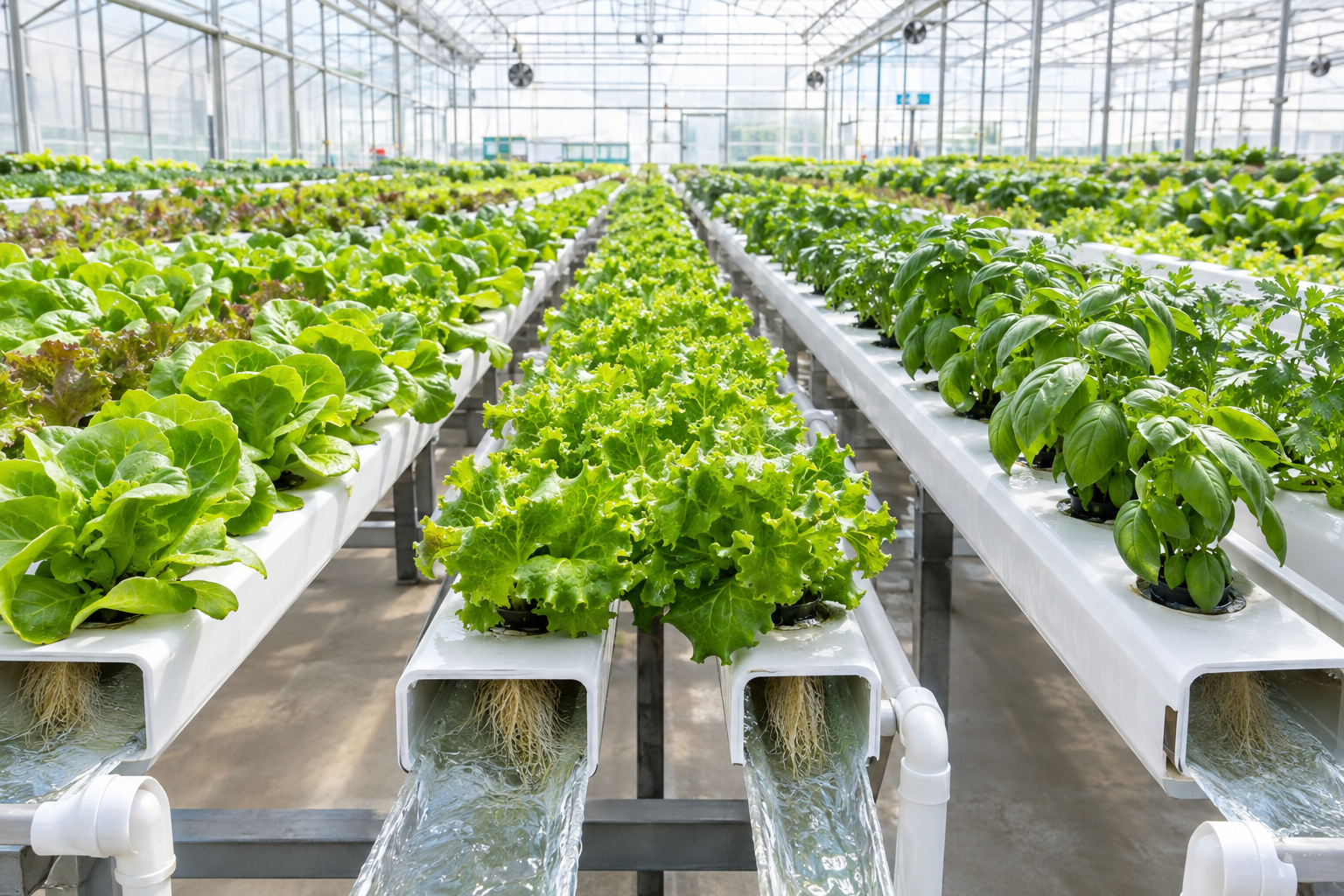
Walk into any commercial hydroponic lettuce or herb operation and you will see the same setup repeated dozens or hundreds of times over: long, shallow troughs running in parallel, a thin film of nutrient solution moving steadily through them, and rows of plants sitting with their roots just touching that flowing water. This is the Nutrient Film Technique, or NFT, and it is one of the most efficient growing methods used at commercial scale anywhere in the world.
The same principles behind scaling a commercial operation to hundreds of plants are exactly what you need to understand to build a smaller, genuinely effective version at home. Here is how commercial trough systems actually work, and how to replicate one yourself.
Quick Summary: Commercial Trough Systems and How to Replicate Them at Home
- NFT trough systems use long, narrow channels to grow plants with a thin film of continuously flowing nutrient solution.
- Commercial growers favour NFT because it provides high root-zone oxygen, efficient water and nutrient use, space efficiency and consistent growing conditions.
- Leafy greens and herbs such as lettuce, basil, mint, coriander and Asian greens are particularly well suited to NFT.
- A home NFT system uses the same basic principles as a commercial setup: channels, reservoir, pump, slope, end caps and plant supports.
- Channel slope matters: A consistent downward angle keeps nutrient solution flowing instead of pooling around the roots.
- Pump sizing is important: The pump needs to provide enough flow across all channels without creating excessive turbulence.
- Recirculating systems require regular monitoring: Check nutrient concentration and pH regularly because the same solution continuously moves through the system.
- Avoid overcrowding: NFT is space-efficient, but excessive plant density can restrict airflow and increase disease risk.
- Clean channels between growing cycles to reduce algae, root residue and potential pathogen buildup.
- Purpose-built NFT channels can outperform improvised systems because features such as flow grooves and UV-stabilised materials help maintain more consistent flow and durability.
- For home growers, starting with suitable leafy greens or herbs and scaling the number and length of channels to available space is a practical way to replicate commercial NFT principles.
What Is a Commercial Trough System?
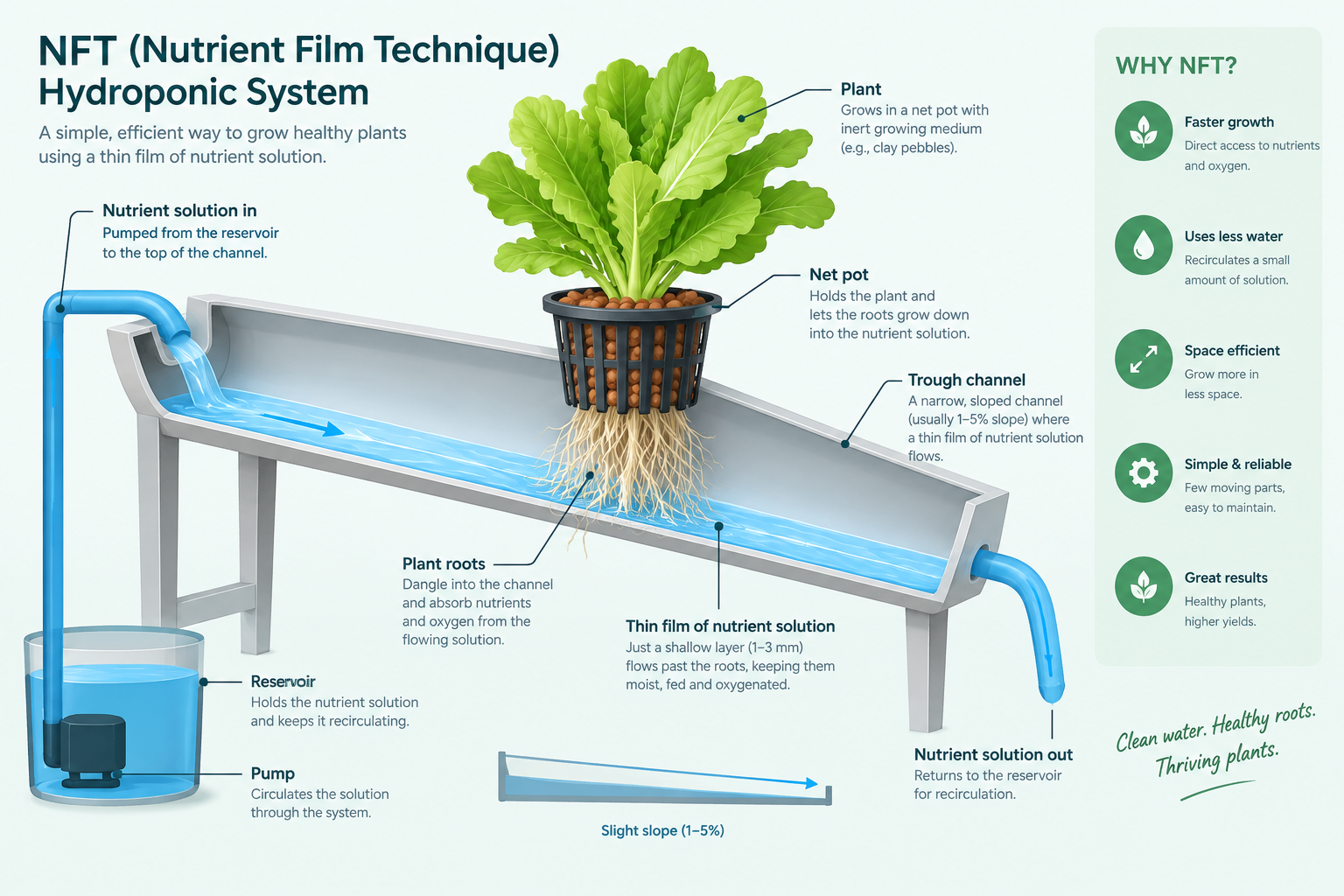
A trough system, more precisely known as an NFT system, grows plants in long, narrow channels rather than individual pots. Instead of soil or a heavy growing medium, plant roots sit directly in the channel, with a thin, continuously flowing film of nutrient solution running along the base. The simplicity of the design is part of what makes it so scalable; once the core components are in place, adding capacity means adding channels, not rethinking the system.
Channels or Gullies

These are the actual troughs the plants sit in, typically made from UV-stabilised PVC or high-density polyethylene, built to withstand constant water exposure and, in outdoor setups, direct sunlight. The base of a well-designed channel features embossed flow grooves that help distribute nutrient solution evenly across the full width of the trough rather than letting it channel unevenly to one side, a detail that makes a meaningful difference to root zone consistency across all plants in the channel.
Reservoir and Water Pump
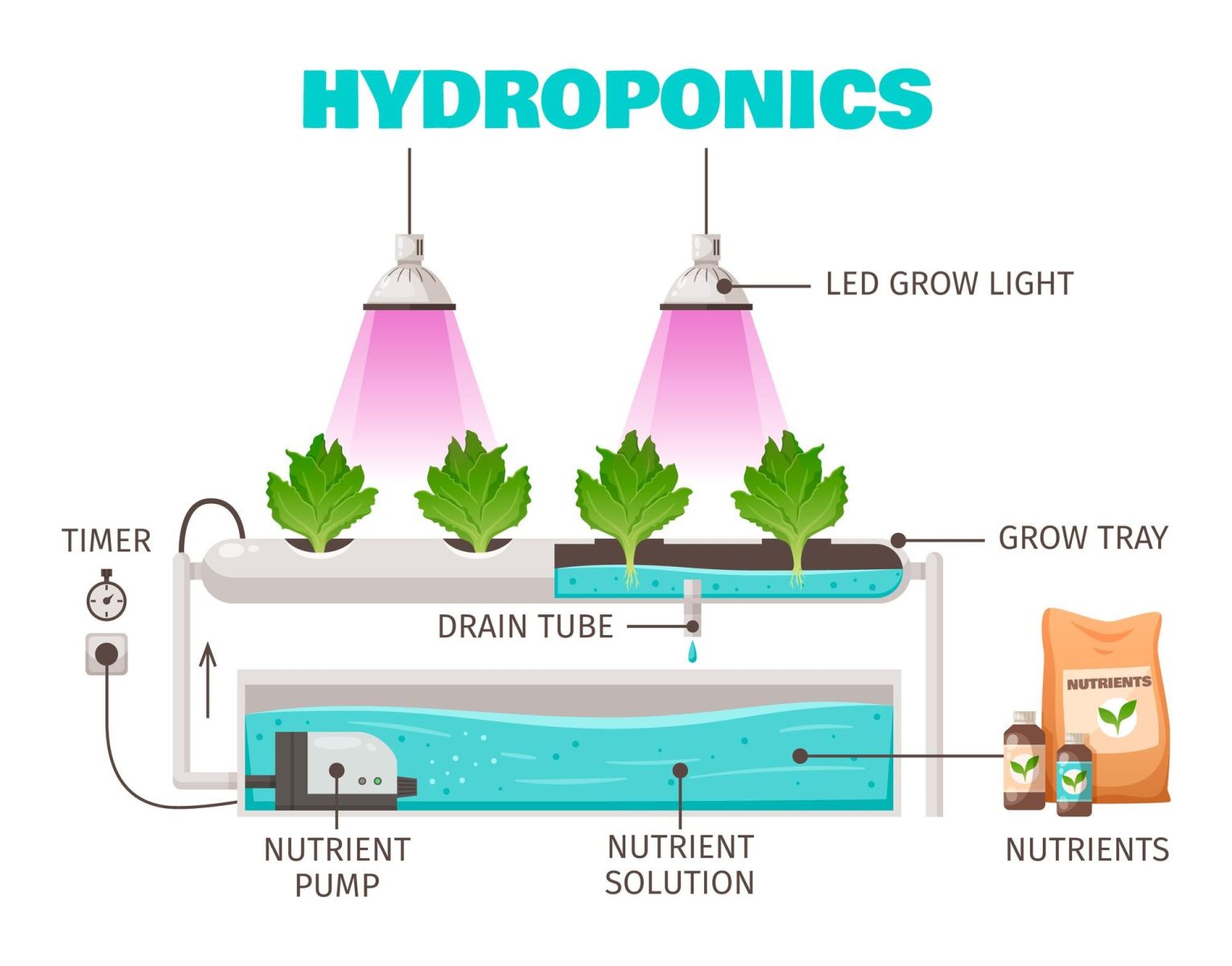
The reservoir holds the nutrient solution that gets pumped through the system and drains back for reuse. A submersible water pump moves this solution from the reservoir up to the top of each channel, where gravity takes over and carries the thin film toward the drainage end. Sizing the pump correctly for the total channel length and flow requirement is important; too weak a pump fails to maintain a proper film, while an oversized one creates unnecessary turbulence at the inlet that can disturb young root systems.
Slope, End Caps, and Net Pots
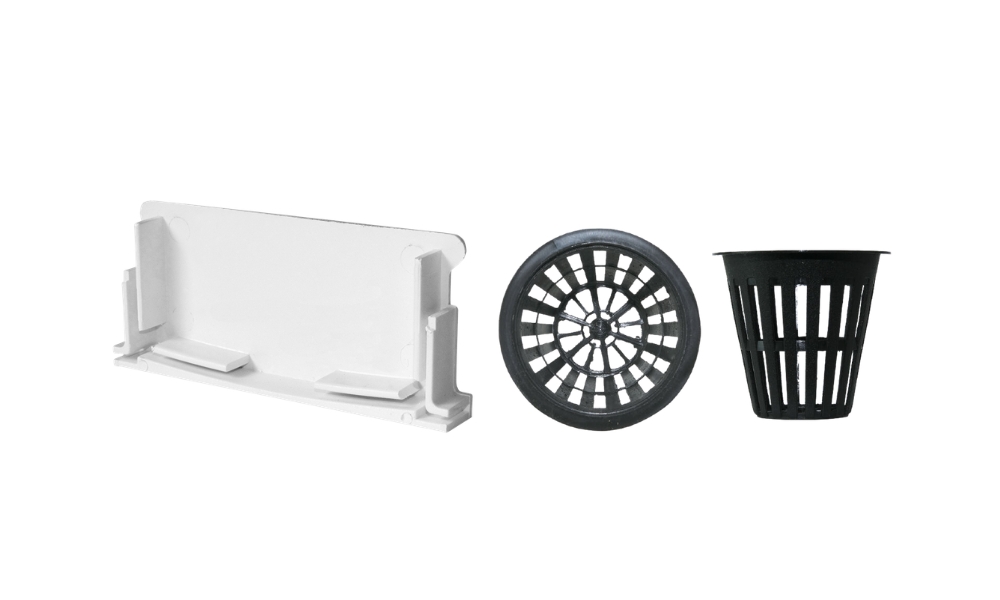
Channels are set at a slight downward angle so gravity keeps the nutrient film moving steadily toward the drainage end rather than pooling around plant roots. End caps seal each end of the channel, with drainage end caps typically including a spout to direct water cleanly back into the reservoir. Net pots or plant supports hold each plant in position at the top of the channel, with roots hanging down into the flowing film below, giving them access to both nutrient solution and the oxygen-rich air above it simultaneously.
Why Commercial Growers Rely on Trough Systems
NFT trough systems dominate commercial leafy green and herb production for a set of specific, compounding reasons. Understanding why they work at scale also clarifies what makes them worth building at home.
| Advantage | How It Works in Practice |
|---|---|
| High oxygen availability | Roots sit in a thin film rather than being submerged, giving them constant access to oxygen and supporting faster, healthier growth |
| Efficient water and nutrient use | Nutrient solution recirculates rather than running to waste, significantly reducing water consumption compared to traditional irrigation |
| Space efficiency | Long, narrow channels pack closely together on tiered benching, maximising plants per square metre of floor space |
| Consistency at scale | Every channel receives the same nutrient mix and flow rate, making uniform growth across hundreds of plants far easier to maintain |
| Lower labour per plant | Planting, monitoring, and harvesting follows the same repeatable process across all channels, rather than requiring individual attention per pot |
What Crops Suit a Trough System
Not every plant is a good fit for NFT growing, and commercial growers are selective for good reason. Matching your crop choice to what NFT actually supports well is one of the most important decisions to make before building anything.
Well-Suited Crops
Leafy greens, especially lettuce, are the classic NFT crop, their shallow root systems sit naturally in a thin nutrient film and their compact growth habit suits the spacing of trough channels well. Herbs including basil, mint, and coriander grow well in trough systems and appear in both commercial and home setups regularly. Asian greens and smaller leaf varieties also perform well in shallower, narrower channels designed specifically for compact crops. These plant types share the key trait that makes them ideal for NFT: shallow, fibrous roots that thrive with direct access to a moving nutrient film and the oxygen-rich air above it.
Less Suitable Crops
Heavier fruiting plants like tomatoes, cucumbers, or capsicums are generally not well suited to NFT channels. Their root systems develop more mass than a thin film can adequately support, and the overall plant weight needs more physical anchoring than a net pot sitting in a shallow trough provides. These crops tend to perform better in deep water culture, Dutch bucket, or media-based hydroponic systems designed specifically to handle the structural and nutritional demands of larger fruiting plants.
How to Replicate a Trough System at Home
Scaling down a commercial trough system for hydroponics at home does not mean losing what makes a trough system effective. The same core principles apply, just at a size that suits a shed, garage, or grow tent rather than a commercial greenhouse. Following a structured setup process prevents the most common problems growers encounter when building their first NFT system.
Step 1: Choose Your Channel Size and Length
Smaller leaf varieties like herbs and fancy lettuce suit thinner, shallower channels, while larger leafy greens benefit from a wider trough with more root space. Channels are commonly sold in standard lengths such as 3-metre sections, which can be joined together for longer runs or cut down for a more compact setup. Choosing purpose-built NFT channels over repurposed piping ensures the base geometry is designed to distribute nutrient solution evenly rather than letting it run unevenly to one side.
Step 2: Set Up Your Slope
A consistent downward angle along each channel keeps nutrient solution flowing toward the drainage end rather than pooling around plant roots. Even a home system needs this slope maintained across the full channel length, a gentle, even fall across a tray stand or bench is usually enough. Too flat and solution pools; too steep and roots at the top of the channel risk drying out between pump cycles. A slope of around 1 in 40 to 1 in 30 is a commonly used starting point for home NFT setups.
Step 3: Connect Your Reservoir and Pump
A submersible water pump moves nutrient solution from the reservoir up to the inlet end of each channel. Size the pump to your system's total channel length and flow requirements, a pump that maintains a thin, steady film across the full length of all channels without creating turbulence at the inlet is the target. For a typical home system with several 3-metre channels, a moderate-capacity pump with an adjustable flow rate gives the flexibility to dial in the film thickness without committing to a fixed output.
Step 4: Install End Caps and Net Pots
A standard end cap seals the top of the channel where nutrient solution enters, while an end cap with a drainage spout at the outlet end directs the flow cleanly back into the reservoir rather than dripping unpredictably. Net pots sit in pre-cut holes along the top of the channel, holding each plant in position with roots hanging down into the flowing film below. Spacing net pot holes to match the mature canopy size of your chosen crop prevents overcrowding, which restricts airflow and increases disease pressure even in an otherwise well-managed system.
Steps 5 and 6: Plant and Monitor
Plants are typically started in a separate propagation setup, rockwool cubes or coco plugs in a humidity dome, before being transferred into net pots once roots are visible at the base of the plug. Once the system is running, nutrient concentration and pH need regular checking and adjustment, ideally daily in an active system. Because the solution recirculates continuously rather than being replaced each cycle, small imbalances compound over time if they are not caught early. A reliable EC and pH meter is an essential part of running any recirculating system effectively.
Common Mistakes When Building Trough System for Hydroponics at Home
A few issues come up repeatedly for growers building their first trough setup. Most are straightforward to avoid once you know where to look.
Getting the slope wrong is the single most common setup error. Too flat, and nutrient solution pools rather than flowing properly. Too steep, and roots at the top of the channel can dry out between pump cycles. Set the angle deliberately, check it with a spirit level, and verify that water moves steadily from inlet to outlet before planting anything.
- Undersizing the pump leads to uneven flow across channel length, with plants furthest from the inlet suffering most from inconsistent nutrient delivery.
- Overcrowding channels restricts airflow through the canopy and encourages disease, even in a system that is otherwise well managed.
- Skipping regular cleaning allows algae and root residue to accumulate between grow cycles, increasing pathogen pressure in subsequent grows.
- Ignoring nutrient monitoring allows small imbalances to compound over time in a recirculating system, unlike in run-to-waste setups where fresh solution is used each cycle.
Why a Purpose-Built System Beats Improvising
It is tempting to build a trough system from generic parts, but purpose-built NFT channels solve problems that improvised setups consistently run into. Properly designed channels feature embossed water flow grooves that distribute nutrient solution evenly across the base of the trough. UV-stabilised materials hold up far better under sustained sunlight exposure than standard plastic piping repurposed for the job, particularly in outdoor or greenhouse setups where material degradation over time is a real factor.
A genuinely well-built home trough system, using the same quality channels, end caps, and connectors that commercial operations rely on, performs far more consistently over multiple grow cycles than a system pieced together from mismatched parts. The upfront investment in the right components pays back through predictable results and less troubleshooting over time.
Build Your Own NFT Trough System with Hydro Experts
Ready to build your own trough system at home? Browse the full Sure Grow NFT System range at Hydro Experts, including channels, end caps, reservoirs, pumps, and net pots suited to home and small commercial setups. Reach out to the team for help sizing a system that fits your space, crop selection, and irrigation approach.
FAQs on Trough Systems for Hydroponic at Home
They describe the same thing from different angles. Trough system refers to the physical channels that plants grow in, while NFT, or Nutrient Film Technique, describes the growing method itself, a thin, continuously flowing film of nutrient solution running along the base of those channels. In practice, the two terms are used interchangeably in the hydroponic industry.
A functional system can be assembled from basic parts, but purpose-built channels, end caps, and connectors are designed specifically to manage flow distribution, prevent leaks, and resist UV degradation, all of which meaningfully affect how consistently the system performs over time. Improvised components tend to introduce inconsistencies in flow and durability that become more apparent across multiple grow cycles, whereas purpose-built parts are designed to perform predictably from the start.
Leafy greens, herbs, and smaller leaf varieties like Asian greens tend to do best, since their shallow, fibrous root systems suit the thin nutrient film these channels provide. Lettuce in particular is the most reliable NFT crop across both commercial and home setups. Heavier fruiting plants like tomatoes or capsicums are generally not a good fit for NFT channels, since their root mass and plant weight need more support than a shallow trough provides.
Ideally daily in an active system. Because the solution is reused continuously rather than replaced each cycle, small imbalances in EC or pH can build up quickly if left unchecked. Checking both EC and pH each day, and adjusting as needed, keeps the nutrient environment stable and prevents deficiency or toxicity issues that might not become visible in plants until several days after the imbalance began. A reliable EC and pH meter is an essential tool for any recirculating hydroponic setup.
Yes, a consistent, gentle downward angle is essential. Without it, nutrient solution pools in low points along the channel rather than flowing steadily toward the drainage end, which leads to uneven root zone conditions and increases the risk of anaerobic patches forming around standing water. A slope of around 1 in 40 to 1 in 30 is a reliable starting range for most home NFT setups, and checking it with a spirit level before planting saves a lot of troubleshooting later.