


How to Harvest Hydroponic Crops Properly: Guide on Timing, Drying & Curing
By Hydro Experts | 29 March 2026
A practical guide to harvesting hydroponic crops correctly, covering the right timing for different plant types, proper cutting techniques, trimming methods, drying and curing processes, and post-harvest handling to preserve freshness, flavour, and overal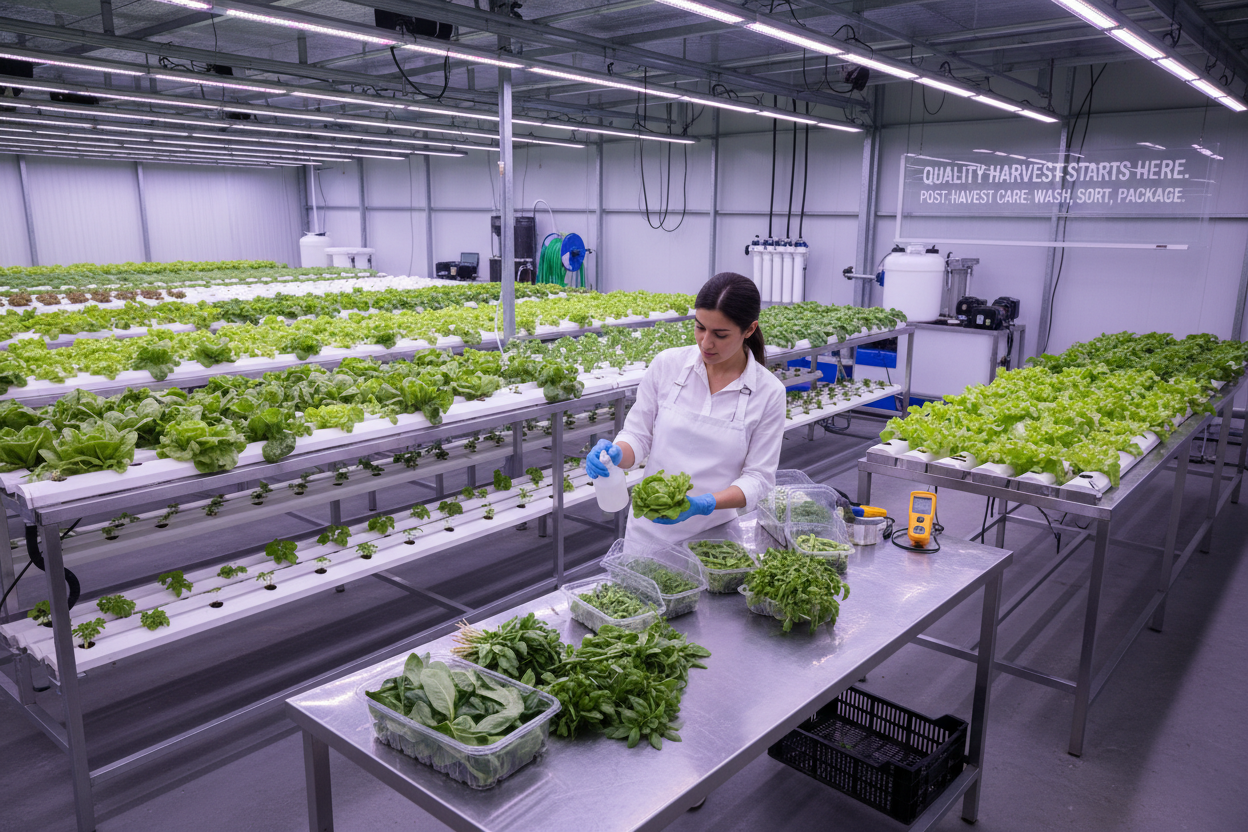
Growing hydroponically gets a lot of attention. The nutrient mix, the lighting schedule, the pH management, and the reservoir maintenance. Most of the conversation centres on getting plants to harvest. What happens at and after harvest gets far less attention, which is why so many growers who have done everything right up to that point lose quality in the final steps.
Harvesting at the wrong time, handling produce roughly, or skipping post-harvest processing costs you the freshness, potency, and shelf life that good growing practice builds. The hydroponic harvest process is not complicated, but it is precise.
This guide covers timing, trimming, drying, curing, and handling for the common hydroponic crop categories, along with the tools that make each step cleaner and more consistent.
Why Harvest Timing Matters More in Hydroponics

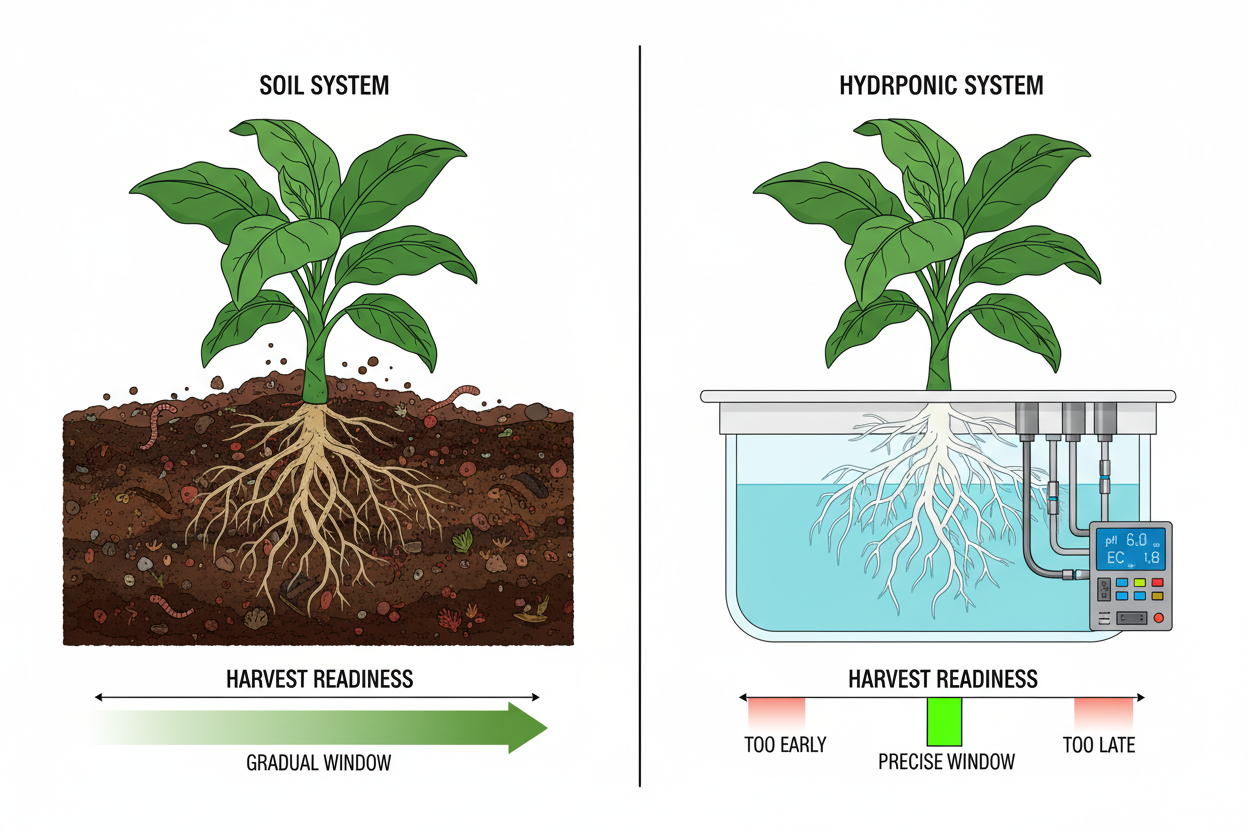
Soil-grown crops have some buffers. Nutrients in the medium continue feeding the plant after the grower steps back, and the plant's transition to harvest is more gradual. In hydroponics, the grower controls the entire input stream. That control accelerates growth, but it also means the plant responds more sharply to changes in feeding and environment. When the plant is ready, it is ready, and the window is often narrower than in soil.
Harvesting too early means underdeveloped flavour, lower yield weight, and in the case of fruiting crops, poor texture and nutritional density. Harvesting too late means the plant has begun breaking down its own compounds, flavour declines, and shelf life shortens before the crop even leaves the growing space.
Timing indicators vary by crop type, but the principle is consistent: learn the specific signals your crop gives at peak maturity and harvest to those signals rather than to a calendar date. Hydroponic growth rates are faster than soil equivalents, which means the calendar date that worked for a soil grower is usually earlier in a hydroponic system.
Timing by Crop Type
Leafy Greens (Lettuce, Spinach, Basil, Herbs)
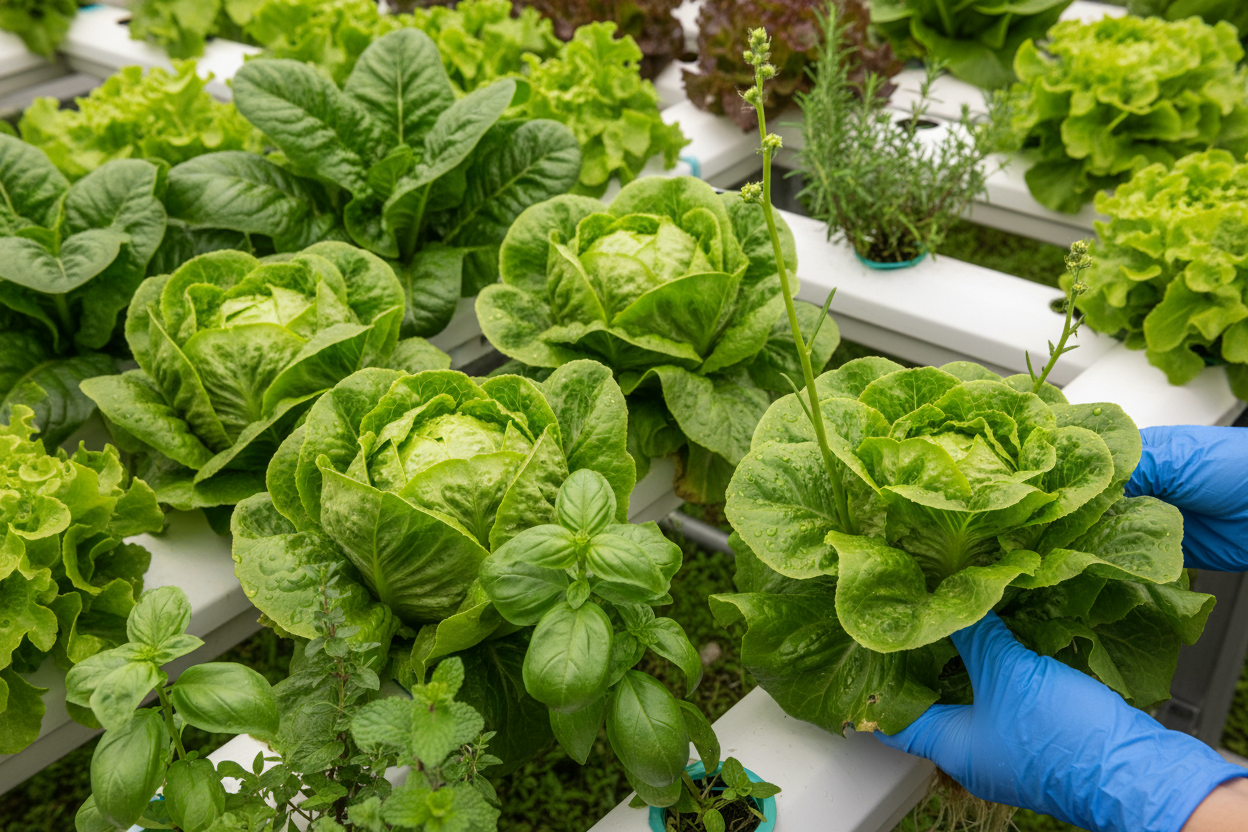
Leafy greens are the most forgiving category for timing, but the most sensitive to post-harvest handling. The harvest window for lettuce runs from when the head reaches its target size and the leaves are fully developed to just before the plant begins to bolt, the process of sending up a flower stalk triggered by heat, long daylight hours, or nutrient stress.
Bolting lettuce turns bitter quickly. The signals are a central stem beginning to elongate, and the innermost leaves are starting to cup. Harvest before these signs develop fully. For loose-leaf varieties harvested by the cut-and-come-again method, take the outer leaves while leaving the growing centre intact. The plant continues producing, extending the harvest window across multiple sessions.
Basil bolts faster than lettuce, and the quality decline after flowering begins is rapid. Pinch out flower heads as soon as they appear to extend the harvest window. Once flowering is underway in earnest, harvest the entire plant.
The best time to harvest leafy greens is in the early morning after the lights have been on for an hour or two. Plants have respired overnight and rehydrated from the root zone, making morning leaves the most turgid and fresh. Harvesting later in the day, particularly if the growing environment is warm, produces wilted produce that recovers poorly in storage.
Fruiting Crops (Tomatoes, Cucumbers, Capsicum, Strawberries)
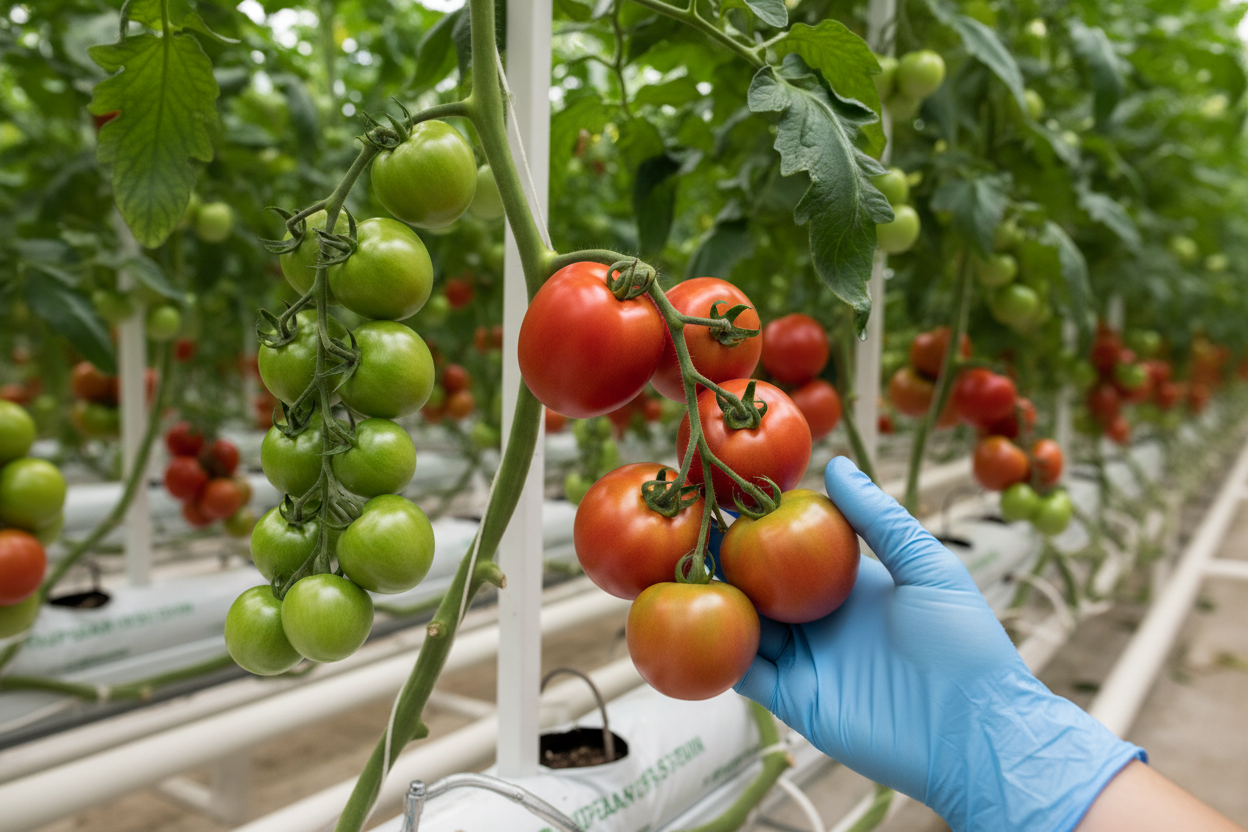
Fruiting crops have more specific maturity signals and less tolerance for early or late harvest.
Hydroponic tomatoes are best harvested at the breaker stage for most varieties, when colour change has begun, but the fruit is not yet fully ripe. They continue ripening off the vine at room temperature, and this approach gives better shelf life than harvesting at full ripeness. For cherry tomato varieties and for personal use where immediate consumption is the plan, harvest at full colour for maximum flavour.
Cucumbers harvested too late develop a bitter core and seeds that are too developed for eating. Harvest while the skin is firm, the colour is right for the variety, and the fruit has reached its typical size without beginning to yellow. Cucumbers left too long on the vine in a hydroponic system also signal the plant to slow new fruit production.
Capsicum harvested green is technically mature, but the flavour and nutritional content develop significantly as the fruit changes to its final colour. Red, yellow, and orange capsicum left to fully colour on the plant in a hydroponic system deliver substantially better flavour than those harvested early and coloured off the vine.
Strawberries should be harvested at full colour with the tip showing full redness. Unlike many fruits, strawberries do not continue to ripen meaningfully after picking. Handle them gently as they bruise easily and damaged tissue deteriorates rapidly.
Cannabis and Flower Crops
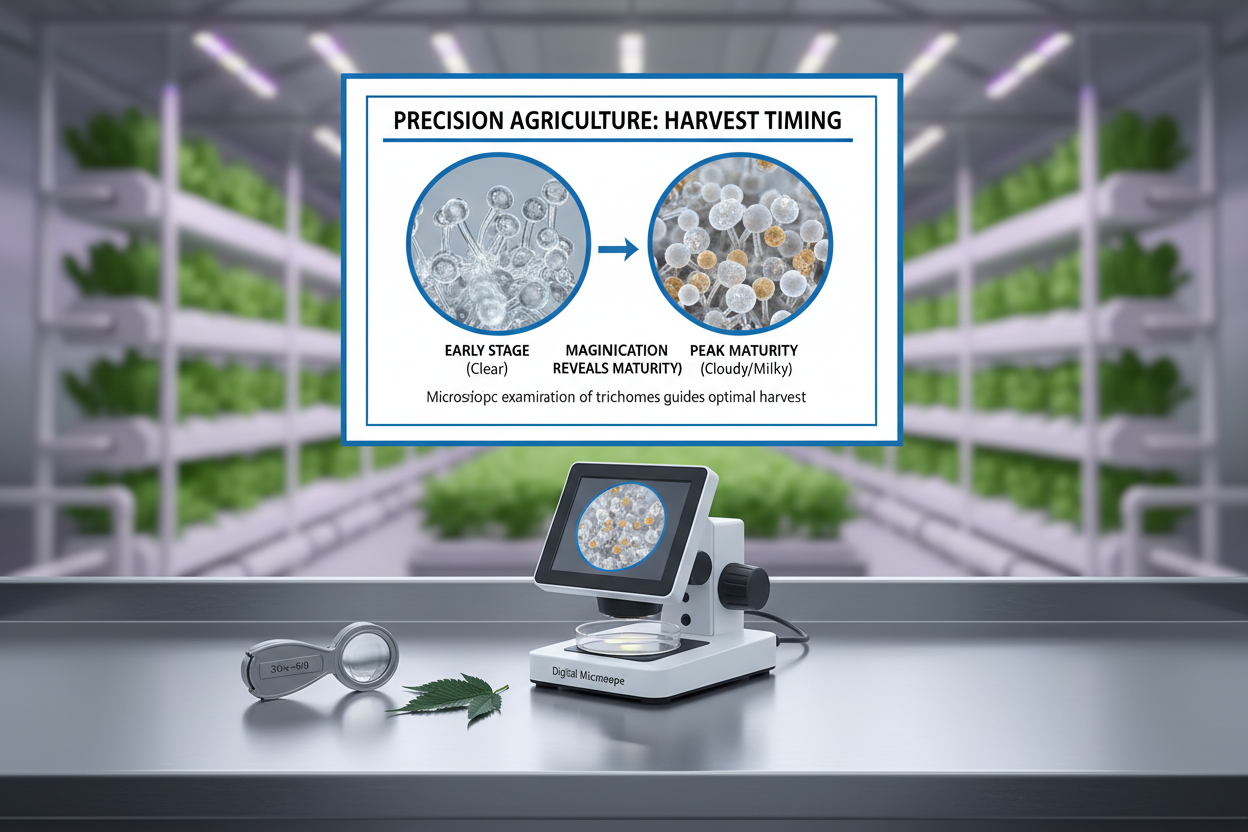
For cannabis and other resin-producing plants, timing is determined by trichome development rather than visual size or colour of the flower itself. A jeweller's loupe at 30x to 60x magnification or a digital microscope provides the necessary view of trichome heads. Clear trichomes indicate the plant is not yet at peak potency.
Cloudy or milky white trichomes indicate peak THC development. Amber trichomes indicate THC is degrading into CBN, which produces a more sedative effect. Most growers harvest at the transition from mostly cloudy to mixed cloudy and amber, calibrated to the effect profile they are targeting.
Pistil colour provides a secondary indicator. When 70 to 90% of pistils have darkened from white to orange or red, the plant is typically in the harvest window.
Hydro Experts carries jeweller's loupes and digital microscopes suited to trichome inspection for growers working with resin-producing crops.
The Pre-Harvest Flush
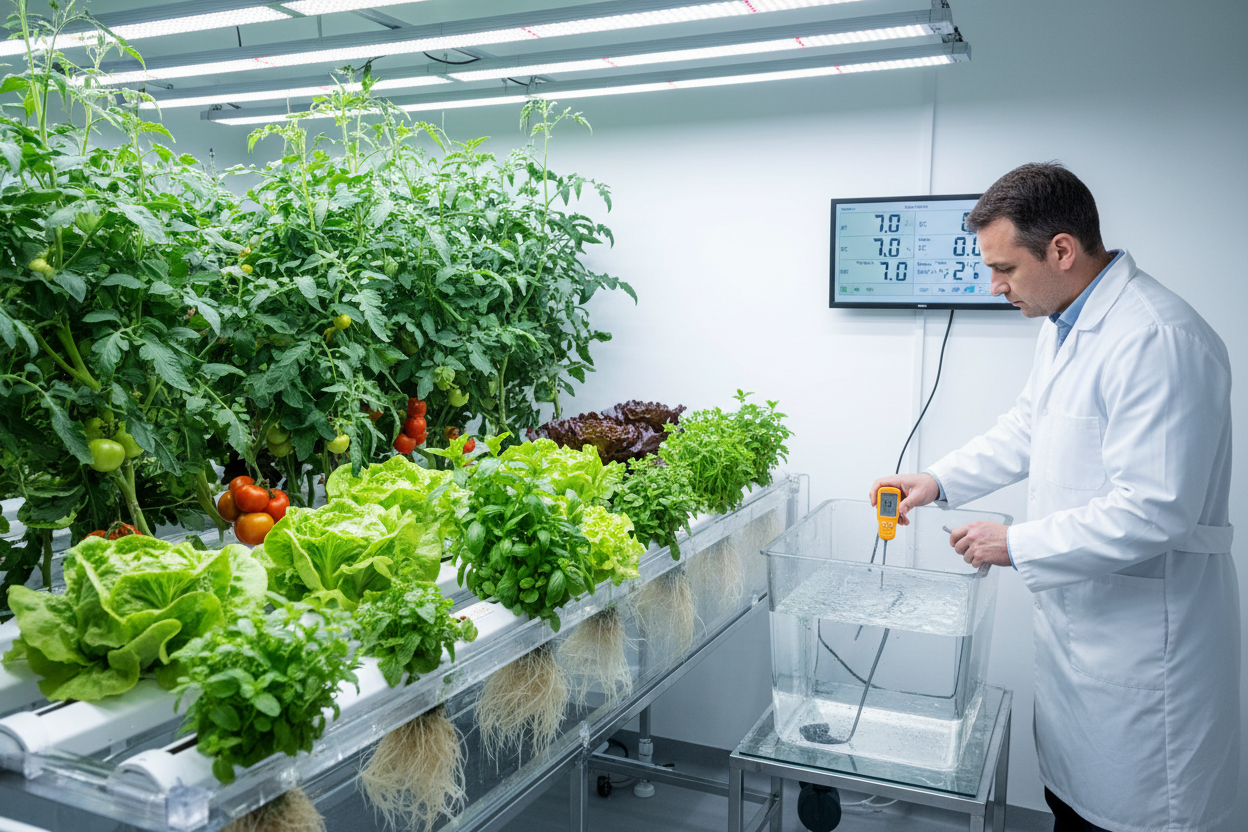
For most hydroponic crops, a pre-harvest flush of one to two weeks using plain pH-adjusted water or a dedicated flushing agent in place of the normal nutrient solution improves final product quality. The flush clears residual nutrient salts from the plant tissue, which can affect flavour in edible crops and the burn quality of cannabis.
The flush period length depends on the growing medium and system type. In recirculating systems, drain and replace the reservoir with plain water or flushing solution. In coco or other inert media, flush with a volume of plain water that is several times the container volume. In DWC systems, replace the nutrient solution with plain water and maintain oxygenation.
Harvesting: Tools and Technique
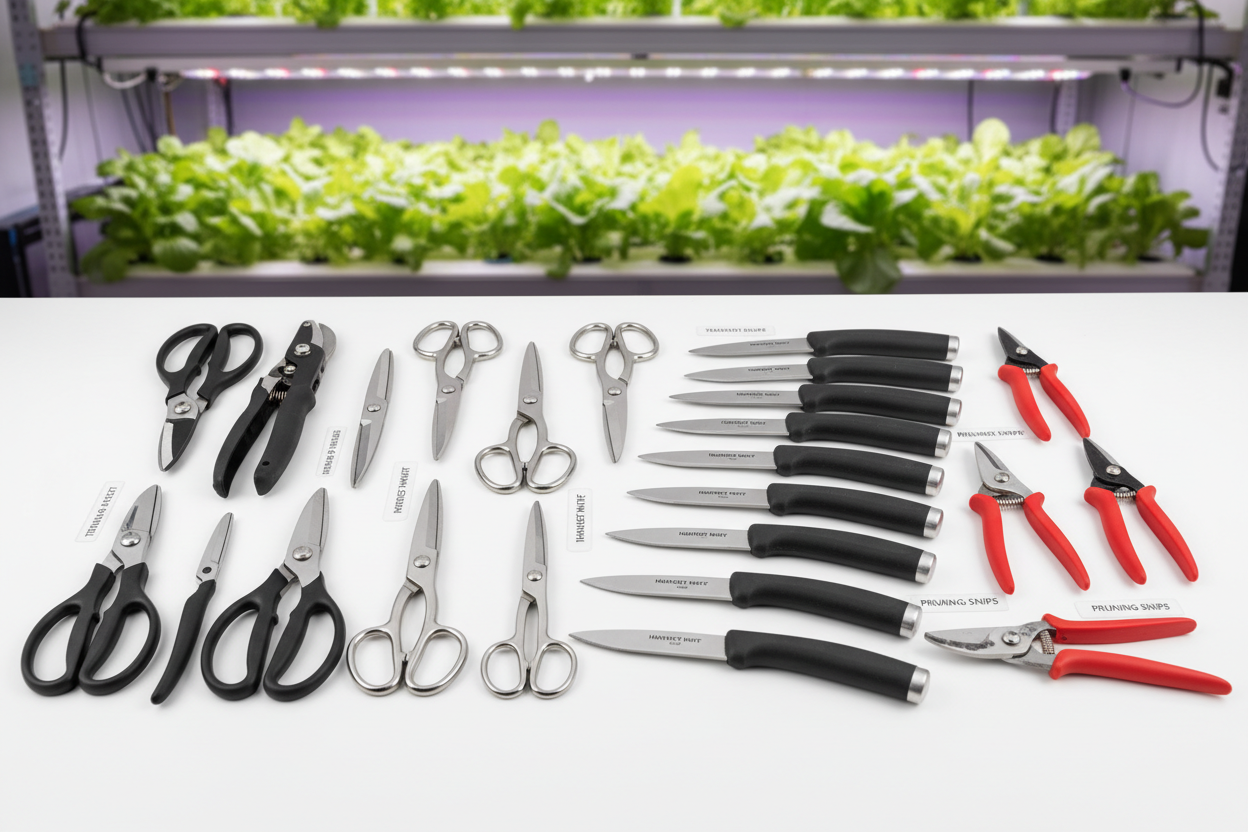
Clean, sharp cutting tools are non-negotiable. Blunt blades crush plant tissue rather than cutting it cleanly, creating entry points for pathogens and oxidation that reduce shelf life and product quality immediately. For leafy greens and herbs, clean scissors or harvest knives. For woody-stemmed plants and fruiting crops, quality pruning snips. For cannabis and heavier flower stems, ratchet pruners or heavy-duty trimming scissors, depending on stem diameter.
Sanitise cutting tools before each harvest session and between plants where disease pressure is a concern. Isopropyl alcohol at 70% applied to blades between cuts is the standard practice.
Hydro Experts carries Chikamasa scissors, a range of pruning and trimming tools, and Fiskars harvest scissors suited to different crop types and stem sizes. Investing in quality cutting tools pays back in producing quality across every harvest.
Harvest into clean containers. For leafy greens, use food-grade harvest bins or trays lined with a clean surface. Avoid stacking wet produce in deep containers where weight and moisture combine to bruise lower layers. For fruiting crops, single-layer harvest trays prevent bruising during transport from the growing space.
Trimming
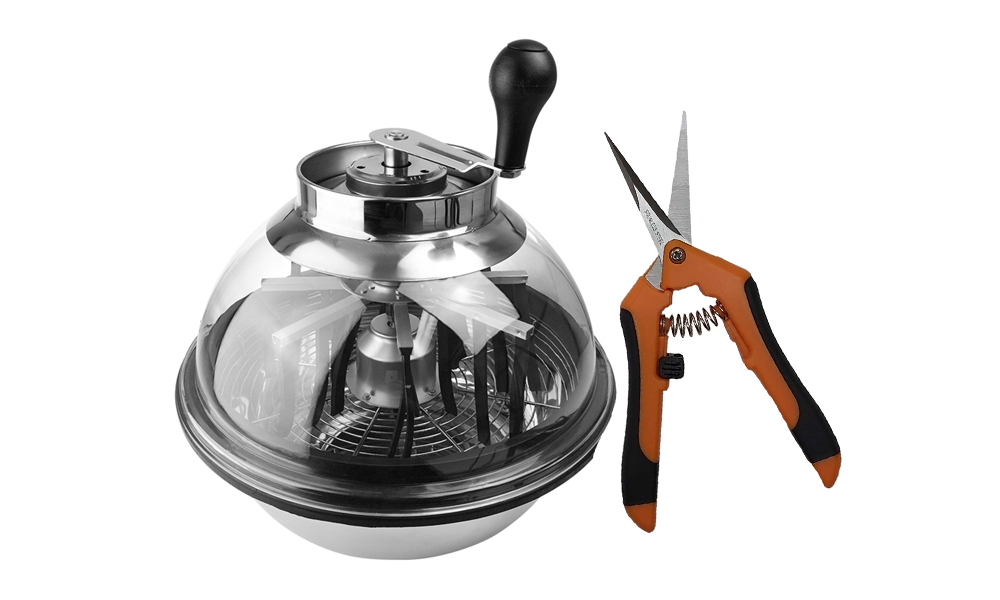
Trimming serves different purposes depending on the crop. For leafy greens, trimming removes damaged outer leaves and roots before the crop goes to storage or the kitchen. For cannabis, trimming is the process of removing fan leaves and sugar leaves from flower clusters to produce the final product.
Wet trimming refers to trimming immediately after harvest while the plant material is still fresh and leaves are easy to remove. Dry trimming refers to trimming after the drying process, when leaves have curled inward, and the product is handled less but requires more care not to damage dried flower structures.
Each approach has its advocates, and the choice depends on the drying environment, the scale of the operation, and personal preference on final product presentation.
For large-scale trimming, mechanical trim machines significantly reduce labour time. For small to medium operations, quality trimming scissors with ergonomic handles reduce hand fatigue across long trim sessions.
Drying
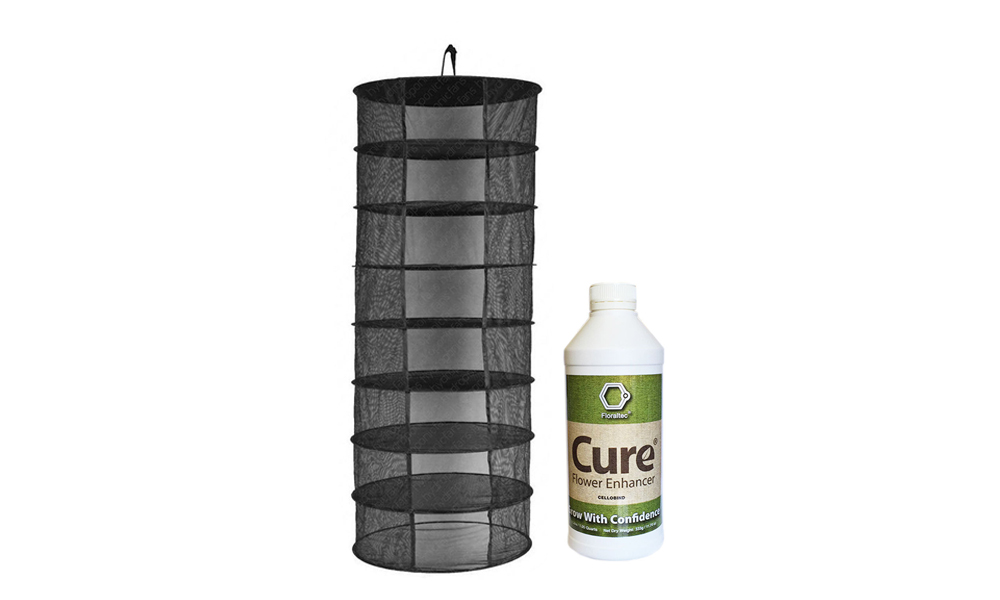
Drying applies primarily to cannabis and herb crops intended for dried use. The objective is to remove moisture slowly and evenly while preserving volatile compounds, primarily terpenes, that carry aroma and flavour.
The ideal drying environment maintains temperatures between 18 and 22 degrees Celsius with relative humidity between 45 and 55%. Air circulation should be gentle and indirect, meaning fans should not blow directly onto drying material. Darkness is important throughout the drying period as light degrades terpenes and cannabinoids in cannabis.
Whole plants or large branches can be hung upside down from drying lines. Individual buds can be placed on drying racks. Drying racks allow better airflow around each bud and are practical for smaller spaces. Hydro Experts carries hanging kits suited to the hanging bud approach.
Drying typically takes seven to fourteen days, depending on bud density and environmental conditions. The crop is ready for the next stage when the smaller stems snap rather than bend, and the outer surface feels dry to the touch while some residual moisture remains in the interior.
Curing
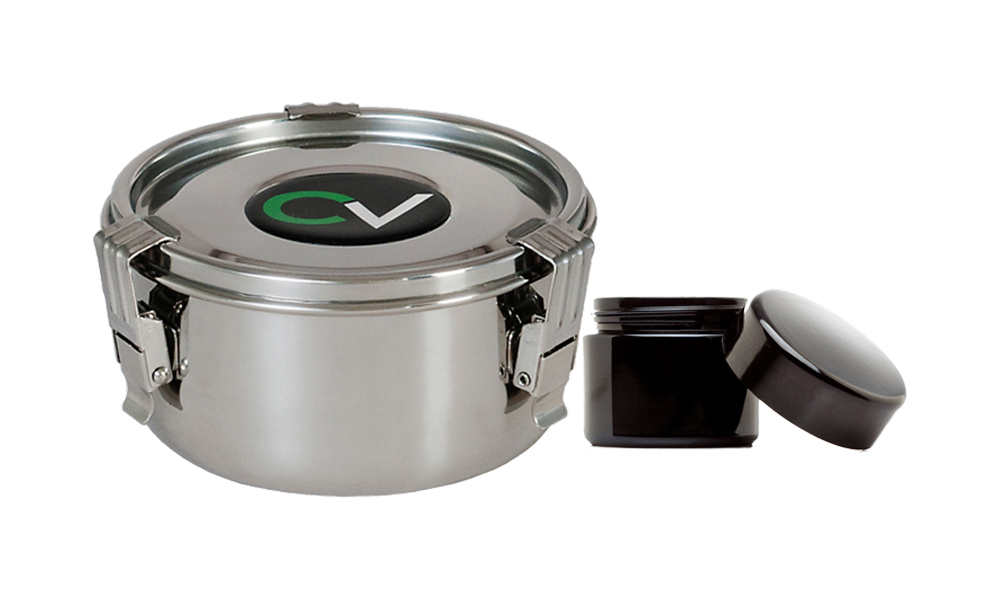
Curing is the post-drying stage that completes the development of flavour and extends shelf life significantly. Properly cured cannabis retains terpene profiles and stays in optimal condition for months. Inadequately cured product degrades rapidly and loses the quality that the grow cycle built.
Place dried material in airtight glass jars or quality storage containers filled to approximately 75% capacity. Open the jars once or twice daily for the first two weeks to allow moisture exchange and check for any signs of mould. This process, called burping, equalises moisture levels within the container and prevents the anaerobic conditions that allow mould to develop.
After two weeks of active burping, the curing process shifts to passive storage with less frequent opening. A full cure runs four to eight weeks for most varieties. Some growers extend beyond eight weeks for specific effects and flavour profiles.
Hydro Experts carries Boveda humidity control packs for maintaining optimal relative humidity inside curing containers and CVault stainless steel curing containers that maintain light-free, airtight storage conditions throughout the curing period.
Post-Harvest Handling for Fresh Produce
Leafy greens and fruiting crops intended for fresh consumption need rapid cooling after harvest. The field heat carried by freshly harvested produce, the temperature it holds from the growing environment, accelerates deterioration. Getting produce to refrigerator temperature quickly extends shelf life significantly.
Do not wash leafy greens before refrigerating if they will be stored for more than a day. Surface moisture in a sealed bag or container creates the conditions for rapid deterioration. Wash immediately before use.
Store leafy greens in perforated bags or containers that allow some airflow while maintaining humidity. Airtight containers trap ethylene gas produced by the produce itself, which accelerates ripening and deterioration.
Fruiting crops like tomatoes should not be refrigerated. Cold temperatures below 13 degrees Celsius halt the enzymatic processes that develop flavour and alter the texture permanently. Room temperature storage for tomatoes preserves the eating quality that the growing cycle produces.
Hydro Experts: Tools for the Full Harvest Cycle
Hydro Experts stocks the equipment that supports the full hydroponic harvest process from pre-harvest flushing through cutting, trimming, drying, and curing. The range covers harvest scissors and pruning tools, drying nets and racks, trimming trays, curing containers, humidity control, flushing agents, and the inspection tools needed for accurate timing decisions.
FAQs
Timing indicators vary by crop. Leafy greens are harvested when leaves are fully developed and before the plant begins to bolt, signalled by a lengthening central stem. Fruiting crops like tomatoes and capsicum are harvested at visual maturity specific to the variety. For cannabis, trichome inspection with a loupe or digital microscope is the most accurate method, with cloudy to mixed cloudy and amber trichomes indicating peak harvest timing. Hydroponic crops mature faster than soil equivalents, so calendar-based timing from soil growing experience will typically be too late.
The pre-harvest flush replaces the nutrient solution with plain pH-adjusted water or a dedicated flushing agent for one to two weeks before harvest. It clears residual nutrient salts from plant tissue, which improves flavour in edible crops and burn quality in cannabis. It is not strictly mandatory but the quality difference in the final product is noticeable enough that most experienced growers include it as standard practice.
The essential tools are clean, sharp cutting instruments appropriate to the crop: harvest scissors or knives for leafy greens and herbs, pruning snips for fruiting crops, and trimming scissors for cannabis post-harvest processing. Trim trays with screens are useful for collecting material during trimming. Drying nets or racks, airtight curing containers, and humidity control packs complete the post-harvest toolkit. Hydro Experts carries a full range of harvest and post-harvest tools including Chikamasa scissors, multi-tier drying nets, CVault curing containers, and Boveda humidity packs.
The optimal drying environment maintains temperatures between 18 and 22 degrees Celsius and relative humidity between 45 and 55 percent. Air should circulate gently without fans blowing directly onto drying material. The space should be dark throughout the drying period to protect terpenes and cannabinoids from light degradation. Drying typically takes seven to fourteen days depending on bud density and environmental conditions, with readiness indicated when smaller stems snap cleanly and the outer surface feels dry while some interior moisture remains.
Shelf life depends on the crop type, harvest timing, and post-harvest handling. Leafy greens harvested at peak maturity, cooled rapidly after harvest, and stored in appropriate conditions last five to ten days. Fruiting crops vary significantly by type. Cannabis properly dried and cured in airtight containers with humidity control maintains quality for six months to a year or beyond. The most significant factors affecting shelf life are harvest timing accuracy, speed of cooling for fresh produce, and the quality of the drying and curing environment for dried crops. Damage during harvest and handling accelerates deterioration across all crop types.