

How to Start Hydroponics on a Budget in australia
By Hydro Experts | 6 February 2026
.png)
Hydroponics eliminates soil, reduces water usage, and accelerates plant growth through nutrient solutions delivered directly to roots. Starting costs deter many growers but budget approaches exist that maintain functionality without premium pricing. Strategic choices in system design, equipment selection, and initial plant varieties keep expenses manageable while building skills for future expansion.
Understanding Hydroponics System Cost Structures

.png)
Hydroponic systems break down into recurring and one-time costs. Initial setup requires containers/pots, growing medium, nutrient solutions, pH testing tools, and pumps or timers, depending on system type. Recurring costs include electricity, nutrient refills, pH adjusters, and replacement growing medium.
The cheapest systems use passive water delivery through wicking or simple flood-and-drain mechanisms. These require minimal equipment and no electricity for operation. Mid-range systems incorporate basic pumps and timers for automated feeding cycles. High-end setups use controllers, sensors, and precision dosing equipment that exceed budget parameters.
Scale impacts total investment. A single plant in a bucket costs under $50 to establish. Six plants in a basic system run $150 to $300. Expanding to twelve plants pushes costs to $400 to $600, depending on automation level and container choices.
Location determines certain expenses. Indoor growing adds lighting costs that outdoor or greenhouse setups avoid. Climate control for temperature and humidity increases investment in closed environments. Starting outdoors or in naturally lit spaces cuts initial outlays substantially.
Different Methods to starting Hydroponics on a Budget
1. Kratky Method Hydroponics for Zero-Power Growing
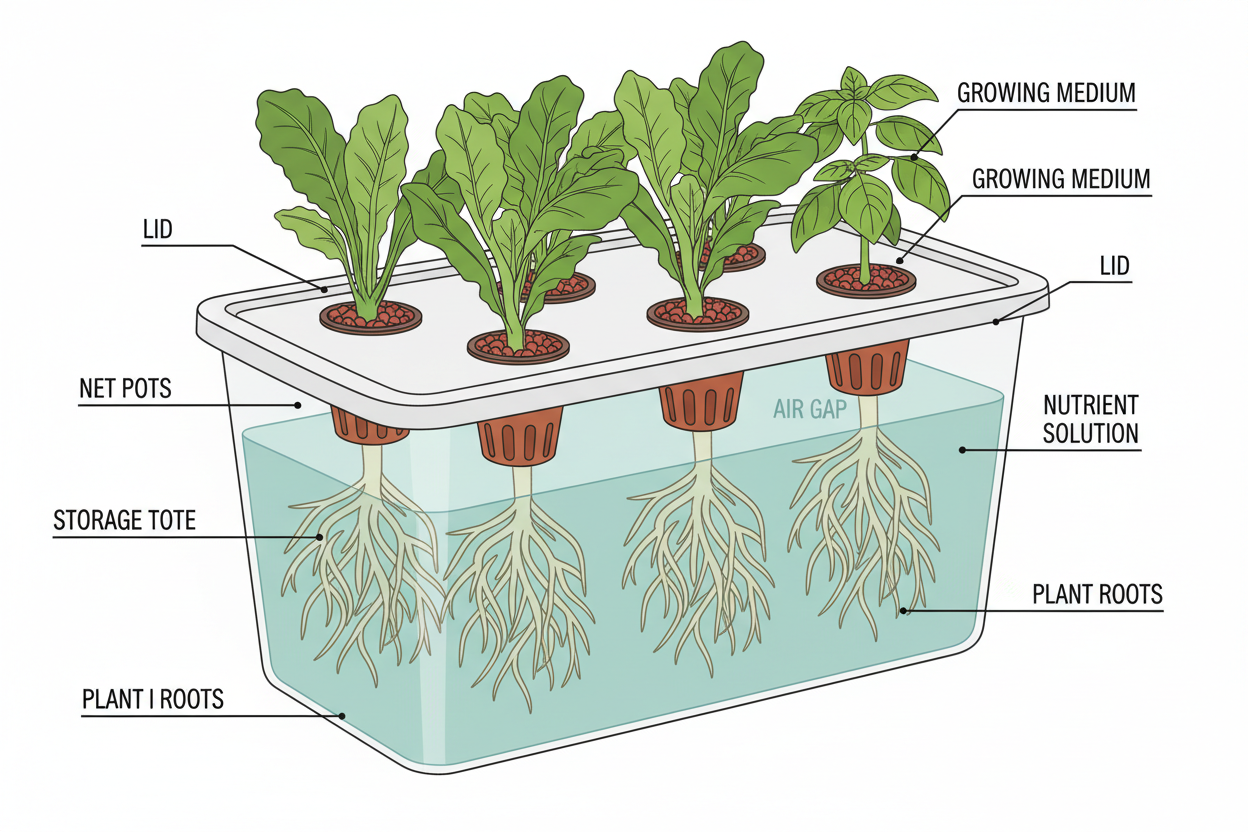
The Kratky hydroponics method provides the simplest entry point. Plants sit in net pots suspended over a nutrient solution in containers. Roots grow down into the liquid while upper portions access oxygen in the air gap. No pumps, timers, or electricity required.
Build a Kratky hydroponics system using a plastic pot/container, net pots, and growing medium. Drill holes in the tote lid matching the net pot diameter. Fill pots with expanded clay, perlite, or coconut coir. Add nutrient solution to the tote, leaving two to three inches of air space below the net pots. Seedlings planted in the net pots develop roots that reach the solution as plants mature.
Material costs stay minimal. Five-litre containers work for leafy greens and herbs. Twenty-litre totes accommodate larger plants like tomatoes or peppers. Net pots cost $1 to $3 each. Growing medium runs $15 to $30 for bags sufficient for multiple setups. Nutrient solution costs $20 to $40 for concentrate, making hundreds of litres.
The system works best for plants harvested before maturity, like lettuce, spinach, and herbs. Fruiting plants struggle without aeration as roots consume oxygen faster than passive methods supply. Nutrient solution requires complete replacement rather than topping up since concentration ratios shift as plants feed.
2. Deep Water Culture Hydroponics on a Budget
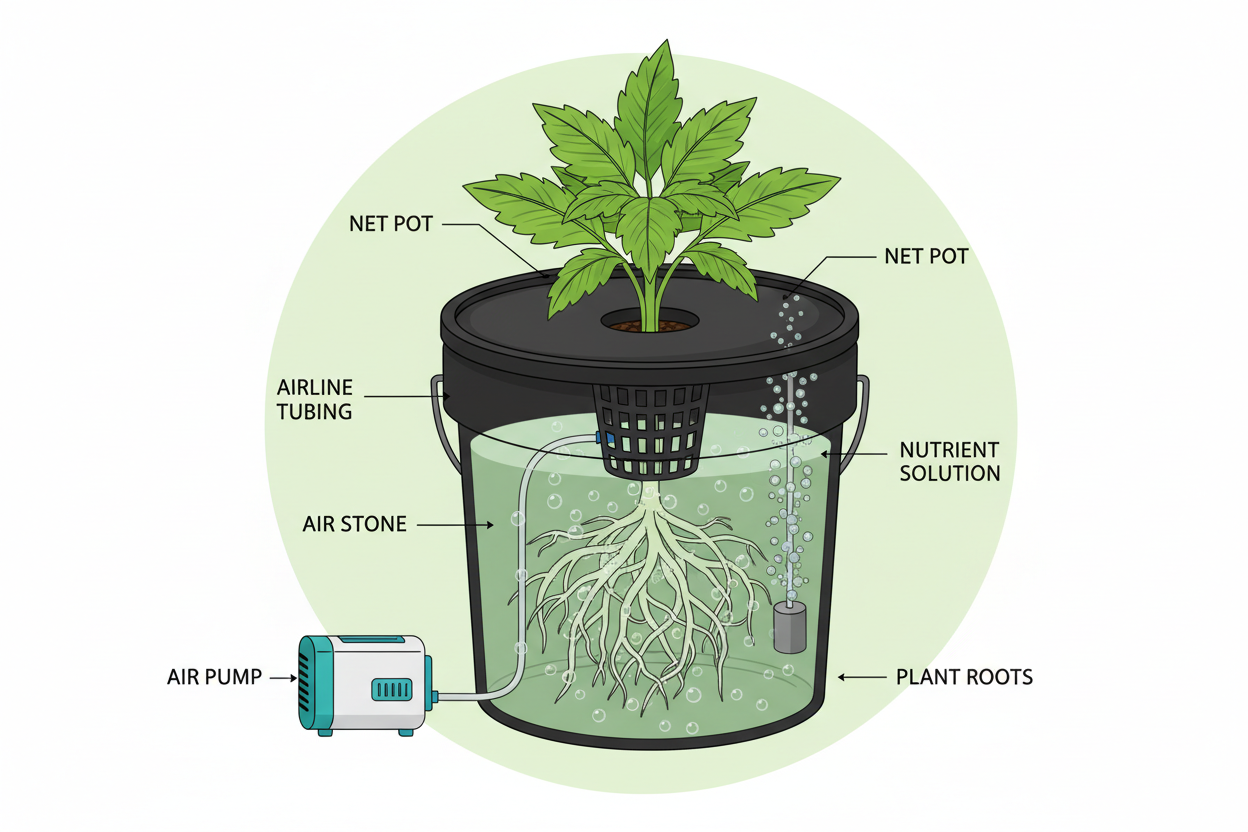
Deep water culture hydroponics suspends plant roots in an aerated nutrient solution continuously. An air pump and stone provide oxygen, preventing root rot. The system suits beginners due to its simple maintenance and forgiving nature.
Construct DWC hydroponics units from buckets, aquarium air pumps, and airline tubing. Five-gallon buckets serve as reservoirs. Drill a hole in the lid for the net pot. Run the airline from the pump to an air stone at the bucket bottom. Fill with nutrient solution to one inch below the net pot. The air stone bubbles oxygenate the solution and create a splash reaching the net pot.
A basic DWC setup for one plant costs $30 to $50. Buckets run $5 to $10. Net pots cost $2 to $4. Small aquarium air pumps rated for 5 to 10 gallons cost $15 to $25. Air stones and tubing add $5. Growing medium and nutrients match Kratky expenses.
Multiple buckets connect to one air pump using manifolds and splitters. A pump rated for 40 gallons powers four to six buckets through a divided airline. This drops per-plant costs as the pump represents the main expense.
DWC handles fruiting plants better than Kratky due to constant aeration. Tomatoes, peppers, and cucumbers thrive in DWC hydroponics systems. Nutrient solution needs weekly top-ups and complete changes every two to three weeks. Monitor pH and adjust as needed since buckets drift faster than larger reservoir systems.
3. Nutrient Film Hydroponics Technique Simplified
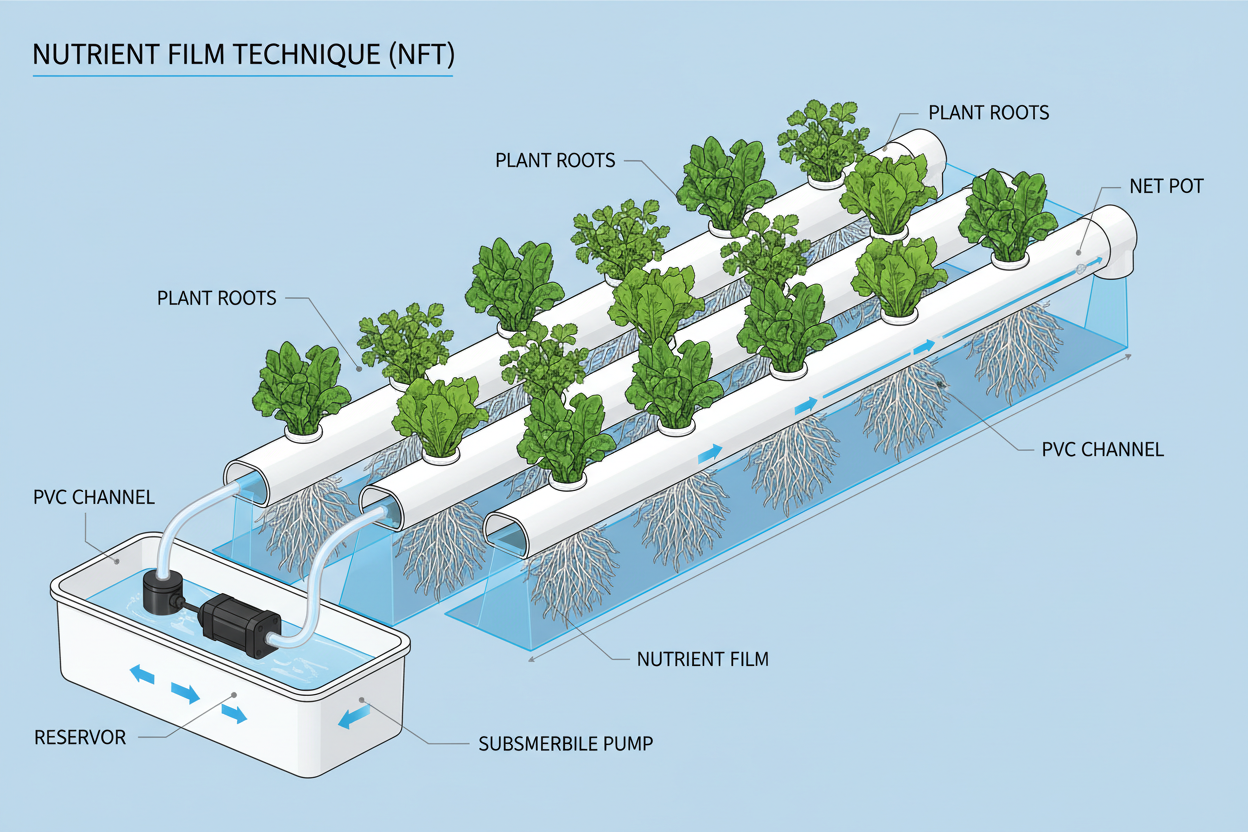
NFT hydroponics systems flow a thin nutrient film over roots in angled channels. Pumps circulate solution from a reservoir through channels and back. The method uses less water than DWC and allows easy inspection of root health.
Build NFT growing systems using PVC pipe or plastic guttering. Cut holes for net pots along the top of the channel. Set channels at one to two degree angles. Place a reservoir bucket at the low end. Run a submersible pump from the reservoir to the high end of the channel. Solution flows down the channel and drains back to the reservoir.
Material costs depend on channel length and plant count. A four-plant NFT system setup costs $80 to $120. PVC pipe runs $2 to $4 per meter. Guttering costs less at $1 to $2 per meter. Small submersible pumps rated at 200 to 400 litres per hour cost $15 to $30. Reservoir buckets, net pots, and growing medium match previous system costs.
NFT hydroponics works excellently for leafy greens and herbs. Fruiting plants grow successfully but require staking since channels provide limited root anchoring. The system scales efficiently by adding channel length and more net pots without proportional cost increases.
Power consumption stays low with small pumps running continuously. Expect 5 to 10 watts draw, resulting in minimal electricity costs. Timer-controlled pumps reduce usage further by running fifteen minutes per hour, though this requires more expensive pumps to handle frequent cycling.
4. DIY Hydroponics Growing Medium Options
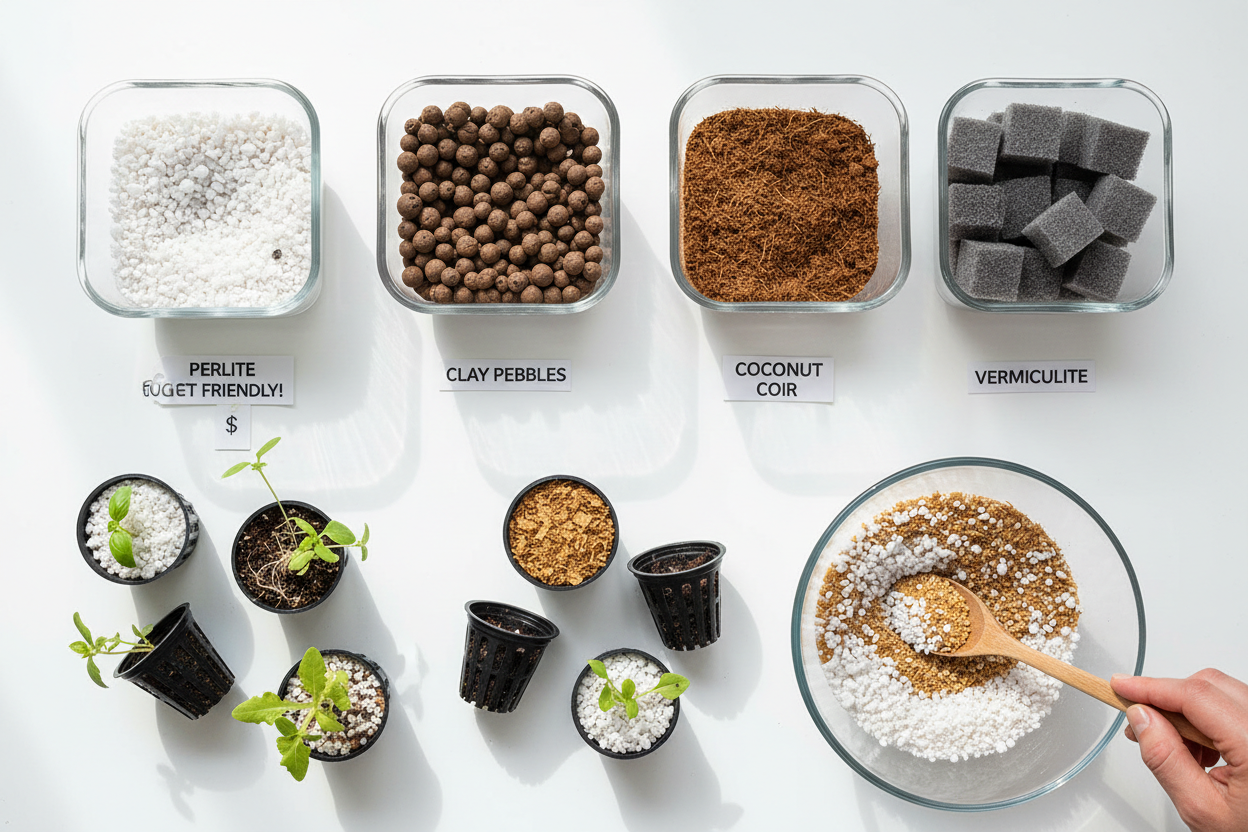
Growing medium anchors plants and retains moisture while allowing oxygen penetration. Commercial options include rockwool, expanded clay pebbles, and coconut coir. Budget alternatives perform adequately with proper handling.
Perlite costs $10 to $20 for large bags at garden centres. The volcanic glass provides excellent drainage and aeration. Mix perlite with vermiculite at a 3:1 ratio for better water retention in passive systems. Pure perlite works in actively aerated or frequently watered setups.
Coconut coir delivers good performance at reasonable prices. Compressed blocks cost $8 to $15 and expand to fill multiple net pots. Rinse the coir thoroughly before use to remove salts. The medium holds moisture well while maintaining air pockets. Coir breaks down slowly, requiring replacement every few grows.
Expanded clay pebbles represent a higher initial investment at $25 to $40 per bag, but last for years with proper cleaning. Rinse thoroughly between crops to remove salt buildup and debris. The medium provides an optimal air-to-water ratio and drains freely, preventing oversaturation.
Gravel and lava rock work in some systems,s particularly NFT, where roots grow into the nutrient film rather than depending on medium moisture retention. Aquarium gravel costs $10 to $15 for bags sufficient for several net pots. Rinse extensively to remove dust and ensure pH neutrality.
Smart Nutrient Solution Choices for Budget Hydroponic System
Complete hydroponic nutrients contain all essential elements in proper ratios. Liquid concentrates offer convenience, but powder formulas provide better value. A 1-kilogram powder bag costing $30 to $50 makes hundreds of litres of working solution while liquid equivalents run $40 to $60 for smaller volumes.
General-purpose hydroponic formulas suit most vegetables and herbs during initial growing. Specialised fruiting or bloom formulas boost results for tomatoes and peppers but add costs. Start with universal nutrients and expand to targeted formulas after gaining experience.
Measuring nutrients accurately prevents waste and plant damage. Digital scales reading to 0.1 gram cost $15 to $25. Kitchen measuring spoons work for liquid nutrients. Follow label instructions precisely, as overfeeding burns roots while underfeeding stunts growth.
pH testing determines if the nutrient solution falls in the optimal 5.5 to 6.5 range, where plants absorb nutrients efficiently. Liquid pH test kits cost $10 to $15 and last for dozens of tests. Digital pH meters provide easier reading, but budget options under $20 require frequent calibration and have a limited lifespan. Invest in quality meters at $50 to $80 once committed to ongoing cultivation.
pH adjusters bring the solution into the target range. Phosphoric acid lowers pH while potassium hydroxide raises it. Small bottles cost $8 to $12 and last months. Add adjusters in small increments, test, and repeat until reaching desired levels.
Lighting Strategies for Indoor Hydroponic Growing Systems
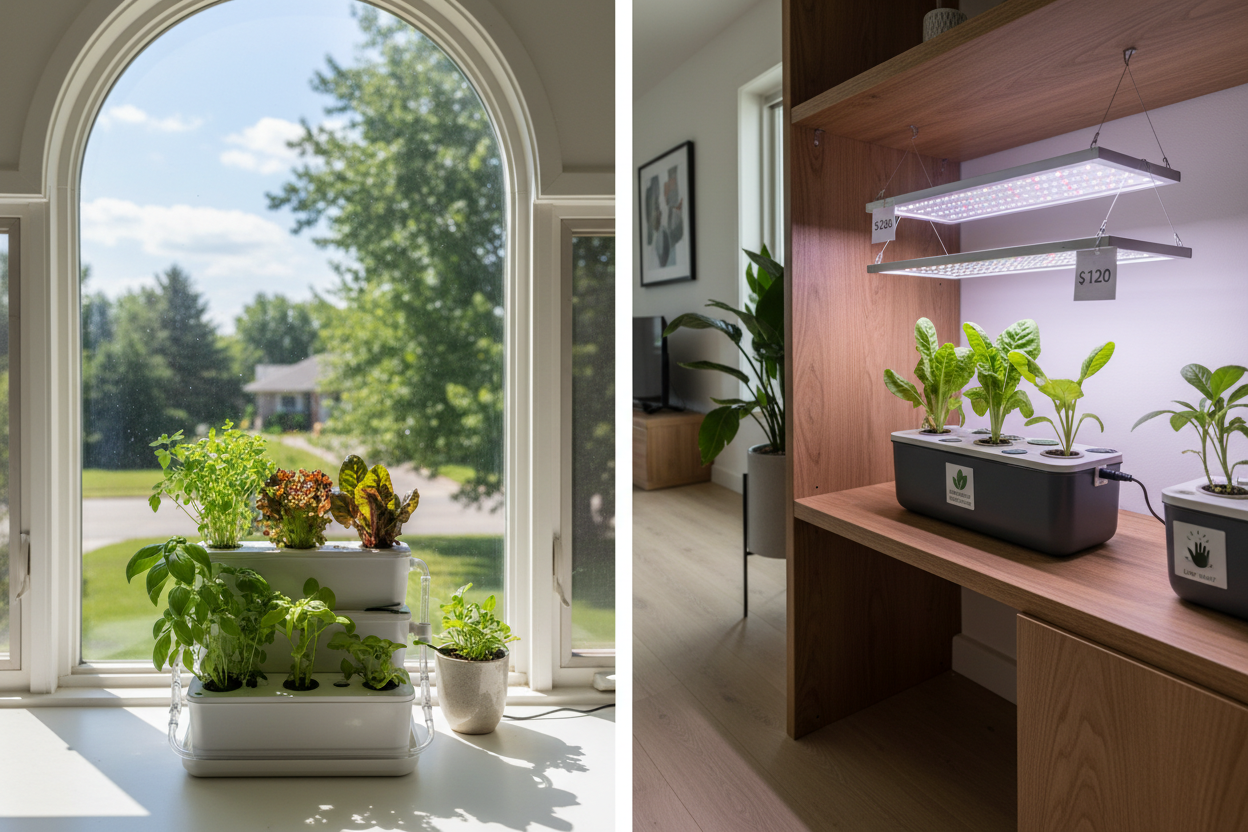
Natural sunlight eliminates lighting costs. South-facing windows provide adequate light for herbs and some leafy greens in most climates. Supplemental lighting extends growing seasons and improves yields.
LED grow lights dropped in price significantly in recent years. Budget full-spectrum LED panels producing 30 to 50 watts cost $25 to $40 and suit two to four small plants. These lights consume less electricity than older technologies while producing less heat, reducing cooling needs.
Fluorescent tube lights offer another budget option. T5 fluorescent fixtures with four tubes cost $60 to $100 and cover larger growing areas. The lights run cooler than high-intensity discharge options and plug into standard outlets without special wiring.
Light duration requirements vary by plant type. Leafy greens need 10 to 14 hours daily. Fruiting plants require 14 to 18 hours during vegetative growth and flowering. Timers automate light schedules and cost $8 to $15 for basic models.
Calculate electricity costs before committing to indoor growing. A 50-watt LED running 14 hours daily consumes about 0.7 kilowatt-hours per day. At $0.25 per kilowatt-hour, monthly costs reach $5 to $6 per light. Multiple lights and longer photoperiods increase expenses proportionally.
Starting Hydroponics with Forgiving Plant Varieties
Certain plants tolerate beginner mistakes and produce harvests quickly. Start with these varieties before attempting demanding species.
Lettuce
Lettuce grows rapidly in all hydroponic systems. Leaf lettuce reaches harvest size in four to six weeks. The plants handle pH swings and nutrient fluctuations better than sensitive varieties. Seed packets cost $3 to $5 and contain dozens of seeds.
Basil
Basil thrives hydroponically and produces continuously when harvested correctly. Pinch tops to encourage bushy growth and prevent flowering. Basil seeds germinate readily, and plants mature in six to eight weeks. Seeds cost $4 to $6 per packet.
Spinach
Spinach produces heavy yields in cool conditions. The crop suits fall and winter, growing in many climates. Harvest outer leaves while centres continue growing. Seed packets run $3 to $5.
Cherry Tomatoes
Cherry tomatoes adapt to bucket systems and smaller spaces better than full-size varieties. The plants produce fruit ten to twelve weeks from the seedling stage. Seeds cost $4 to $7 per packet with two dozen or more seeds.
Peppers
Peppers grow successfully in DWC and NFT systems once established. Start from seedlings rather than seed to reduce the time to harvest. Seedlings cost $3 to $6 at nurseries. Fruit appears ten to fourteen weeks after transplanting.
Where to Invest for Long-Term Value in a Hydroponic System
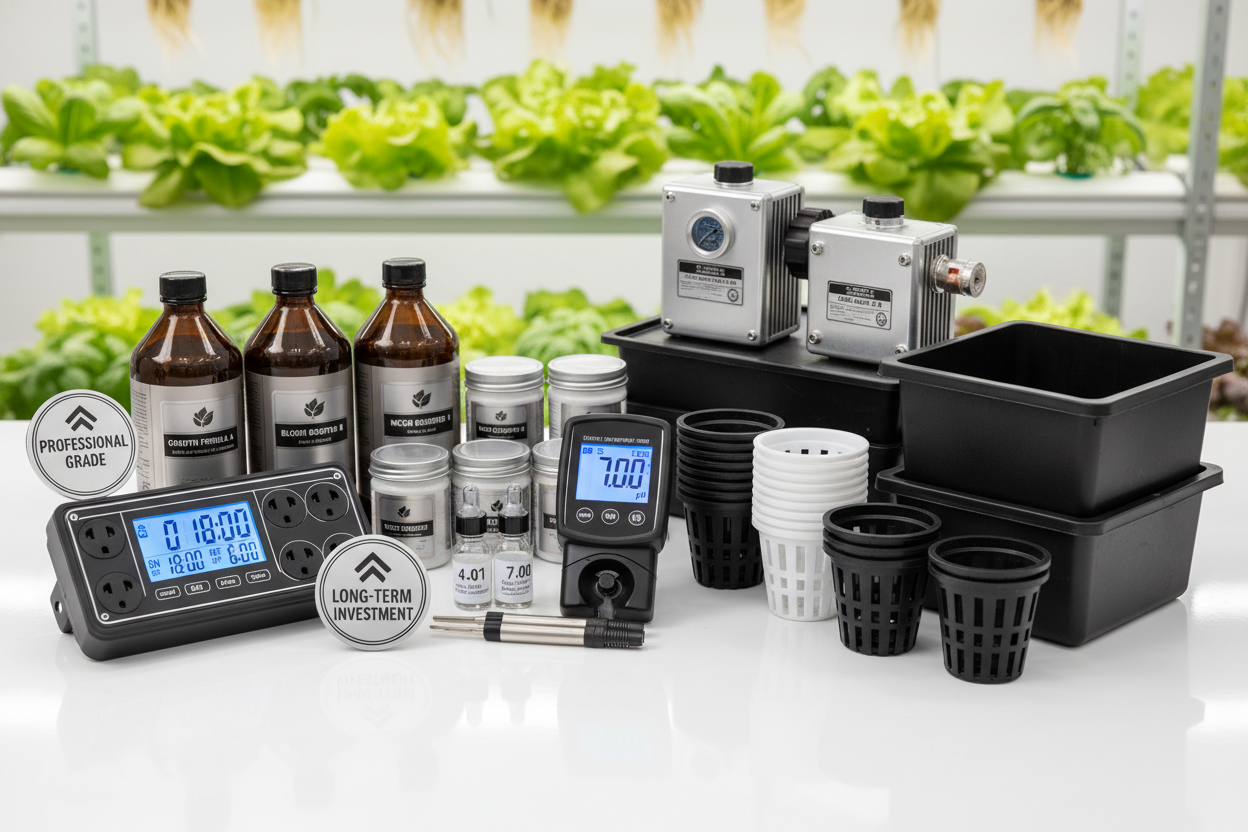
Certain components justify higher initial spending due to durability and performance impact. Prioritise these items when the budget allows.
Quality pH meters
It saves money through accuracy and longevity. Cheap meters drift rapidly and provide unreliable readings, leading to nutrient issues. Spend $50 to $80 on reputable brands. Calibrate monthly using buffer solutions and store probes properly between uses.
Reliable timers
They prevent system failures. Cheap mechanical timers stick or lose settings. Digital timers with battery backup cost $15 to $25 and maintain schedules during power interruptions. This protection prevents pump failures that kill roots within hours in some systems.
Professional Grade nutrition
Concentrated professional-grade nutrients deliver consistent results. Hobbyist-focused brands vary in formulation quality. Commercial greenhouse nutrients cost more initially but provide better value per litre of mixed solution. A $60 investment lasts six months to a year for small-scale operations.
Growing Containers
Proper growing containers resist degradation and light penetration. Food-grade plastics handle nutrients without leaching chemicals. Opaque materials prevent algae growth in reservoirs and channels. Spend slightly more for quality containers rather than replacing deteriorating cheap versions annually.
Good Grade Air Pumps
Air pumps in DWC systems need adequate capacity and durability. Underpowered pumps struggle to oxygenate the solution properly. Pumps rated at double the reservoir volume provide good performance. Quality aquarium pumps cost $25 to $40 but run continuously for years.
Hydroponics Maintenance Practices That Reduce Costs
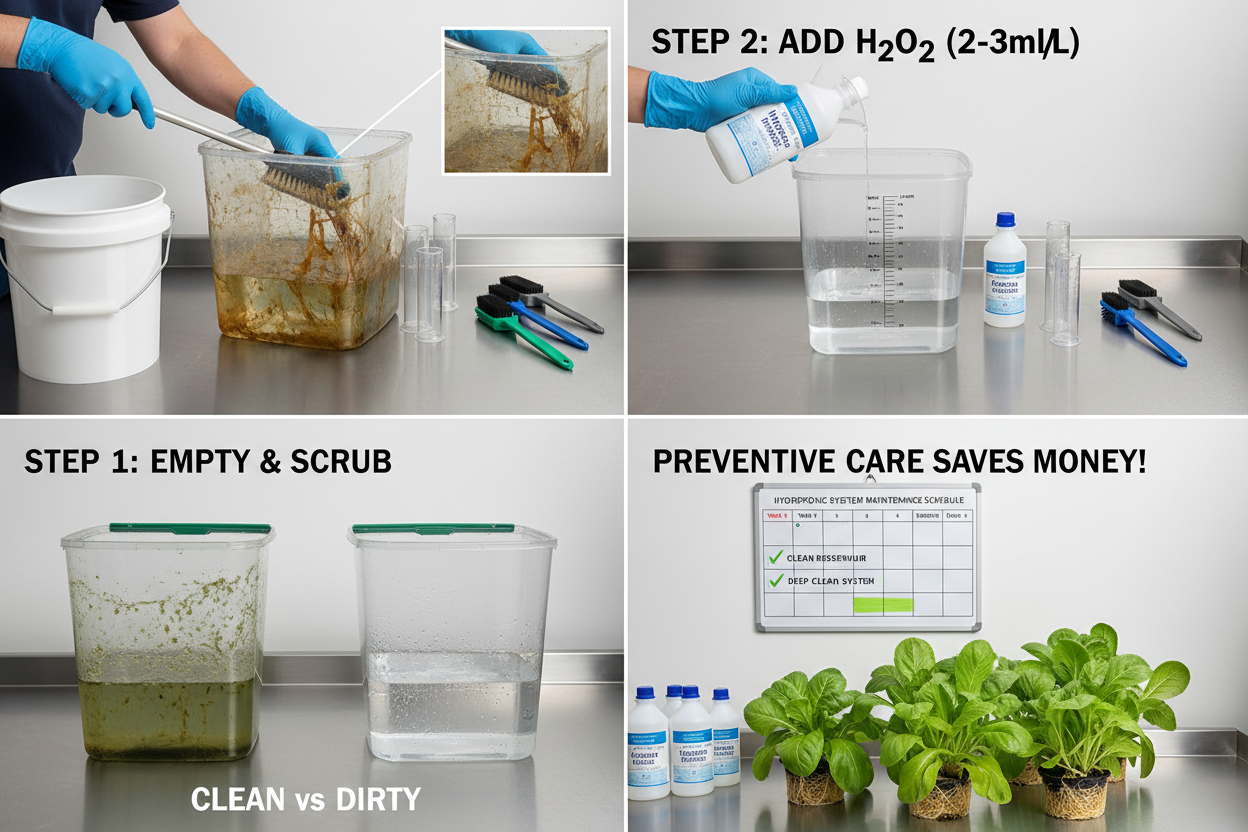
Preventive maintenance extends equipment life and avoids crop losses. Weekly reservoir cleaning removes biofilm buildup. Empty systems completely every two to three weeks for thorough scrubbing. Hydrogen peroxide at 3 per cent concentration kills pathogens without harming plants. Add 2 to 3 millilitres per litre of nutrient solution asa preventive measure.
Monitor plant health daily for early problem detection. Yellow leaves indicate nutrient deficiencies or pH issues. Wilting suggests root problems or pump failures. Catching issues early prevents complete crop losses requiring expensive restarts.
Clean growing medium between crops when using reusable types. Rinse expanded clay pebbles thoroughly, removing root debris and salt buildup. Soak in diluted hydrogen peroxide solution overnight, then rinse again before reuse. This preparation prevents pathogen transfer between crops.
Calibrate pH meters monthly using standard buffer solutions. The storage solution keeps probes hydrated, extending sensor life. Replace probes annually as they drift with age, regardless of maintenance quality.
Keep backup air stones and pump diaphragms for emergency replacements. Air stones clog over time, reducing oxygen delivery. Diaphragms in pumps wear out after months of continuous use. Having spares prevents system downtime during component failures.
Scaling Up Without Breaking Budget
Start with one or two plants in simple systems. Master nutrient management and environmental control before expanding. Each successful crop builds skill,s reducing waste in larger operations.
Modular system design allows incremental expansion. Add buckets to existing DWC setups by splitting air pumps. Extend NFT channels, adding more net pot holes. This approach spreads costs over time rather than requiring large upfront investments.
Propagate plants from cuttings rather than buying seeds or seedlings repeatedly. Basil, mint, and tomatoes root readily from stem cuttings placed in water or growing medium. This technique produces free plants for expansion or replacement.
Collect rainwater for nutrient solutions where water quality permits. Municipal water often contains chlorine or chloramine, requiring treatment or off-gassing. Rainwater needs only pH adjustment before adding nutrients. This practice reduces water costs in areas with expensive utilities.
Join local hydroponics or gardening groups. Members share excess equipment, seeds, and knowledge. Online marketplaces often list used hydroponic equipment at significant discounts. Inspect used pumps and lights thoroughly before purchasing to ensure functionality.
Common Budget Setup Mistakes
Undersizing reservoirs creates maintenance burdens and plant stress. Small containers require daily refilling in warm weather. Minimum reservoir volumes should equal 3 to 5 litres per plant for herbs and leafy greens, 10 to 15 litres for fruiting plants. Larger reservoirs buffer pH and nutrient fluctuations better.
Skipping pH testing leads to nutrient lockout, where plants cannot absorb available elements despite proper solution strength. Spend $10 to $15 on liquid test kits ata minimum. This investment prevents crop failures, costing far more in lost time and materials.
Using garden fertilisers instead of hydroponic nutrients causes deficiencies. Soil fertilisers lack trace elements and use different compound forms. True hydroponic nutrients contain chelated minerals immediately available to roots. The $30 to $50 for proper nutrients pays back through successful harvests.
Overcrowding plants reduces yields and increases disease risk. Follow spacing recommendations for varieties grown. Lettuce needs 15 to 20 centimetres between plants. Tomatoes require 30 to 40 centimetres. Proper spacing improves air circulation and light penetration, maximising production per plant.
Neglecting system cleaning allows biofilm and algae buildup. These organisms compete with plants for oxygen and nutrients while harbouring pathogens. Weekly wipe-downs and complete cleaning every few weeks maintain system health. Prevention costs nothing but time while treating problems requires expensive products.
Conclusion
Hydro Experts' budget systems have continued to serve hydroponics enthusiasts in Australia for a long time. Visit our website now and explore some budget options you can use to get started on your hydroponics journey.
FAQs
A single-plant Kratky system costs around $20–$30 including container, net pot, medium, and nutrients. Expanding to four to six plants in a shared reservoir costs $40–$60. A basic DWC system with an air pump starts at $30–$50 per plant and provides better long-term performance, especially for fruiting crops.
No. Garden fertilizers assume soil provides additional minerals and organic matter. Hydroponic nutrients contain all essential elements in immediately available forms. Using soil fertilizer causes deficiencies, slow growth, and poor yields. Expect to invest $30–$50 in proper hydroponic nutrients for consistent results.
Monthly costs are mainly electricity and nutrients. Air pump (5–10W): $1–$2/month. 50W LED (14 hrs/day): $5–$6/month. Nutrients for 6 plants: $10–$15/month. Total indoor cost: $15–$25/month. Outdoor systems without lighting cost as little as $5–$10/month.
Kratky offers the lowest startup cost and zero running expenses but limits scalability. DWC costs slightly more but supports more plant types and easy expansion. For most beginners, DWC provides the best balance of cost, simplicity, and performance. Start with one or two buckets and scale up as experience grows.
Safe to buy used: containers, channels, frames (clean thoroughly and inspect for cracks).
Buy new: pumps, timers, air stones, and pH meters. Used pumps may fail early, and used pH meters often require probe replacement, eliminating savings. Growing media and nutrients should always be new to avoid contamination.