

How to Build Space-Saving Hydroponic Garden Indoors Australia
By Hydro Experts | 6 February 2026
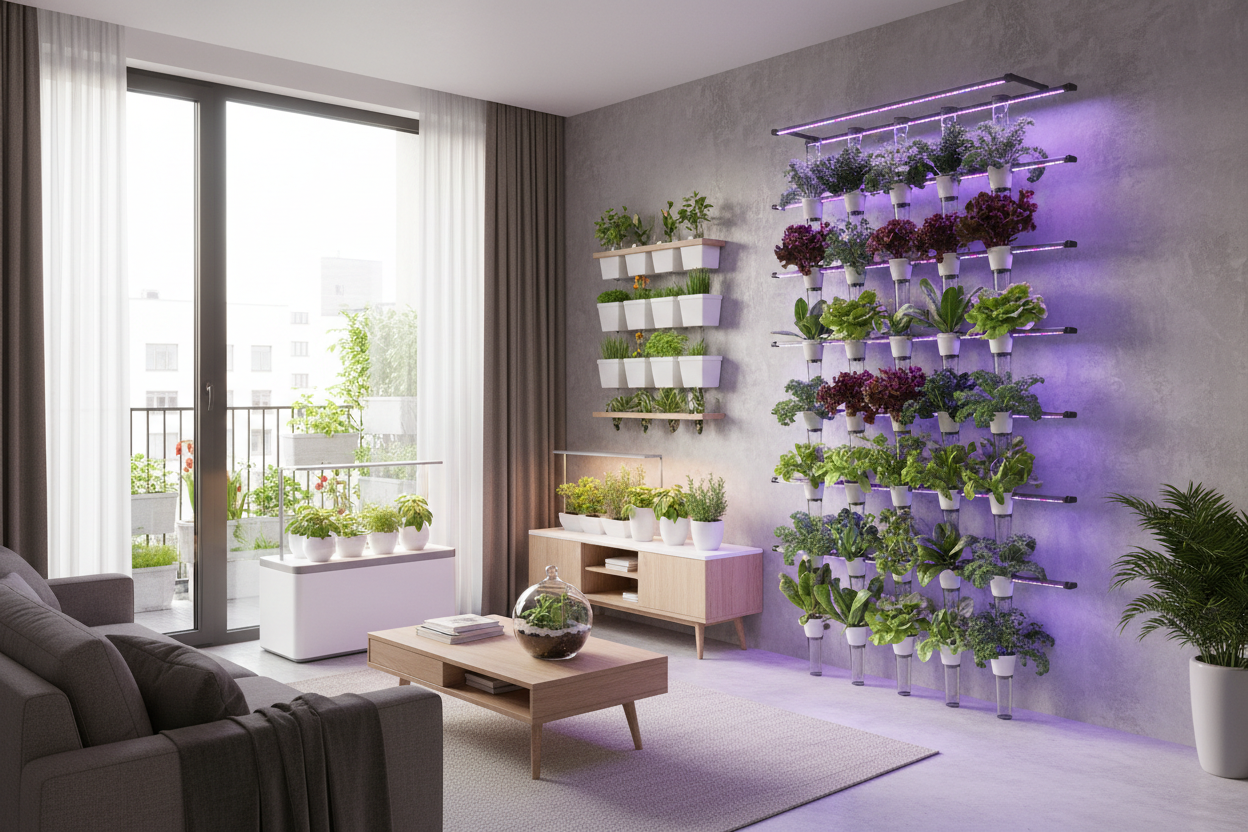
Indoor hydroponic systems produce fresh vegetables and herbs in apartments and small rooms without soil. Vertical configurations and compact designs maximise yield per square meter. Understanding system types and setup procedures enables successful gardening in limited spaces.
Advantages of Indoor Hydroponic Growing

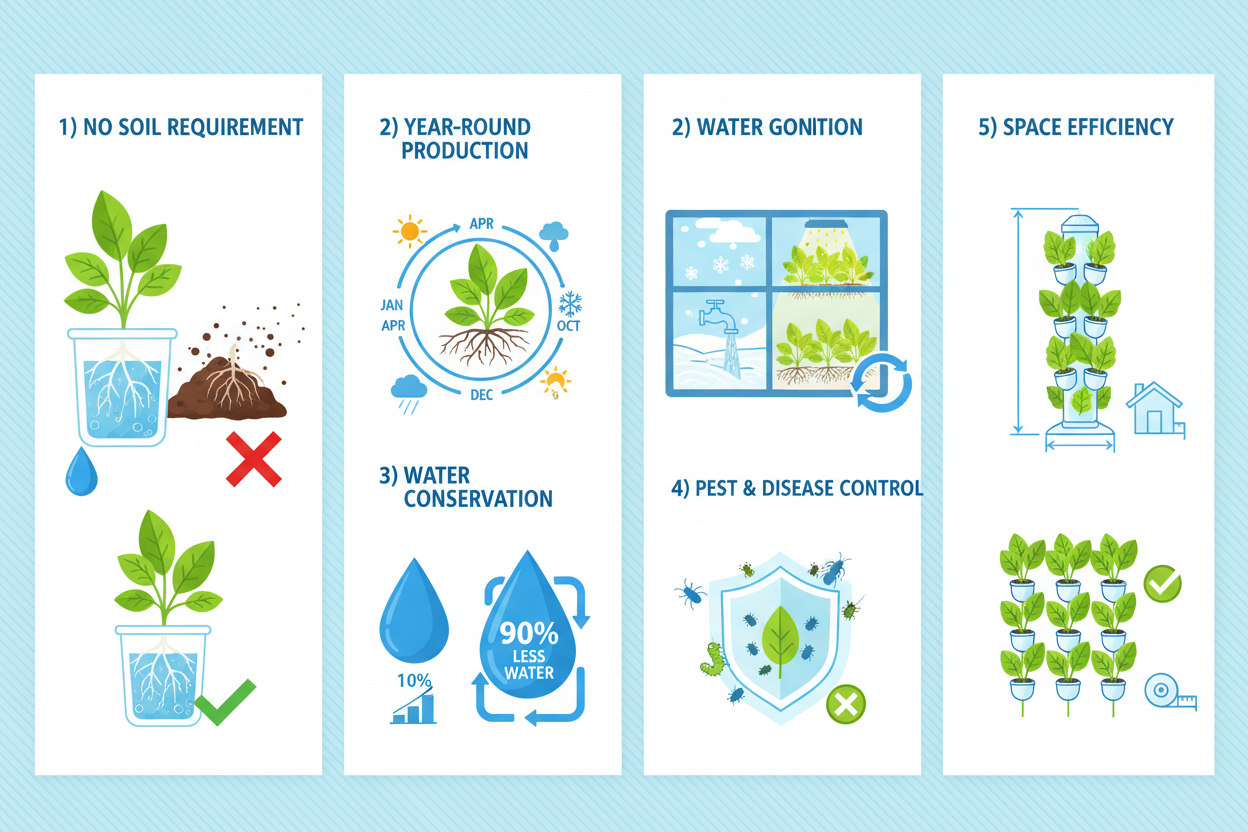
- Hydroponic systems eliminate soil requirements, reducing mess and weight in residential settings. Nutrient solutions replace traditional growing media. Water-based cultivation suits apartment environments where soil containers prove impractical or prohibited by lease agreements.
- Year-round production continues regardless of outdoor weather conditions. Climate control within homes maintains optimal growing temperatures. Artificial lighting provides consistent photoperiods. Seasonal limitations disappear,r allowing continuous harvests of preferred crops.
- Water consumption decreases compared to soil gardening. Recirculating systems reuse nutrient solutions minimizing waste. Evaporation represents primary water loss rather than soil absorption and drainage. Total water usage drops by 90% compared to equivalent soil gardens.
- Pest and disease pressure diminishes in controlled indoor environments. Soil-borne pathogens cannot establish without growing media. Insect access becomes restricted in sealed growing spaces. This reduction allows pesticide-free production of clean produce.
- Space efficiency increases through vertical growing and intensive planting. Multiple tiers stack within a single footprint. Root systems occupy minimal volume compared to soil equivalents. One square meter of vertical garden produces yields matching four square meters of traditional gardens.
Build a Space-Saving Hydroponic Garden Indoors
1. Vertical Growing System Design
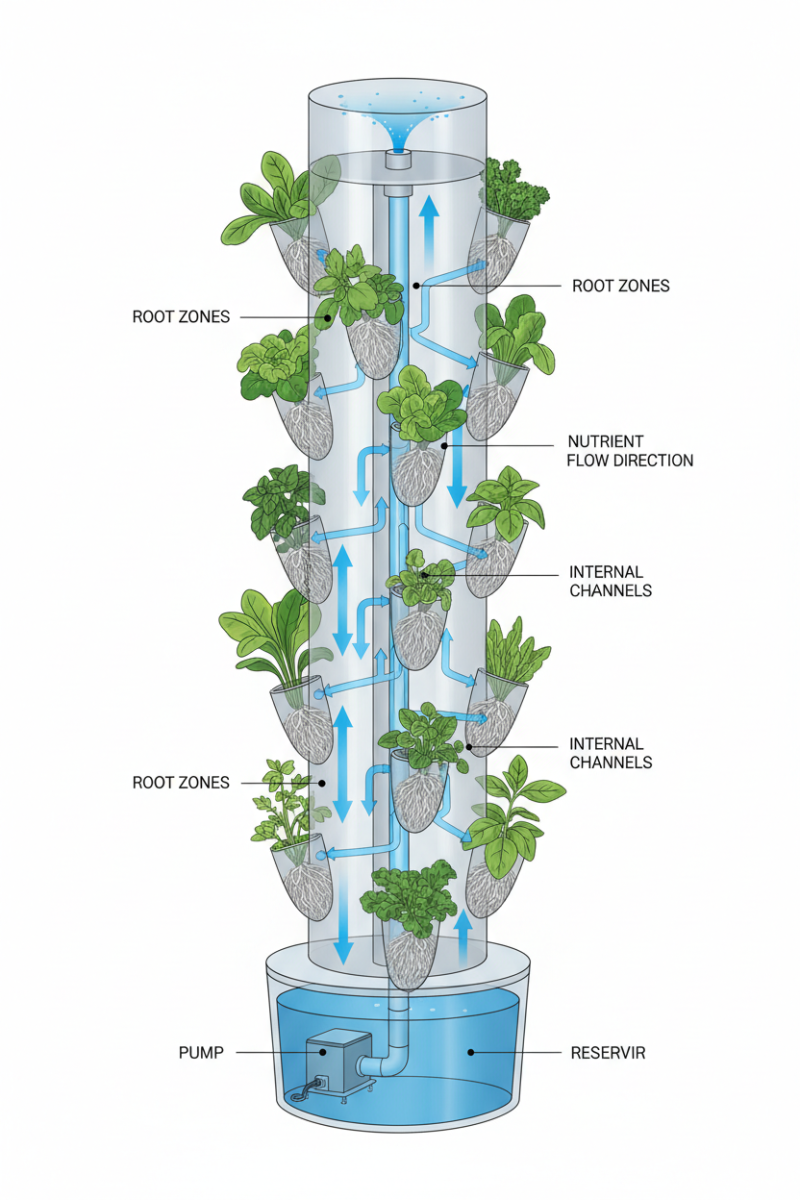
Tower systems stack growing sites in cylindrical columns. Plants are inserted into pockets along tower exteriors. Nutrient solution pumps to tower tops and cascades downward through internal channels. Roots access solution as it flows past growing sites before returning to reservoirs.
Tower footprints measure 30 to 50 centimeters diameter while reaching 150 to 200 centimeters height. Each tower accommodates 20 to 36 plants, depending on configuration. Spacing towers 60 centimetres apart allows maintenance access while maximising density.
Wall-mounted systems attach to vertical surfaces using bracket systems. Horizontal growing channels are mounted in stacked rows. Each channel holds multiple plants in net pots. Drip irrigation or nutrient film technique supplies water and nutrients to the roots.
Wall systems require a structural support capacity assessment before installation. Filled systems weigh 15 to 30 kilograms per meter of growing channel. Mounting to wall studs distributes loads safely. Moisture barriers protect walls from accidental leaks or condensation.
A-frame configurations position angled growing channels in triangular profiles. This freestanding design suits room centres or corners. Both sides of the channels accommodate plants doubling capacity compared to single-sided walls. Footprints range from 80 to 120 centimetres wide, depending on the angle.
Rotating systems spin vertical columns, exposing all plants to centralised lighting. Motors turn towers at slow rates, ensuring even light distribution. This design maximises space efficiency while simplifying lighting requirements. Single overhead fixtures serve entire rotating assemblies.
2. Compact Countertop Systems
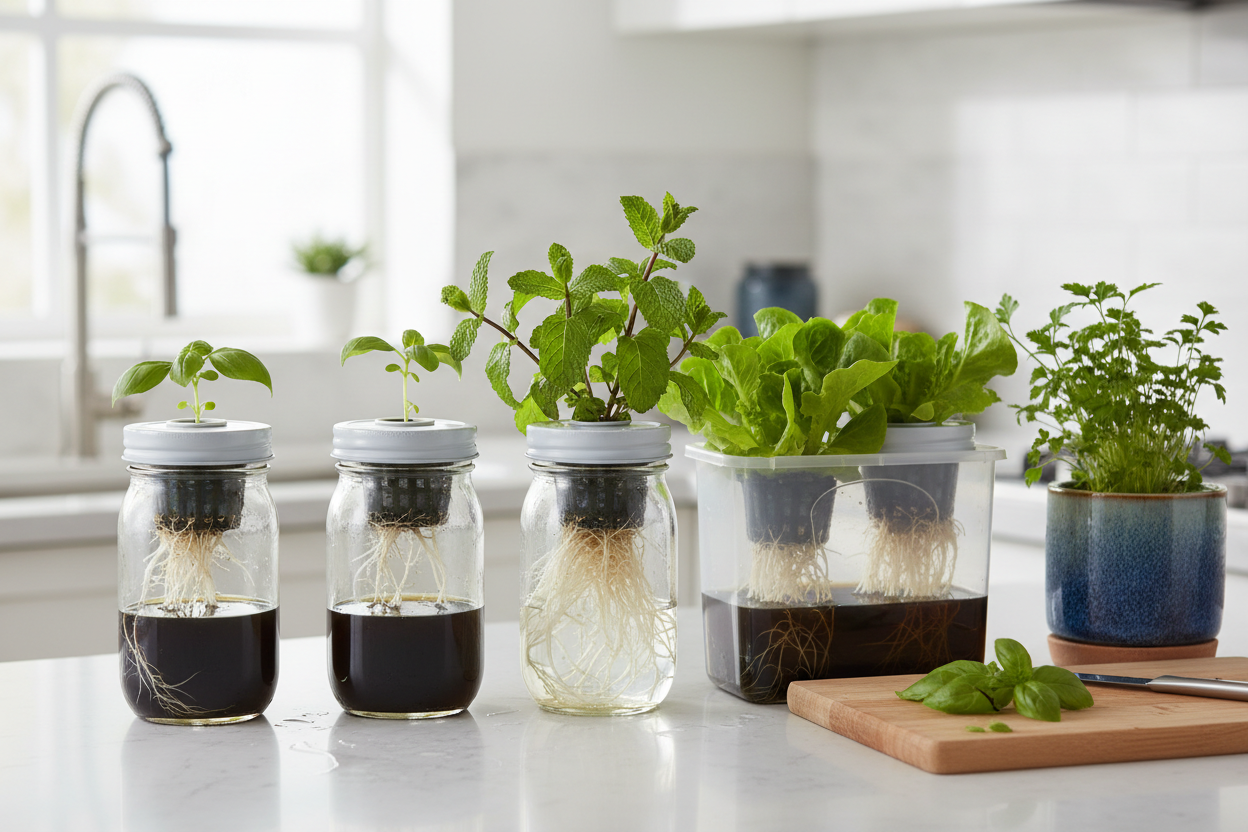
Kratky method containers provide the simplest hydroponic setups, requiring no pumps or electricity. Plants are suspended in net pots over nutrient solution reservoirs. Roots extend into the solution while air gaps prevent drowning. Solution levels drop as plants consume water, creating expanding air spaces.
Container selection includes food-grade plastic bins, mason jars, or purpose-built units. Opaque materials prevent algae growth in nutrient solutions. Lids accommodate net pot insertions while blocking light entry. Five-litre containers suit single large plants or multiple small herbs.
Deep water culture systems float plant rafts on aerated nutrient solutions. Air pumps supply oxygen to submerged roots, preventing anaerobic conditions. This active approach suits plants with higher oxygen demands than the Kratky methods accommodate.
Wick systems draw nutrient solution to roots through capillary action. Growing media in net pots contacts wicks extending into reservoirs. Cotton rope or felt strips function as wicks. This passive system requires no power but limits plant size and growth rates.
Countertop units occupy kitchen counter space measuring 30 by 60 centimetres. These compact gardens produce salad greens and herbs for immediate cooking use. Integrated LED lighting provides the necessary photosynthesis energy. Capacities range from 6 to 12 plants in single-tier configurations.
3. Nutrient Film Technique for Small Spaces
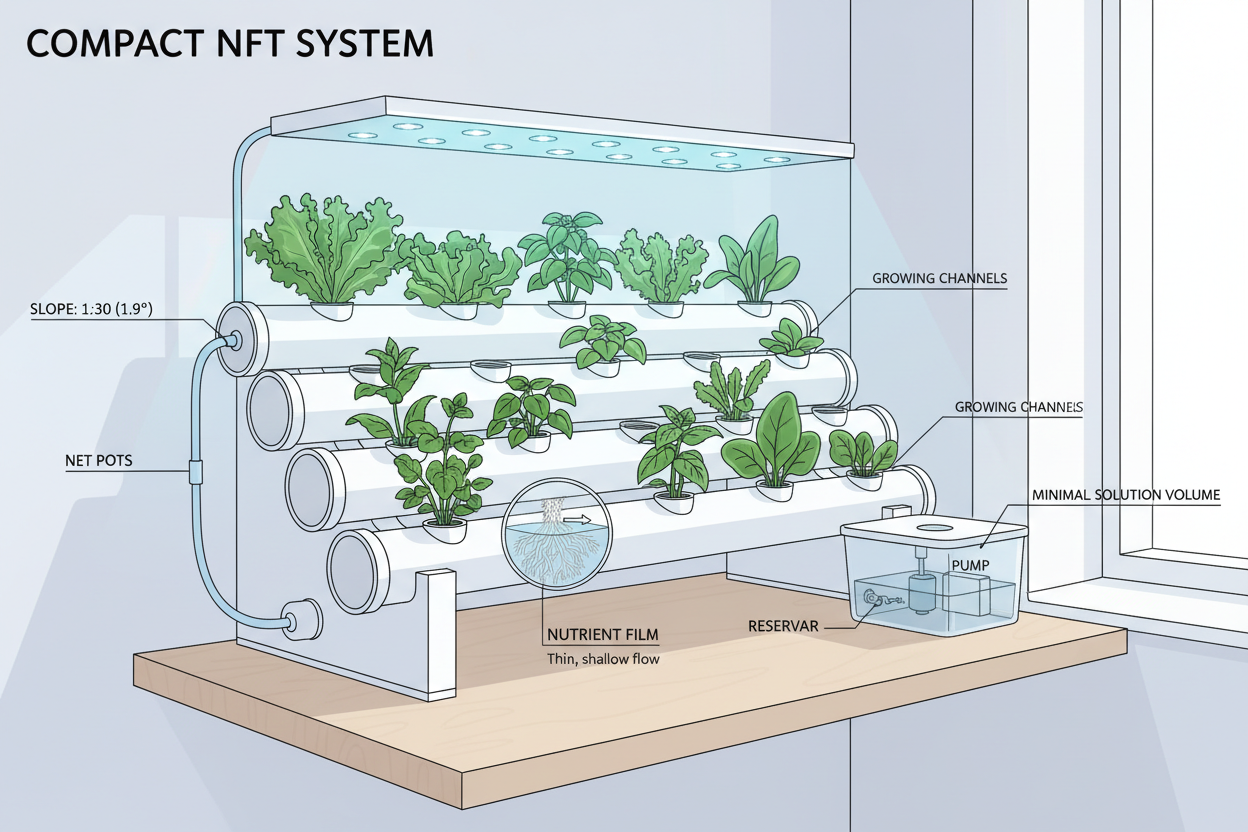
NFT systems circulate thin nutrient solution films through sloped channels. Plant roots rest in channels, contacting the flowing solution. Excess solution returns to reservoirs for recirculation. Minimal solution volumes reduce system weight and reservoir size.
Channel construction uses PVC pipe or purpose-built profiles. Holes cut at regular intervals accommodate net pot insertions. Slopes between 1:30 and 1:40 ratios maintain flow without excessive velocity. Channel lengths up to 3 meters function effectively before flow rates diminish.
Pump selection determines flow rates and system capacity. Submersible pumps rated for 300 to 600 litres per hour suit residential NFT systems. Adjustable flow valves fine-tune delivery rates. Backup pumps prevent crop loss during primary pump failures.
Channel stacking creates vertical NFT gardens. Multiple channels are mounted in tiered arrangements, sharing single reservoirs and pumps. Manifold distribution splits the flow between channels. Return lines consolidate drainage back to reservoirs.
Timer controls cycle pumps, maintaining consistent root moisture. A fifteen-minute operation followed by a fifteen-minute rest prevents solution stagnation while conserving energy. Continuous operation suits some crop types, while intervals work for others.
4. Lighting Requirements and Solutions
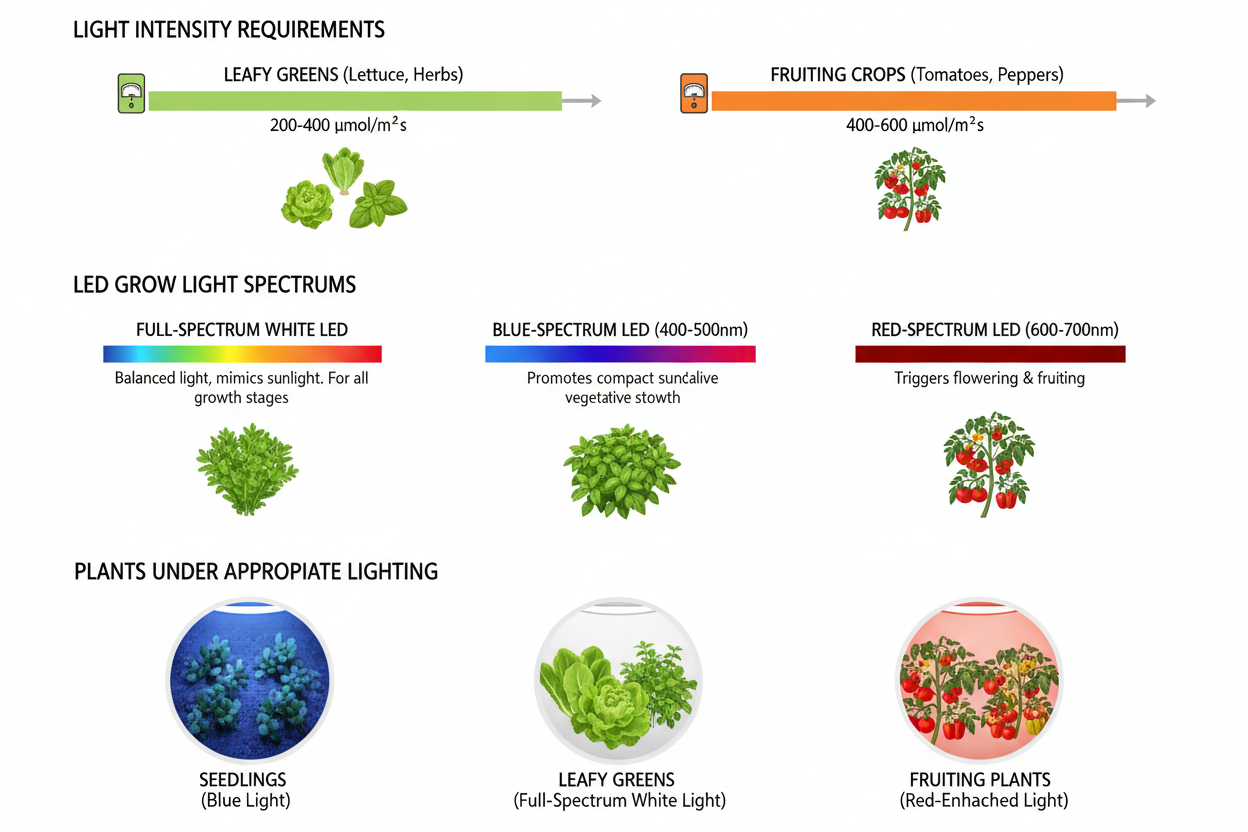
Light intensity determines growth rates and crop quality. Leafy greens require 200 to 400 micromoles per square meter per second. Fruiting crops, including tomatoes and peppers, need 400 to 600 micromoles. LED grow lights deliver targeted spectrums at these intensities.
Full-spectrum white LEDs mimic natural sunlight, supporting all growth stages. Blue wavelengths promote vegetative growth and compact structure. Red wavelengths trigger flowering and fruiting. Adjustable spectrum fixtures allow customisation for specific crops and growth phases.
Fixture positioning maintains recommended distances from plant canopies. High-intensity lights mount 30 to 60 centimetres above plants. Lower-output fixtures are positioned closer at 15 to 30 centimetres. Adjustable hanging systems accommodate plant growth, raising fixtures as needed.
Photoperiod timers automate daily light cycles. Leafy greens thrive under 12 to 16-hour days. Fruiting crops often require 14 to 18 hours. Consistent timing prevents stress from irregular schedules. Digital timers provide precise control.
Heat generation from lightning affects room temperatures. LED efficiency minimises thermal output compared to older technologies. Adequate ventilation removes excess heat. Temperature monitoring ensures growing zones remain within optimal ranges of 18 to 26 degrees Celsius.
5. Nutrient Solution Management
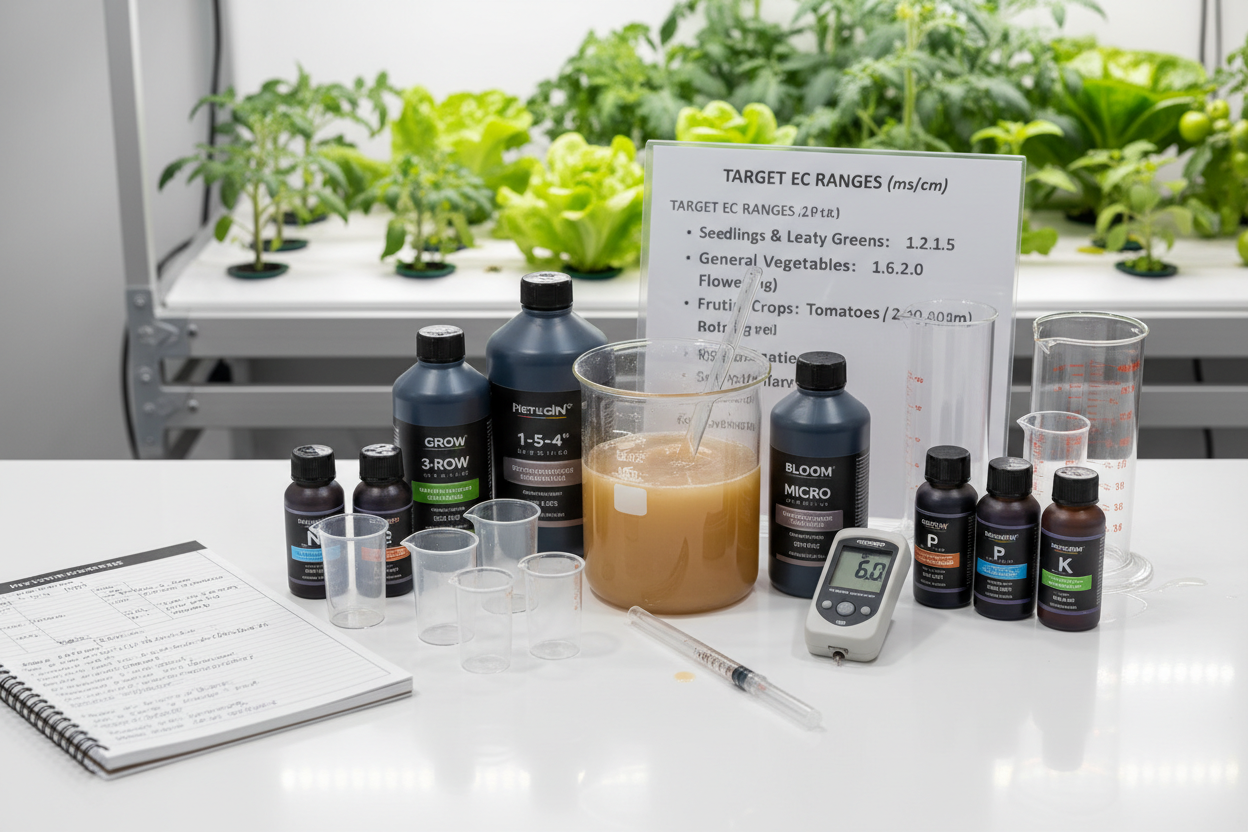
Hydroponic nutrients provide essential minerals in water-soluble forms. Commercial formulations contain nitrogen, phosphorus, potassium, and micronutrients. Two or three-part solutions mix in specific ratios depending on crop type and growth stage.
Electrical conductivity meters measure total dissolved solids, indicating nutrient concentration. Target EC values range from 1.2 to 2.5 millisiemens per centimeter depending on crops. Lettuce prefers lower concentrations, while tomatoes tolerate higher levels. Monitoring prevents deficiencies and toxicities.
PH levels affect nutrient availability to plant roots. Optimal ranges span 5.5 to 6.5 for most crops. PH meters provide accurate measurements. Adjustment solutions raise or lower pH, bringing solutions into target ranges. Daily monitoring maintains stability.
Reservoir changes occur every two to four weeks,s depending on crop consumption and system size. Complete solution replacement prevents imbalanced nutrient ratios from selective plant uptake. Fresh solutions restore optimal conditions. Recording change dates maintains consistent schedules.
Water quality influences nutrient solution preparation. Municipal water supplies vary in mineral content and pH. Water testing identifies baseline parameters. Filtration removes chlorine and chloramine harmful to beneficial microorganisms in some growing methods.
6. Crop Selection for Small Systems
Leafy greens, including lettuce, spinach, and kale, grow rapidly in compact systems. Harvest occurs 30 to 45 days after germination. Shallow root systems suit NFT and wick methods. Multiple succession plantings provide continuous harvests.
Herbs, including basil, cilantro, mint, and parsley, thrive hydroponically. Compact growth habits fit small spaces. Frequent harvesting encourages bushy development. Single plants produce sufficient quantities for regular cooking use.
Strawberries adapt well to vertical tower systems. Runners cascade decoratively while producing fruit. Varieties selected for day-neutral flowering fruit year-round under controlled lighting. Each plant yields 200 to 500 grams annually.
Cherry tomatoes grow in larger hydroponic systems with adequate support structures. Determinate varieties suit space-limited applications. Pruning maintains manageable sizes. Production begins 60 to 80 days after transplanting, continuing for months.
Peppers, including sweet and hot varieties produce in deep water culture systems. Compact cultivars reach 40 to 60 centimeters height. Fruiting requires higher light intensities and longer photoperiods than leafy crops. Yields reach 10 to 20 fruits per plant.
7. Building a Basic Vertical Tower
Material requirements include 100mm PVC pipe, end caps, submersible pump, reservoir container, and growing media. Five-litre buckets serve as reservoirs. Two-meter pipe lengths create towers accommodating 20 planting sites. Net pots insert into drilled holes.
Hole drilling occurs at 10-centimetre vertical spacing in staggered spiral patterns. Hole saws matching net pot diameters ensure proper fit. Deburring smooths rough edges, preventing root damage. Test-fitting pots before assembly confirms sizing.
Internal irrigation lines run from tower bases to the tops. Rigid tubing or flexible hose delivers nutrient solution. Distribution manifolds at tower peaks spread the solution evenly. Gravity returns solution to reservoirs through tower interiors.
Pump sizing accommodates vertical lift requirements. Pumps must overcome height plus friction losses. Units rated for 1-meter head at required flow rates suit most towers. Inline valves regulate flow, preventing overflow.
Assembly begins with base cap installation. Irrigation lines thread through before securing top caps. Mounting brackets attach towers to walls or stands, ensuring stability. Reservoir connections complete plumbing loops.
Testing involves filling systems with water and operating pumps. Checking for leaks prevents damage to floors and furnishings. Flow adjustments ensure even distribution to all planting sites. Corrections occur before introducing plants.
8. Seed Starting and Transplanting
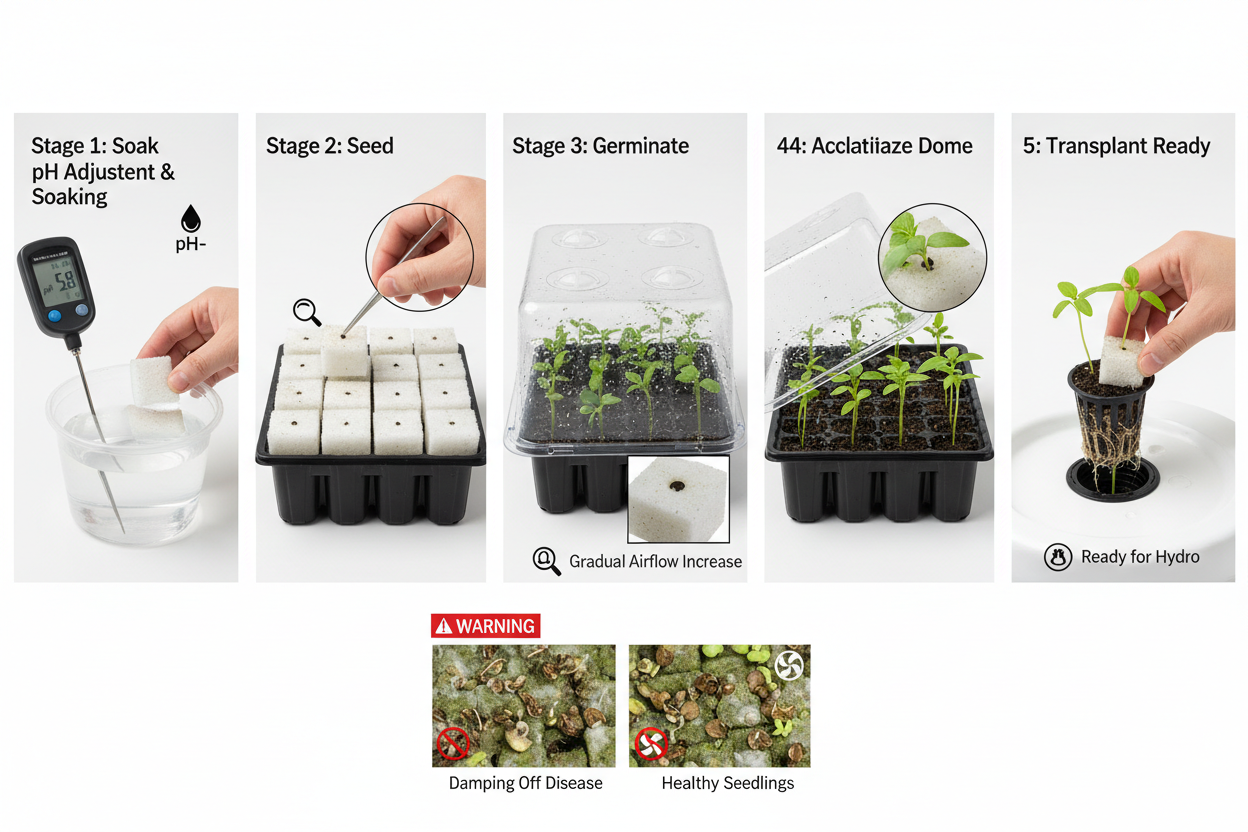
Rockwool cubes provide sterile starting media for hydroponic seeds. One-inch cubes accommodate single seeds. Soaking cubes in pH-adjusted water prepares them for planting. Maintaining moisture without saturation encourages germination.
Humidity domes cover seed trays, retaining moisture during germination. Ventilation openings prevent excessive humidity, causing damping off. Removing domes after sprouting acclimates seedlings to ambient conditions.
Germination lighting uses lower intensities than mature plants require. Compact fluorescent or LED fixtures positioned close to trays prevent stretching. Sixteen-hour photoperiods accelerate early development.
Transplanting occurs when seedlings develop two to four true leaves. Root systems should fill cubes without circling. Transferring to net pots positions roots for solution contact. Supporting media, including expanded clay or coconut coir stabilizes plants.
Acclimation periods allow transplants to adjust to final growing conditions. Gradual light intensity increases prevent shock. Monitoring the first week's growth identifies transplant stress requiring intervention.
Indoor Hydroponic Garden Climate Control in Growing Spaces
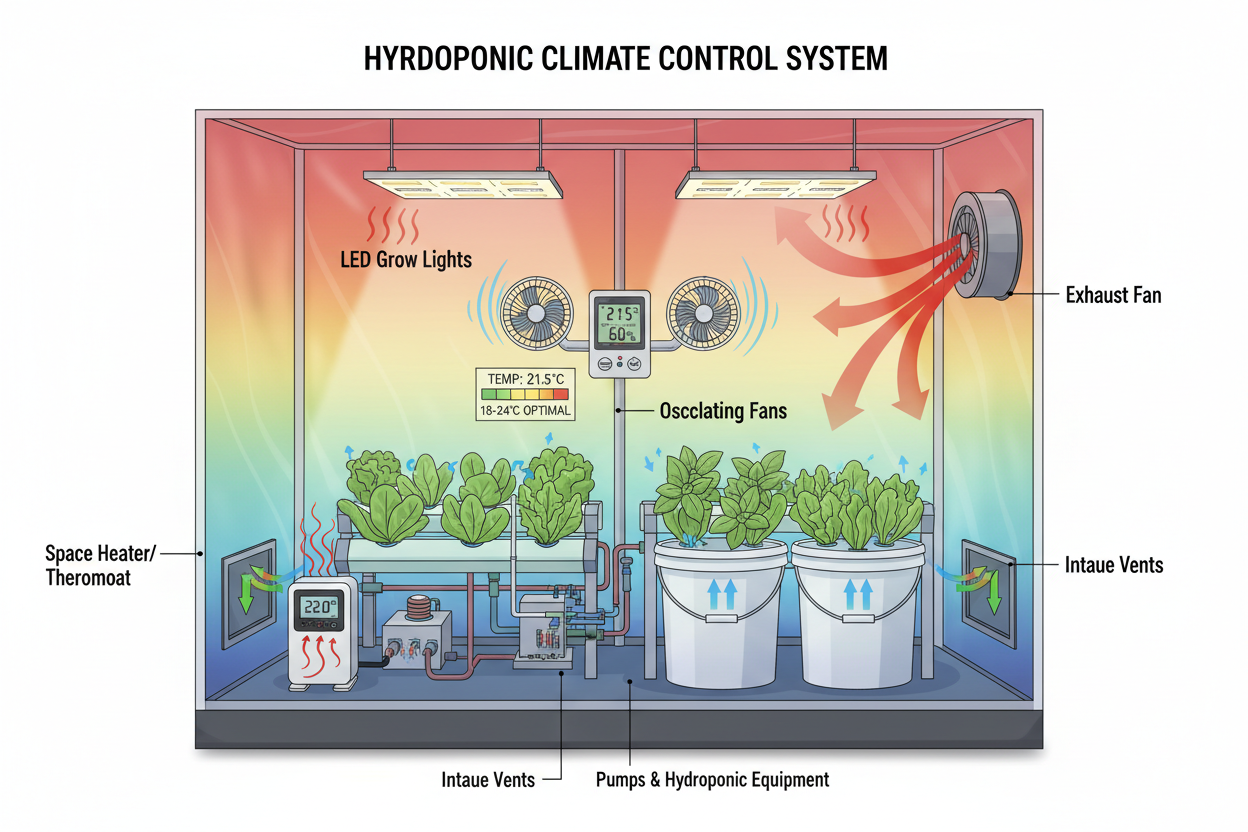
Temperature management maintains optimal growth ranges. Heating may prove necessary in cooler months despite indoor locations. Small space heaters supplement ambient temperatures. Thermostats automate control, preventing temperature swings.
Cooling addresses excess heat from lighting and pumps. Air circulation using oscillating fans distributes temperatures evenly. Exhaust fans remove hot air when temperatures exceed thresholds. Intake vents supply fresh air, completing ventilation cycles.
Humidity control prevents mould and mildew in enclosed growing areas. Dehumidifiers extract excess moisture when levels exceed 60%. Adequate air movement reduces localised humidity around plant canopies. Monitoring with hygrometers identifies problem periods.
Carbon dioxide supplementation accelerates growth in sealed environments. Plants consume CO2 during photosynthesis, depleting enclosed spaces. Supplemental CO2 maintains atmospheric levels or enriches to 1000-1200 ppm. Tanks with regulators provide controlled release.
Air circulation fans prevent stagnant zones and strengthen stems. Continuous gentle airflow mimics outdoor breezes. Oscillation ensures all plants receive movement benefits. Avoiding direct high-velocity airflow prevents physical damage.
Maintenance Routines and Monitoring for Indoors Hydroponic Garden
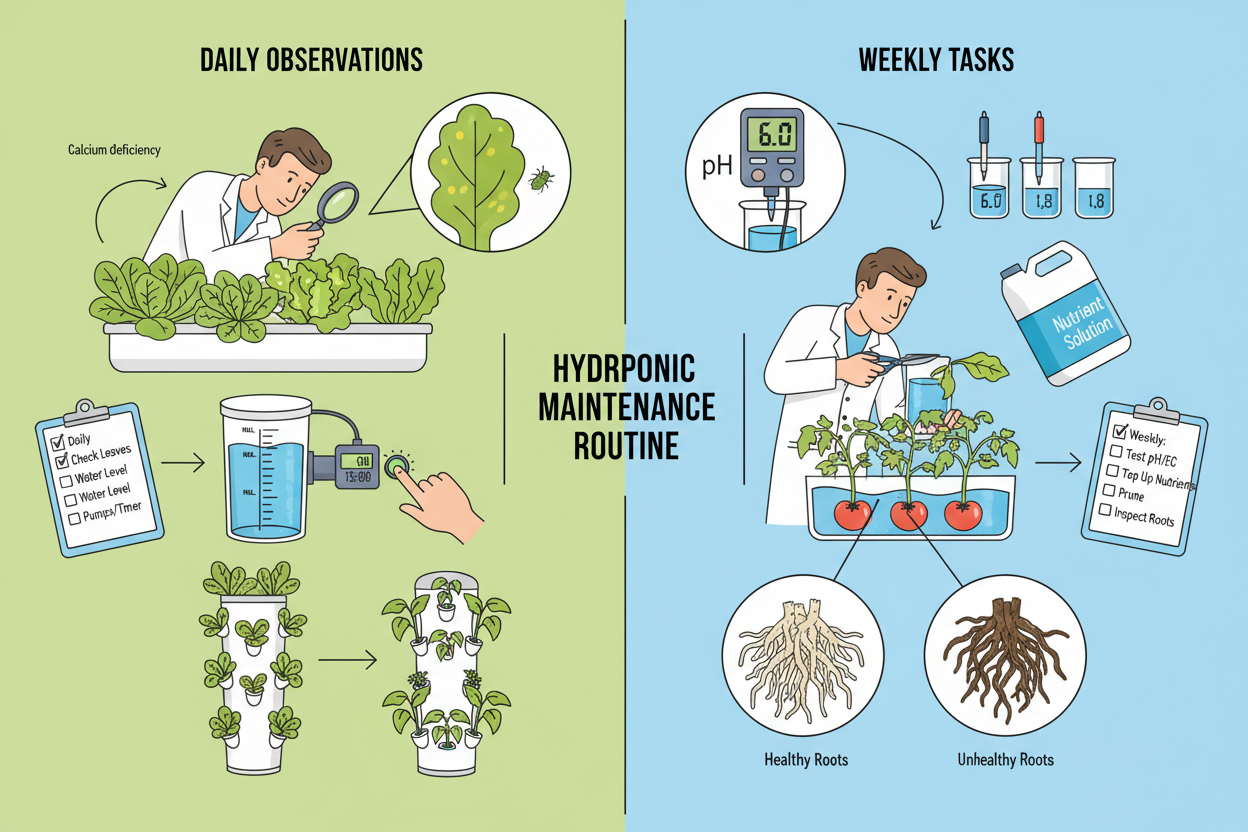
Daily observations identify developing issues before they escalate. Checking plant appearance reveals nutrient deficiencies, pest presence, or disease symptoms. Solution levels indicate consumption rates. Equipment operation confirms that pumps and timers function correctly.
Weekly tasks include pH and EC testing with adjustments as needed. Topping reservoirs maintains solution volumes. Pruning removes dead leaves and manages plant size. Inspecting roots reveals health status and potential problems.
Biweekly cleaning prevents algae accumulation and biofilm formation. Scrubbing reservoirs and channels removes buildup. Sterilising equipment between crop cycles eliminates pathogens. Hydrogen peroxide solutions sanitise without toxic residues.
Monthly deep maintenance includes inspecting pumps for wear, checking tubing for blockages, and testing backup systems. Replacing worn components prevents failures during crop cycles. Calibrating meters ensures accurate readings.
Record keeping tracks planting dates, variety performance, and harvest quantities. Notes on problems and solutions guide future growth decisions. Yield documentation demonstrates system productivity, justifying space allocation.
Hydro Experts Product Integration for Indoor Garden
Hydro Experts Australia supplies complete vertical garden kits, eliminating component sourcing challenges. Pre-designed systems include towers, pumps, nutrients, and growing media. Assembly instructions guide setup, reducing trial and error.
Modular expansion kits add capacity to existing systems. Additional towers integrate with current reservoirs and pumps when capacity allows. Stacking multiple tiers maximises vertical space utilisation in high-ceiling rooms.
Custom consultation services design systems for specific spaces. Hydro Experts technicians assess room dimensions, lighting, and growing goals. Tailored recommendations optimise layouts and component selection.
Quality components ensure reliable long-term operation. Commercial-grade pumps outlast consumer alternatives. Food-safe materials throughout contact surfaces maintain produce safety. Australian standards compliance guarantees product safety.
Support continues post-purchase through technical assistance. Growing guides specific to system types help beginners succeed. Troubleshooting resources address common issues. Replacement parts availability maintains systems over years of operation.
Budget Considerations and Cost Analysis for Indoor Hydroponics
Initial investment varies with system complexity and size. Basic Kratky setups cost under $50 for DIY builds. Mid-range NFT systems run $200 to $500. Complete vertical tower installations reach $800 to $1,500.
Operating costs include electricity for lighting and pumps, nutrients, and water. Monthly expenses typically total $20 to $50, depending on system size. LED efficiency minimises power consumption. Nutrient concentrates last months, reducing per-use costs.
Produce value calculation,s compare homegrown yields to retail prices. Lettuce production at 50 heads annually saves $200 to $300. Herb yields worth $400 to $600 displace grocery purchases. Payback periods range from 6 to 18 months.
DIY construction reduces costs significantly compared to commercial systems. Sourcing components individually allows budget allocation. Plans available online guide construction. Salvaged material,s including containers and tubing, decreases expenses further.
Long-term savings accumulate through repeated growing cycles. Perennial crops, including herbs, continue producing for years. System longevity spreads initial investment across extended periods. Avoiding grocery trips saves time valued beyond monetary calculations.
Common Mistakes and Solutions with Indoor Hydroponics
- Overfeeding plants causes nutrient toxicity and buildup. Starting with half-strength solutions prevents burning. Gradual increases based on plant response optimise concentrations. Flushing systems with fresh water corrects excess accumulation.
- Inadequate lighting produces leggy stretching and poor yields. Measuring actual light intensity with meters confirms adequacy. Upgrading fixtures or reducing plant quantities matches light to capacity. Reflective surfaces maximise available light utilisation.
- Neglecting pH monitoring allows drift outside optimal ranges. Daily testing during the initial weeks establishes adjustment patterns. Automated pH controllers maintain stability in larger systems. Buffer solutions calibrate meters, ensuring accuracy.
- Poor air circulation encourages fungal diseases and weak stems. Adding fans improves airflow throughout canopies. Spacing plants prevents overcrowding. Pruning enhances air penetration to interior leaves.
- Ignoring reservoir temperatures affects oxygen availability and pathogen growth. Warm solutions above 25 degrees Celsius hold less dissolved oxygen. Chilling reservoirs or adding air stones compensates. Beneficial bacteria products suppress root pathogens.
Conclusion
Hydro Experts Australia offers beginner-friendly vertical hydroponic kits with full instructions. These systems include all essential components and are designed for efficient indoor growing. Expert guidance helps match the right system to your space and growing goals.
FAQs
Indoor hydroponic systems are highly space-efficient. Vertical systems can function in as little as 0.5 square metres of floor space. Countertop gardens fit on standard kitchen benches, while wall-mounted systems maximise vertical space without using the floor. Measuring your available area helps determine the most suitable system type.
Fast-growing crops are ideal for compact systems:
- Lettuce and leafy greens: 30–45 days
- Herbs like basil and coriander: 4–6 weeks
- Radishes: 25–30 days
These short cycles allow multiple harvests per year from a single setup.
Properly maintained hydroponic systems rarely attract pests. Eliminating soil removes fungus gnat breeding grounds. Indoor environments limit insect access, and sticky traps help monitor any activity. Clean growing practices prevent infestations before they start.
Yes. LED grow lights fully replace sunlight for indoor hydroponic gardens. Full-spectrum LEDs deliver the wavelengths plants need for photosynthesis. Many systems operate successfully in windowless rooms, basements, and closets using artificial lighting alone.
Hydro Experts Australia offers beginner-friendly vertical hydroponic kits with full instructions. These systems include all essential components and are designed for efficient indoor growing. Expert guidance helps match the right system to your space and growing goals.