

Best Hydroponic System for Travelers or Low-Maintenance Growers
By Hydro Experts | 30 September 2026
Away often? Compare AutoPot, drip, DWC and NFT to find the best low-maintenance hydroponic system, plus reservoir, timer and pre-trip tips. Shop at Hydro Experts Australia.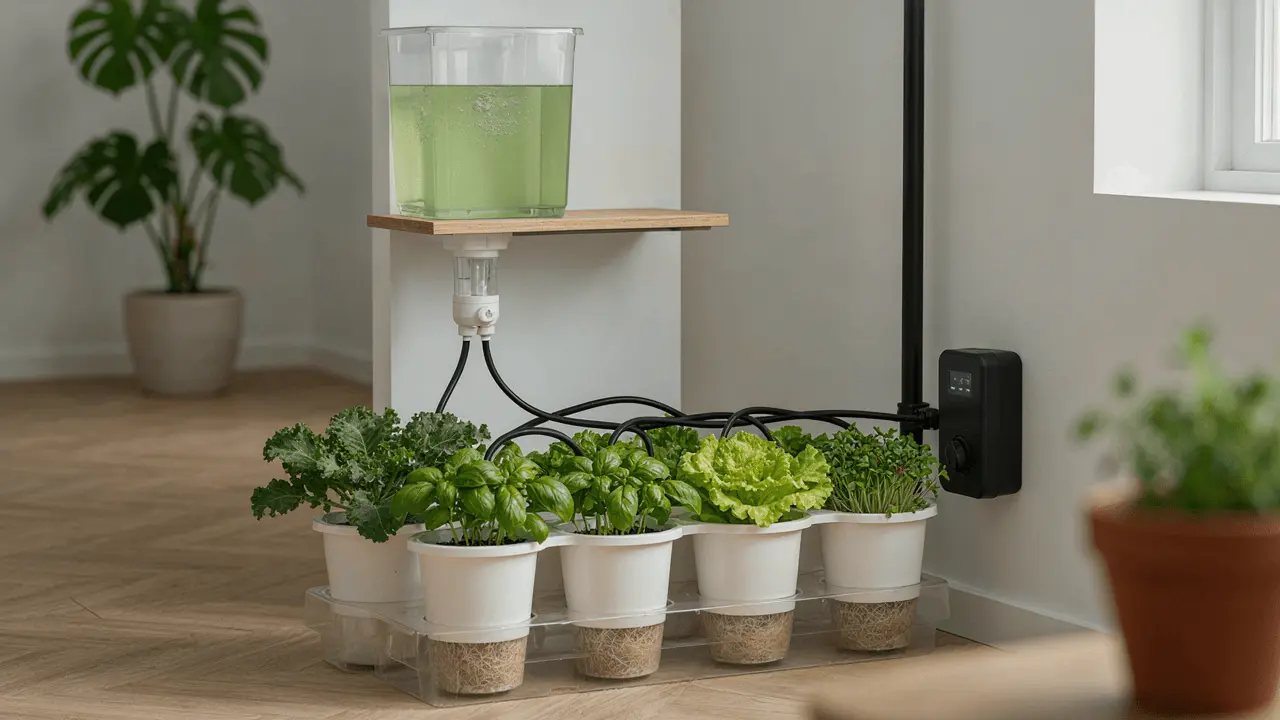
Hydroponics can make growing plants easier, but not every hydroponic system is equally convenient for people who travel frequently or have limited time for daily maintenance. Some systems require regular checks of water levels, pumps, nutrient solution, and growing conditions, while others can automate much of the watering process.
If you are away from home for several days at a time, the right setup can make a significant difference. A system with a good-sized reservoir, reliable water delivery, and minimal moving parts can keep plants supplied while reducing the amount of daily attention they need.
So, what is the best hydroponic system for travelers or low-maintenance growers?
For many growers, a gravity-fed or self-watering system such as AutoPot is worth considering because it can deliver water and nutrients to plants without requiring a conventional irrigation pump. Other options, including drip systems with timers and automated systems, can also work well depending on the plants and the length of time you are away.
Quick Insights: Best Hydroponic System for Travelers
The best hydroponic system for travelers and low-maintenance growers is one that provides reliable water delivery, has sufficient reservoir capacity, and requires minimal daily intervention. AutoPot is a particularly practical option because its gravity-fed SmartValve system automatically regulates water supply without requiring a conventional irrigation pump.
- AutoPot is a strong choice for travelers: Its gravity-fed SmartValve system regulates water delivery based on plant consumption, reducing daily watering and dependence on electric pumps.
- Choose a system with a suitable reservoir: Larger water capacity can extend the time between refills. The right size depends on plant numbers, growth stage, water consumption, and environmental conditions.
- Drip systems with timers offer flexible automation: They can automate irrigation intervals and reduce manual watering, provided the timer, tubing, and water supply operate reliably.
- DWC and NFT require more monitoring: DWC depends on adequate water conditions and aeration, while NFT relies on consistent nutrient circulation and pump operation.
- Consider power failure risks: Pump-based systems can stop delivering water or oxygen during an outage. Gravity-fed systems can reduce some of this electrical dependence, although other growing equipment may still need power.
- Prepare your system before travelling: Fill the reservoir, check pH and EC, inspect pumps and tubing, test timers, and run the complete setup for several days before leaving.
- Automation does not eliminate maintenance: Nutrient levels, water quality, reservoir cleanliness, plant health, and equipment performance still need regular attention.
What Makes a Hydroponic System Low Maintenance?
A low-maintenance hydroponic system should reduce the number of tasks you need to perform every day.
The most useful features include:
- A larger nutrient reservoir
- Automatic or self-regulating watering
- Timers for pumps or irrigation
- Reliable tubing and fittings
- Easy access for refilling and cleaning
- Stable nutrient delivery
- Fewer components that can fail
A larger reservoir gives plants access to water for longer before it needs to be refilled. Automation can then handle watering according to the system's design rather than relying on you to manually water each plant.
Hydro Experts carries several types of hydroponic systems, including DWC, ebb and flow, drip systems, aeroponics, NFT systems, and AutoPot setups.
On a tighter budget? See our guide on how to start hydroponics on a budget.
AutoPot: A Strong Option for Travelers
AutoPot systems are particularly interesting for growers who want to reduce daily watering.
Instead of continuously pumping nutrient solution to the plants, AutoPot uses a reservoir and SmartValve system to regulate when water enters the growing container. The valve allows water into the tray and then stops the flow until the plant has used the available water.
This creates a wet-dry watering cycle based on the plant's water consumption rather than a fixed watering schedule.
One of the biggest advantages for travelers is that AutoPot systems can operate using gravity from a tank, meaning they do not necessarily require an electric pump for water delivery.
That gives the system fewer electrical components to worry about while you are away.
Hydro Experts offers several AutoPot configurations, from individual modules to multi-pot kits and window box systems. You can also browse the full AutoPot Australia brand range.
Why a Large Reservoir Matters
The reservoir is one of the most important parts of a low-maintenance hydroponic setup.
If the reservoir is too small for your plants, you may need to refill it frequently. A larger reservoir provides more water and nutrient solution, giving you a longer window between refills.
The correct size depends on the number of plants, their size, environmental conditions, and how quickly they consume water. A larger tank is not automatically better, but having enough capacity is particularly useful when you are going to be away from home.
Hydro Experts stocks hydroponic reservoirs in a wide range of sizes, including compact tanks as well as much larger options for bigger systems.
Gravity-Fed Systems vs Pump-Based Systems
One of the main decisions for a low-maintenance setup is whether you want your irrigation to depend on a pump.
Pump-based systems can work extremely well, but the pump becomes another component that needs to remain operational while you are away. A power failure, pump problem, or blocked line can interrupt water delivery.
Gravity-fed systems can simplify this part of the setup. AutoPot systems, for example, can use a reservoir positioned above the growing modules to deliver water through gravity.
This does not mean pump-based systems are unsuitable for travelers. A properly configured pump, timer, and backup plan can provide reliable automated irrigation. It simply means that a gravity-fed setup can remove one potential point of failure.
If you do go with a pump-based setup, browse hydroponic water pumps to find one that suits your reservoir and system size.
Using Timers to Automate Watering
If your system requires a pump, a timer can reduce the amount of manual work involved.
Timers can be used to control pumps, irrigation intervals, grow lights, and ventilation depending on the setup. Hydro Experts carries timers designed for hydroponic applications, including digital cycle timers and water timers for gravity-fed systems.
For example, instead of manually switching a pump on and off, you can program it to operate at specific intervals.
The exact schedule should always match the requirements of your particular system and plants. Automation should support the system's intended watering method rather than simply running the pump as often as possible.
What About DWC?
Deep Water Culture, or DWC, is another popular hydroponic method. Plants grow with their roots suspended in nutrient solution, usually with an air pump providing oxygen to the water.
DWC can be relatively simple to set up, but it is not necessarily the first option to consider if your main priority is being away from the garden for extended periods.
The system still depends on maintaining appropriate water conditions, and equipment such as air pumps can be important to root health. If you are travelling, you should consider what would happen to the plants if the power supply or aeration system stopped working.
For short periods away from home, a well-maintained DWC setup can still work. For longer periods, however, a system designed around a larger reservoir and automated water delivery may require less intervention.
Curious how aeration affects growth? Read how oxygen and water flow affect hydroponic growth.
NFT Systems for Low-Maintenance Growing
Nutrient Film Technique, or NFT, continuously moves a thin layer of nutrient solution through growing channels before returning it to a reservoir.
NFT can be efficient and works particularly well for crops such as leafy greens and herbs. However, because the system relies on circulating nutrient solution, the pump and water flow need to remain reliable.
Hydro Experts notes that NFT systems use pumps to move nutrient solution through channels and return it to the reservoir. Timers can also be used to control pump cycles depending on the system and crop.
For a traveler, that means it is worth considering backup plans for power and pump failure before leaving the system unattended.
Explore NFT channels and parts, or read how commercial trough systems work and how to replicate them at home.
Drip Systems With Timers
Automated drip systems are another practical option.
A reservoir supplies nutrient solution through tubing and drippers, while a timer controls when irrigation takes place. This can reduce manual watering considerably and allows you to create a predictable watering routine.
A gravity-fed timer can also be used in some setups. Hydro Experts' PLANT!T Water Timer, for example, can be connected to a tap or gravity-fed reservoir and programmed for watering duration and frequency.
Drip systems can therefore be useful when you already have a suitable reservoir and want to automate irrigation without completely changing your growing setup.
Drip lines can clog over time, so it helps to know how to prevent and troubleshoot clogged drip lines in your hydroponic system.
How Long Can You Leave a Hydroponic System Unattended?
There is no universal number of days.
It depends on the system, reservoir capacity, plant size, environmental conditions, crop type, and how much water the plants normally consume.
A small system with a small reservoir may need attention much sooner than a larger system with enough solution capacity for several days.
Before leaving, run the system for several days while you are still at home. This lets you see how quickly the plants use water and whether the pump, timer, tubing, and reservoir are working reliably.
Do not test a new system for the first time immediately before going on holiday.
How to Prepare Your Hydroponic System Before Travelling
A few simple checks can make an automated setup much more reliable.
1. Fill the Reservoir
Start with enough nutrient solution for the expected period, while staying within the recommended operating range of your reservoir.
2. Check the Water Flow
Make sure tubing is connected properly and that water is reaching every plant site as intended.
3. Test the Timer
Run the complete watering cycle before leaving. Confirm that the timer switches the equipment on and off at the correct times.
4. Inspect Pumps and Filters
If your system uses a pump, check that it is operating normally. Filters and lines should also be free from blockages.
5. Check Nutrient Levels
Prepare the nutrient solution according to the manufacturer's instructions and check the system's pH and EC before leaving. Reliable nutrient meters and pH testing equipment make this quick, and our hydroponic base nutrients range covers a wide choice of feeding programs.
6. Consider Power Failures
If your system depends on electricity, think about what happens if the power goes out. A backup pump, battery solution, or system that can continue watering without electricity may provide additional protection.
Which Hydroponic System Is Best for You?
The best choice depends on how often you travel and how much automation you want.
| System | Maintenance | Good for Travellers? | Main Consideration |
|---|---|---|---|
| AutoPot | Low | Yes | Gravity-fed watering reduces dependence on pumps |
| Timed Drip | Low to moderate | Yes | Requires reliable timer and water delivery |
| DWC | Moderate | Sometimes | Aeration and water conditions need monitoring |
| NFT | Moderate | Sometimes | Pump and nutrient flow must remain reliable |
| Aeroponics | Higher | Less suitable | More equipment and greater dependence on consistent operation |
For someone who wants a straightforward, self-watering setup, AutoPot is particularly worth looking at. Its SmartValve system regulates water delivery based on the plant's consumption, and the system can operate using gravity from a reservoir.
Choosing the Right Reservoir
Your reservoir should match both the size of your garden and how long you expect to be away.
For a small setup, a compact reservoir may be enough. For a larger garden or longer absence, additional water capacity can reduce how frequently the system needs attention.
Hydro Experts offers reservoirs ranging from smaller tanks to options with capacities of several hundred litres and more.
When choosing a reservoir, also consider where you will place it. It should be stable, accessible for refilling, and suitable for the amount of water your system needs.
Once your reservoir is in place, read our tips on preparing your nutrient tank.
Low Maintenance Does Not Mean No Maintenance
Even the most automated hydroponic system should not be treated as completely maintenance-free.
Plants still need to be monitored, nutrient solution may need adjustment, reservoirs need cleaning, and tubing or valves can eventually require attention.
The goal of automation is to reduce how often you need to intervene, not eliminate maintenance completely.
This is especially important before travelling. The more time you spend testing and checking your setup beforehand, the easier it is to identify potential problems before you leave.
Where to Find Hydroponic Systems in Australia
Hydro Experts offers a wide selection of hydroponic systems, including AutoPot, DWC, NFT, drip, aeroponic, and other complete systems.
For growers looking for a lower-maintenance setup, the AutoPot range includes single modules, multi-pot kits, window box configurations, and other components designed around reservoir-fed watering.
You can also find reservoirs, irrigation components, timers, nutrients, pumps, tubing, and other equipment needed to build or customise your system.
FAQs
A self-watering system such as AutoPot can be a practical option because it can use a reservoir and gravity-fed water delivery, reducing the need for daily watering.
You can reduce the amount of attention required, but the safe period depends on the system, reservoir capacity, plants, and growing conditions. Test the setup before leaving and make sure the reservoir has sufficient capacity.
AutoPot systems can operate using gravity-fed water from a reservoir, so they do not necessarily require an electric pump for watering. Other equipment in your growing environment, such as lights, may still require electricity.
Timers can automate equipment such as irrigation pumps, grow lights, and ventilation. Gravity-fed water timers can also automate certain irrigation setups without requiring a pump.
There is no single ideal size. Choose a reservoir based on the number and size of your plants, their water consumption, and how long you want the system to operate between refills. Larger systems may require significantly larger reservoirs.