

Single-Part vs Multi-Part Hydroponic Nutrients | Full Usage Guide
By Hydro Experts | 7 June 2026
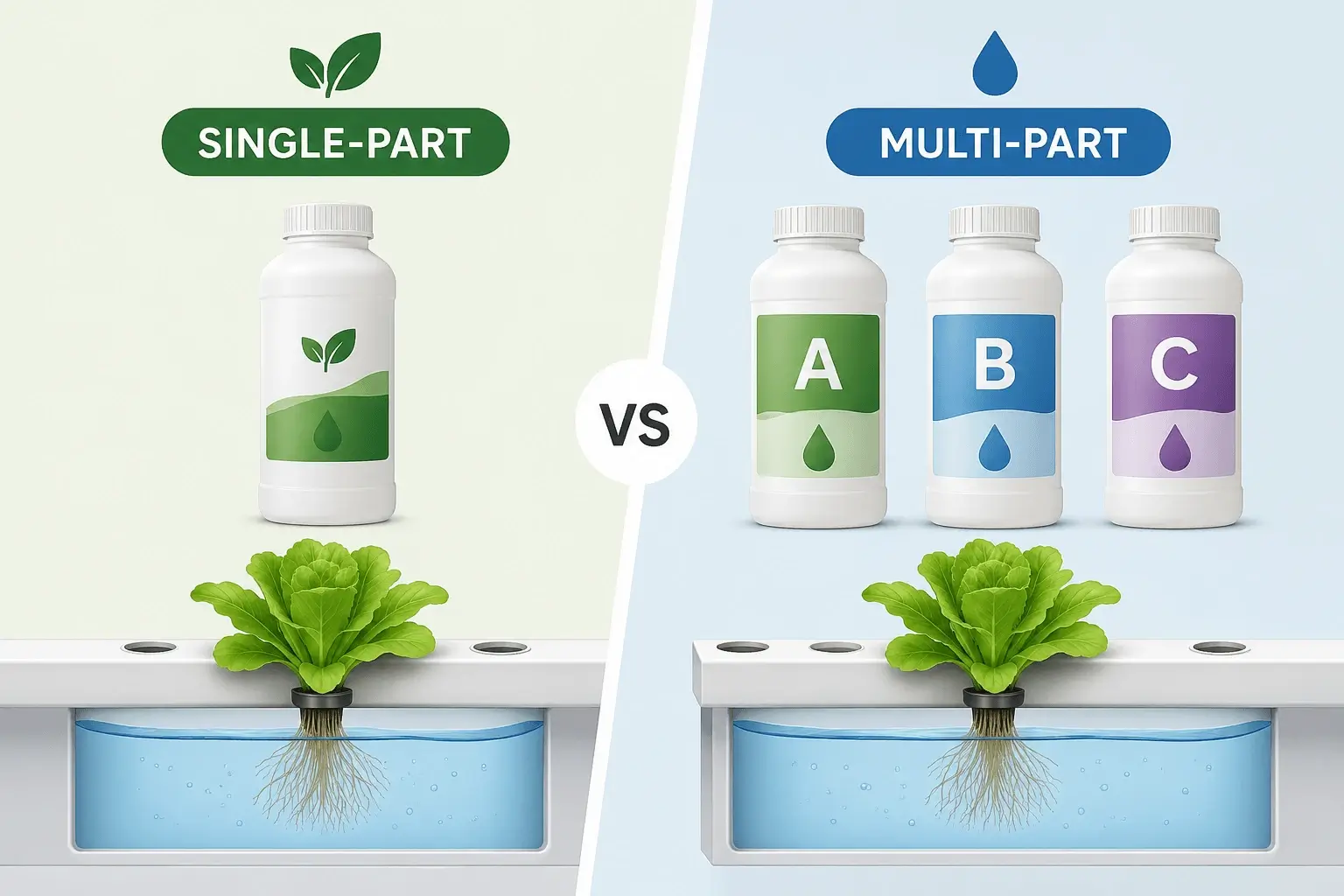
Nutrient selection is one of the first decisions a hydroponic grower makes and one of the most frequently revisited. Walk into any hydroponic supply store and the nutrient shelf presents a range of options that runs from a single bottle claiming to cover the full growth cycle to a multi-bottle system with separate formulations for each growth stage, a root stimulator, a bloom booster, a silica supplement, and a pH buffer. The marketing around both approaches is confident and occasionally contradictory.
The honest answer is that both single-part and multi-part nutrient programs can produce healthy plants and good yields. The difference is not between success and failure, it is between simplicity and control. The value of that control depends on what you are growing, how experienced you are, and how much time you want to spend managing the feed program. This covers what each approach actually delivers, where each performs well, and how to decide which fits your setup.
What Nutrients Do
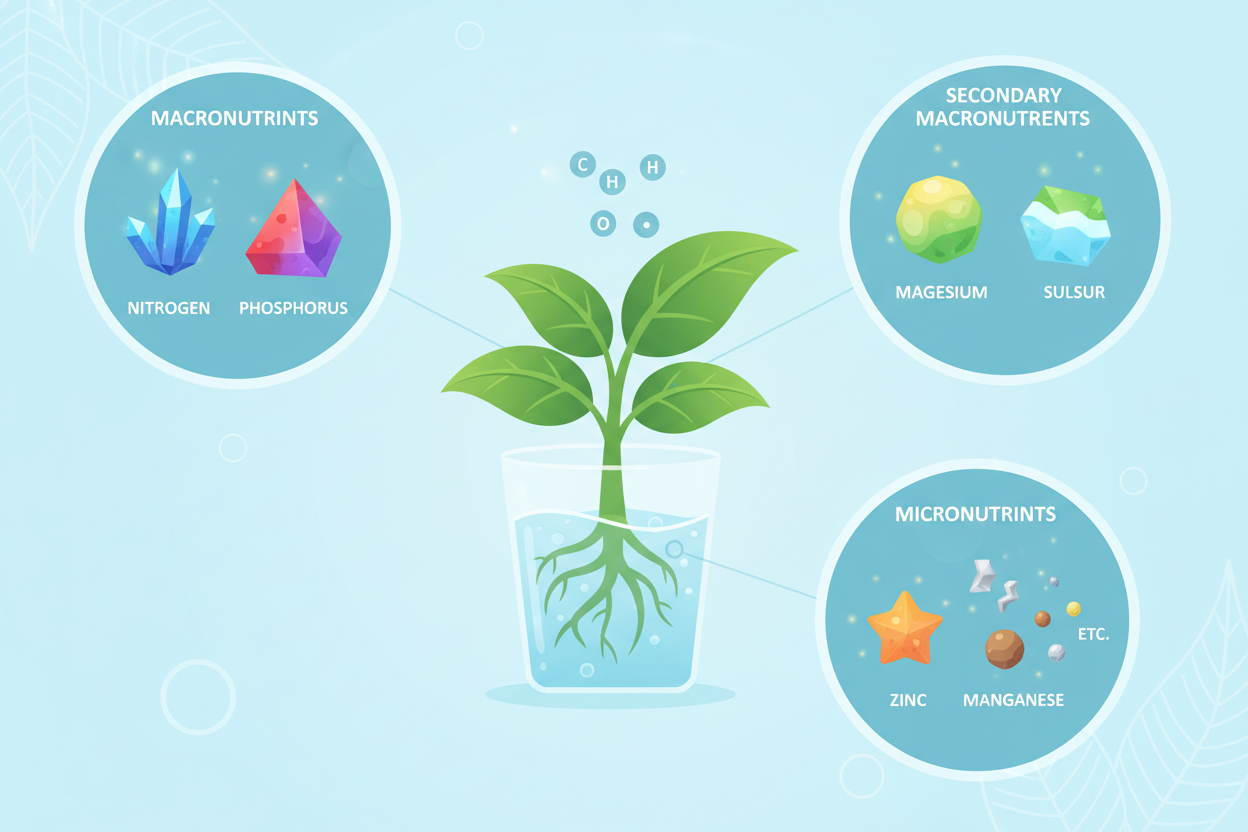
Plants require seventeen essential elements for healthy growth. Three come from air and water: carbon, hydrogen, and oxygen. The remaining fourteen come from the nutrient solution in a hydroponic system. Understanding what each element does and why its proportion in the solution matters is the foundation for making sense of both delivery formats.
Macronutrients: Required in Large Quantities
The three primary macronutrients drive the bulk of plant growth and development. Nitrogen fuels vegetative growth, chlorophyll production, and protein synthesis. Phosphorus supports root development, energy transfer, and flowering. Potassium regulates water movement, enzyme activation, and overall plant vigour. The ratio of these three elements in the nutrient solution has the most direct influence on how a plant grows at each stage of its life cycle.
Secondary Macronutrients: Required in Moderate Quantities
Calcium provides cell wall structure and membrane integrity, making it essential for firm, healthy growth and resistance to physiological disorders like tip burn in lettuce and blossom end rot in tomatoes. Magnesium sits at the centre of every chlorophyll molecule and is critical for photosynthesis. Sulphur drives protein and enzyme synthesis and contributes to flavour development in many crops.
Micronutrients: Required in Trace Quantities
Iron, manganese, zinc, boron, copper, molybdenum, chlorine, and nickel are required in very small concentrations but are no less essential. Deficiency in any one micronutrient produces visible symptoms and limits yield even when all other elements are present at optimal levels. The ratio of these elements that produces the best outcome changes across the plant's life cycle, vegetative growth favours higher nitrogen, while flowering and fruiting favours higher phosphorus and potassium with reduced nitrogen. A single formulation cannot simultaneously optimise for both phases.
Single-Part Nutrients: What They Are and How They Work
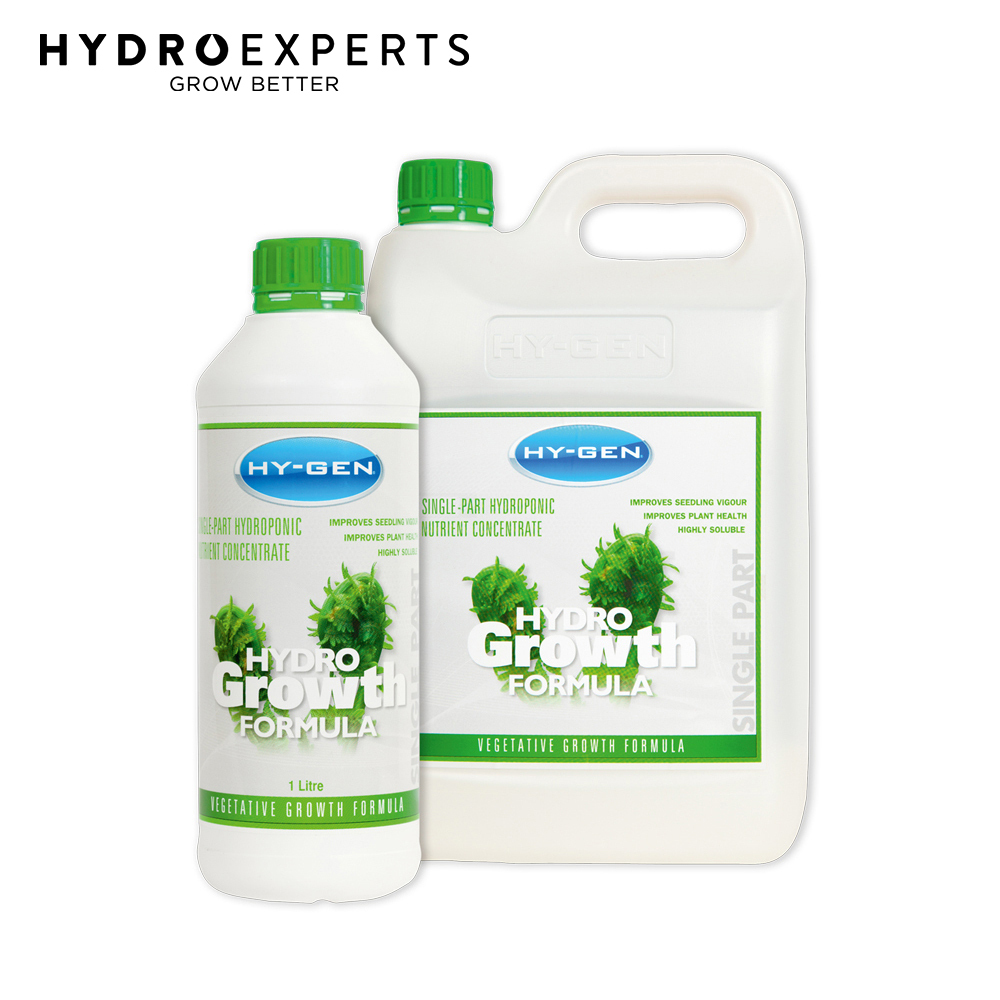
A single-part nutrient is a complete nutrient solution in one bottle or powder that contains all required elements in a fixed ratio. Mix it with water at the specified rate, adjust pH, and you have a nutrient solution ready for use across the full growth cycle. The appeal is real: one product, one mixing step, less room for error.
Where Single-Part Nutrients Work Well
Beginner growers learning nutrient management benefit from single-part nutrients because they reduce the complexity of mixing multiple components while still delivering a complete mineral profile. Leafy greens and herbs, lettuce, basil, spinach, silverbeet, are well suited to single-part programs because they have relatively consistent nutrient demands across their short growth cycles and do not transition through distinct vegetative and flowering phases. Simple recirculating systems such as NFT and DWC running fast-turnover crops are also a natural fit, as are commercial lettuce operations where consistent, predictable growth and minimal labour matter more than maximising yield potential.
The Limitations of Single-Part Nutrients
The fixed ratio is the core constraint. A single formulation optimised for vegetative growth carries too much nitrogen into flowering, which suppresses flower development and can delay or reduce yield in fruiting crops. A formulation balanced for flowering is suboptimal for vegetative growth. Some single-part nutrients attempt a compromise ratio that is acceptable across both phases without being optimal for either.
Single-part nutrients also face a practical chemistry limitation. Calcium and phosphate cannot be stored in high concentrations in the same solution without precipitating. A true single-part nutrient either uses chelated calcium or keeps one of these elements at a concentration that limits its availability, which is why many single-part systems are effectively one-part-plus, requiring a separate calcium and magnesium supplement to address this chemistry constraint.
Multi-Part Nutrients: What They Are and How They Work
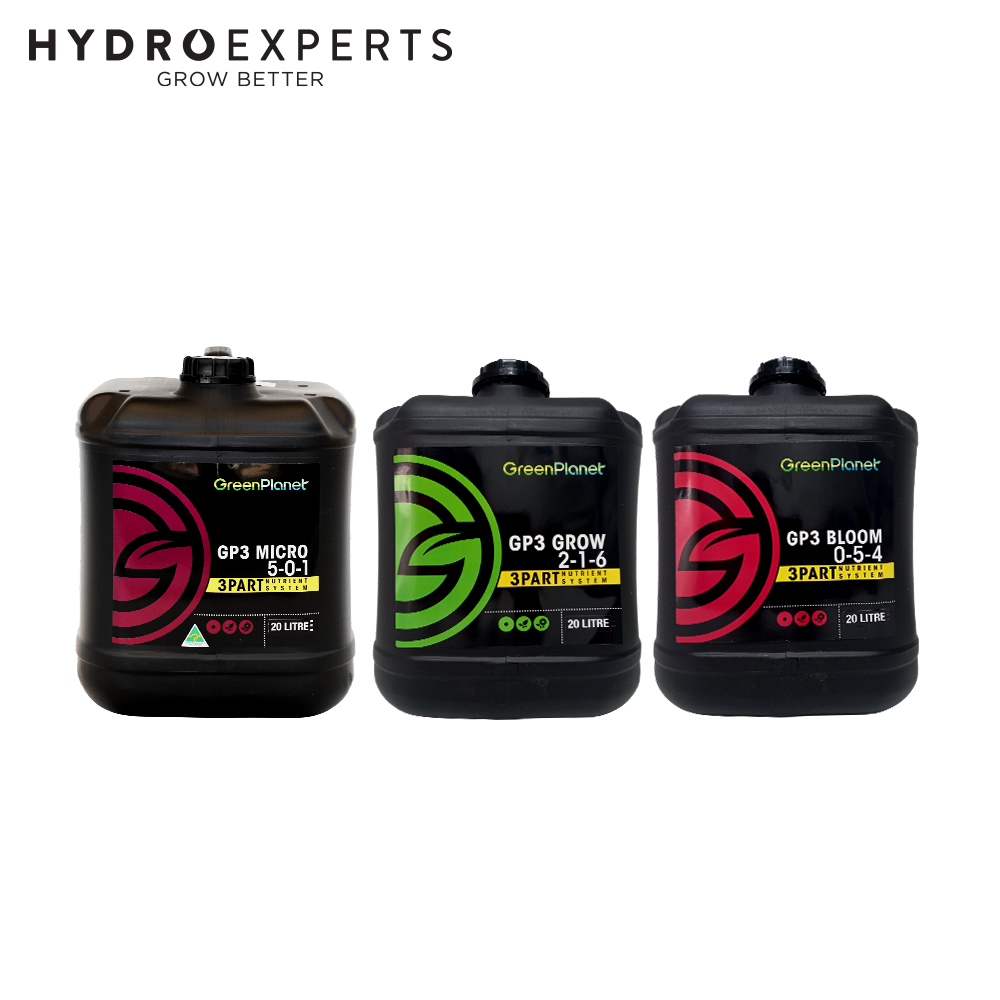
A multi-part nutrient system separates the nutrient profile across multiple components that are mixed individually into the reservoir. The most common structure is a two-part system with a grow formulation and a bloom formulation, each mixed at different ratios depending on the growth stage. Three-part systems add a micro component containing the trace elements and calcium separately from the base macronutrients, which resolves the calcium-phosphate precipitation problem entirely.
Common Additives in a Full Multi-Part Program
Beyond the base components, a full multi-part feeding program often incorporates a range of targeted additives. Root stimulators contain beneficial bacteria, fungi, or hormonal compounds that support root development in the early growth phase. Silica supplements strengthen cell walls and improve resistance to environmental stress, pests, and disease. Bloom boosters increase phosphorus and potassium concentration during the peak flowering period to maximise flower development. PK additives deliver a targeted phosphorus and potassium spike at specific points in the flowering cycle, while enzymes break down dead root matter in the reservoir and reduce the risk of pathogenic bacterial build-up. Flushing agents are used in the final week before harvest to clear residual mineral salts from plant tissue.
Where Multi-Part Nutrients Produce Better Results
Fruiting and flowering crops are where multi-part systems demonstrate a clear advantage. The ability to shift nutrient ratios between vegetative and flowering phases produces measurable yield improvements in crops like tomatoes, capsicum, cucumbers, and cannabis. Experienced growers who understand EC and pH management and can interpret plant response to adjust the feed program get the most out of a multi-part system. High-investment grows where maximising yield per watt and per litre of nutrient solution justifies the additional cost and complexity also suit the multi-part approach, as do longer growth cycles where the vegetative and flowering phases are distinct enough that phase-specific nutrition produces meaningful results.
The Complexity Cost
Multi-part systems require more management. Mixing multiple components in the correct sequence and ratio for each growth stage takes more time and attention than a single-part mix. EC and pH need to be monitored more frequently because more components means more opportunity for imbalance. The cost of a full multi-part feeding program including additives is substantially higher than a single-part equivalent.
Growers who add every available additive without understanding what each contributes often create nutrient programs that are expensive, difficult to troubleshoot, and not meaningfully better than a simpler approach. The value of additives is real but conditional, a bloom booster added to an otherwise poorly managed feed program does not compensate for incorrect base nutrition, inadequate light, or poor environmental control.
EC, pH, and Why They Matter More Than Product Brand
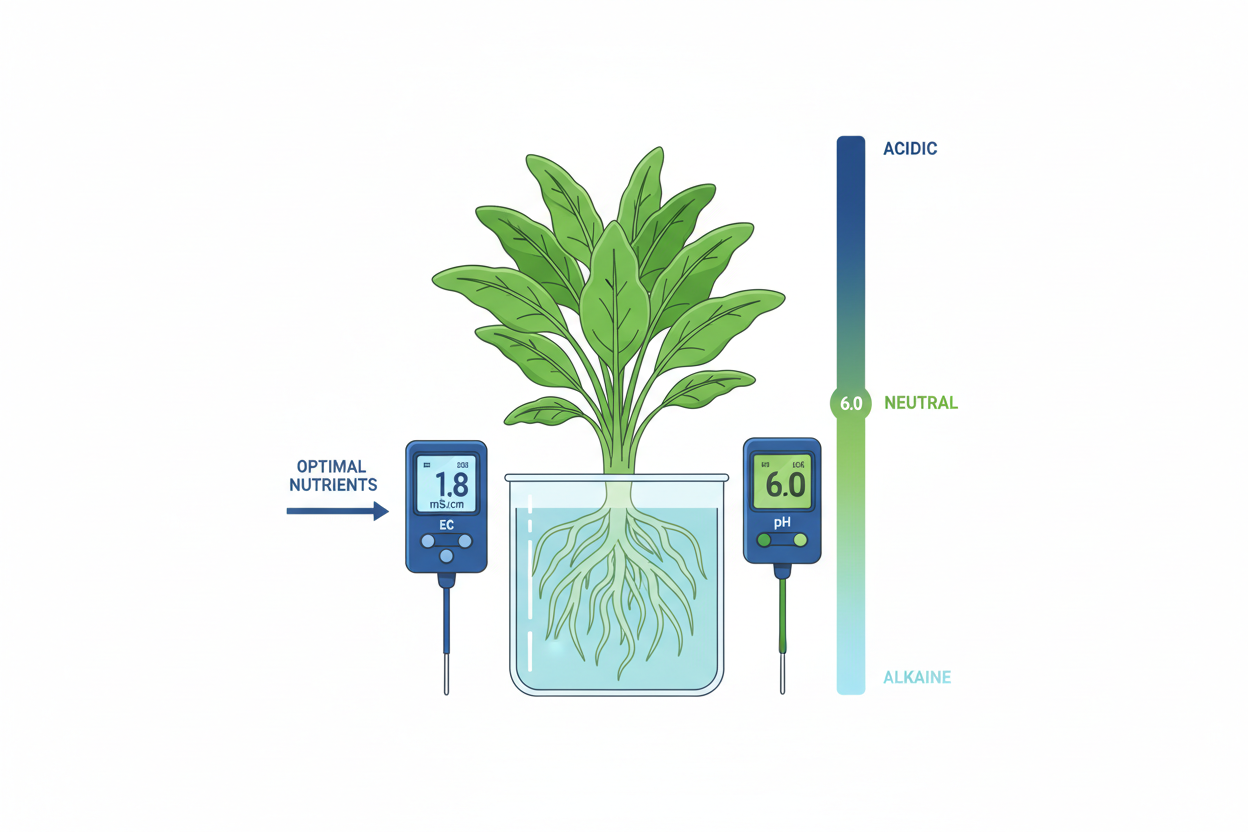
Regardless of which nutrient system you use, EC and pH management determines whether the nutrients you are providing are actually available to the plant. A well-managed single-part nutrient at the correct EC and pH will consistently outperform a comprehensive multi-part system with poor EC and pH management. The product is secondary to the management.
Understanding EC
EC (electrical conductivity) measures the total dissolved mineral content of the nutrient solution. Higher EC delivers more nutrients but also increases osmotic pressure on the roots. The appropriate EC range varies by growth stage, seedlings 0.8 to 1.2 mS/cm, vegetative 1.4 to 2.0 mS/cm, flowering 1.8 to 2.4 mS/cm for most crops, and by species, as leafy greens tolerate lower EC than fruiting crops. Recirculating systems require closer EC monitoring than run-to-waste systems because nutrient concentrations shift as the reservoir is drawn down.
Understanding pH and Nutrient Availability
pH determines nutrient availability. Each element has a pH range at which it is most available for uptake. The optimal pH range for most hydroponic crops is 5.5 to 6.5, with 5.8 to 6.2 being the target for most systems. Outside this range, specific elements lock out regardless of their concentration in the solution. Iron deficiency is common at pH above 6.5. Calcium and magnesium deficiency appears at pH below 5.5. Phosphorus locks out at pH extremes in either direction. Monitoring and adjusting pH with quality pH management products is non-negotiable in any nutrient program.
A grower using a well-managed single-part nutrient at the correct EC and pH will consistently outperform a grower using a comprehensive multi-part system with poor EC and pH management. Master the monitoring fundamentals before adding product complexity.
Single-Part vs Multi-Part: At a Glance
| Feature | Single-Part | Multi-Part |
|---|---|---|
| Mixing complexity | Low | Medium to high |
| Cost per litre of nutrient solution | Lower | Higher |
| Phase-specific optimisation | Limited | Full |
| Suitable crop types | Leafy greens, herbs | Fruiting and flowering crops |
| Troubleshooting ease | Simpler | More variables |
| Yield ceiling for flowering crops | Lower | Higher |
| Recommended experience level | Beginner to intermediate | Intermediate to advanced |
Building a Feed Program: Where to Start
The right starting point depends on what you are growing and where you are in your experience with hydroponic nutrient management. The most common mistake is jumping to a complex multi-part program before the fundamentals of EC and pH management are solid.
For Beginner Growers and Leafy Green Systems
Start with a quality single-part nutrient at the manufacturer's recommended rate. Add a separate calcium and magnesium supplement only if deficiency symptoms appear. Focus on EC and pH management before adding any complexity, consistent monitoring and adjustment will produce better results than any additional product. Master the baseline before evaluating whether a multi-part system would add value to your setup.
For Flowering Crop Growers with Baseline Management Under Control
Move to a two-part or three-part base nutrient system with separate grow and bloom formulations. Introduce additives one at a time over successive grows so you can assess each one's contribution to yield and plant health. Silica supplements and a quality root stimulator are the additives with the most consistent evidence of benefit across a wide range of crops and systems. Add bloom boosters and PK additives only after the base program is producing good results, layering complexity onto an already-performing system is where additives show their value most clearly.
Introduce additives one at a time over successive grows. Adding multiple new products in the same grow makes it impossible to know which one produced any change you observe, positive or negative.
Find the Right Nutrients for Your System at Hydro Experts
Hydro Experts stocks single-part nutrients, two-part and three-part base nutrient systems, and the full range of additives including CalMag supplements, silica additives, root stimulators, and bloom boosters from established brands suited to Australian water quality and growing conditions. Visit hydroexperts.com.au to match your nutrient program to your crop type, system, and experience level.
FAQs
Switching mid-grow is possible but introduces variables that make it harder to identify the cause of any plant response, positive or negative. If you are considering switching, the beginning of a new growth phase, transitioning from vegetative to flowering, is the lowest-risk point to make the change. Starting fresh at the beginning of a new grow is cleaner still, as it lets you establish EC and pH baselines with the new system from the outset.
A quality three-part base nutrient system covering the full macro and micronutrient profile provides what the plant needs to complete its growth cycle without additives. Additives address specific performance targets, root development, stress resistance, flowering intensity, and they produce measurable results in well-managed systems where the base nutrition is already correct. If the base program is well-dialled and EC and pH are managed consistently, silica and a root stimulator are the additives most likely to produce a meaningful return.
Calcium and phosphate cannot coexist in high concentrations in the same solution without forming an insoluble precipitate. A true one-bottle nutrient either chelates the calcium to prevent precipitation or keeps concentrations low enough to avoid it, which limits availability. If you are seeing signs of calcium or magnesium deficiency, interveinal chlorosis, tip burn, or blossom end rot, a dedicated CalMag supplement is the most direct correction.
Target EC depends on growth stage, crop type, and system configuration. General guidelines for most crops: seedlings 0.8 to 1.2 mS/cm, vegetative growth 1.4 to 2.0 mS/cm, early flowering 1.8 to 2.2 mS/cm, peak flowering 2.0 to 2.4 mS/cm. Australian tap water varies in baseline EC by region, so check your source water EC before adding nutrients and factor it into your total target. The Hydro Experts team can advise on EC targets for specific crops and systems.
Hydro Experts stocks a comprehensive range of single-part and multi-part hydroponic nutrients, CalMag supplements, silica additives, root stimulators, bloom boosters, and pH management products suited to Australian growing conditions and water quality. Visit hydroexperts.com.au to browse the full range or contact the team for advice on matching a nutrient program to your specific crop and system configuration.
Related Products
EXPERT'S CHOICE

EXPERT'S CHOICE

ON SALE