


Can You Calibrate a Sensor? How to Calibrate Your Hydroponic Sensors
By Hydro Experts | 23 September 2026
Learn how to calibrate pH meters, EC meters, temperature and humidity sensors for hydroponics. Step-by-step methods, common mistakes and how often to calibrate.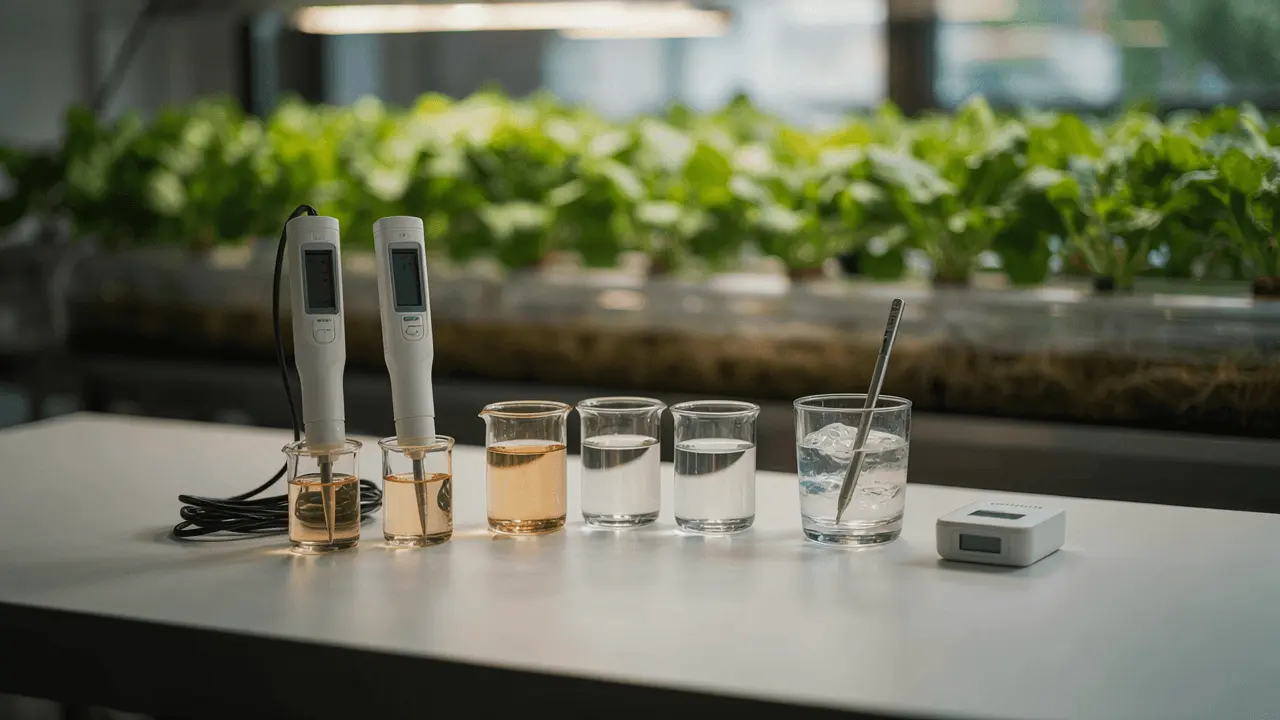
If you use sensors to monitor your hydroponic system, you probably already know that accurate readings matter. Whether you are checking temperature, humidity, pH or EC, a small difference in the reading can affect the decisions you make about your plants.
The good news is that many sensors and meters can be calibrated. Calibration does not mean fixing a broken sensor. It means checking the reading against a trusted reference and making a small adjustment when needed.
This guide explains when calibration is useful, what you need to do it properly, and how to avoid some of the common mistakes that can make your readings less accurate.
What Does Sensor Calibration Mean?
Calibration is simply the process of checking your sensor against a known reference and adjusting the sensor if the reading is slightly off.
For example, if you have a temperature sensor that is reading 21.5°C when a trusted reference shows 21.0°C, you may be able to adjust the sensor by 0.5°C so that it matches the reference. The same basic idea applies to other measurements.
With pH meters, you normally calibrate against known pH solutions such as pH 7.0 and pH 4.0. With EC meters, you use a solution with a known conductivity value. Temperature sensors can be checked against a reliable thermometer or a simple ice-water reference.
The important point is that calibration should be used to correct small differences. If a sensor is showing a reading that is far from what you expect, calibration may not be the answer. It could indicate a problem with the sensor, the reference, the setup or the way the measurement is being taken.
Why Does Calibration Matter?
A sensor can become less accurate over time. Dirt, residue, repeated use, changes in temperature, and general wear can all affect readings.
This matters because your readings are often used to make decisions about your growing environment.
For example:
- Temperature readings help you understand the conditions around your plants
- Humidity readings show how moist or dry the growing environment is
- pH readings help you manage the acidity of your nutrient solution
- EC readings help you keep track of the amount of dissolved nutrients in the water
If the sensor is giving you an incorrect reading, you may end up making unnecessary changes to your system.
Regular checking helps you know that the number on your meter is actually telling you what is happening.
Do You Need to Calibrate Every Sensor?
No. The exact calibration process depends on the type of sensor you are using. Some sensors can be adjusted directly through their settings. Others require calibration solutions or a particular calibration process. Some sensors are factory calibrated and may only need to be checked rather than regularly adjusted.
Always check the instructions for your particular sensor or meter before changing its calibration. For hydroponic equipment, pH and EC meters commonly require calibration using standard solutions. Hydro Experts also recommends regular calibration for pH and EC equipment to help maintain accurate readings.
Want a deeper walkthrough for pens? Read our guide to pH and EC pen calibration and maintenance.
What Do You Need for Calibration?
The most important thing you need is an accurate reference.
There is no point calibrating a sensor against another device that is also inaccurate.
Depending on what you are measuring, this could be:
- A trusted thermometer for temperature
- A reliable hygrometer for humidity
- A pH calibration solution for pH meters
- An EC calibration solution for conductivity meters
For pH and EC meters, use fresh calibration solutions and follow the manufacturer's instructions. Do not assume that one calibration solution will work for every meter.
For temperature and humidity sensors, you need a stable environment so that both the sensor and the reference have enough time to settle.
Calibrating Temperature With a Reference Thermometer
If you have a thermometer that you trust, this is one of the simplest ways to check a temperature sensor.
Place the sensor and the reference thermometer next to each other in the same stable environment. Avoid placing them near a heater, air conditioner, direct sunlight or another source of changing temperature.
Give them enough time to reach the same temperature. Around 30 minutes is a useful starting point for a small sensor, although the exact time depends on the equipment and environment.
Once both devices have settled, compare their readings.
If your sensor allows an adjustment, make a small change so that it matches the trusted reference.
The important part is not to make an adjustment while the two devices are still settling. A temperature sensor can show a different number simply because it has not yet reached the temperature of the surrounding environment.
Using Ice Water as a Temperature Reference
You do not always need another thermometer to create a useful temperature reference.
A properly prepared ice-water mixture can be used as a simple reference around 0°C.
Start with a container containing a good mixture of ice and water. Stir it so that the temperature is distributed evenly throughout the mixture.
If your sensor is not designed to be submerged directly, protect it according to the manufacturer's instructions. For example, a small sensor may be placed inside a sealed plastic bag with as much excess air removed as possible.
Place the protected sensor into the ice-water mixture and allow enough time for it to reach the same temperature as the mixture.
Once the reading has stabilised, the sensor should be close to 0°C.
If the sensor has a calibration setting, you can make a small adjustment to bring the reading in line with the reference.
Make sure the sensor is exposed to the ice-water mixture as much as the instructions allow. The sensor casing and other parts can take time to reach the same temperature, so rushing the process can give you a misleading reading.
How to Check Humidity
Humidity calibration is a little different from temperature calibration.
One common method is the salt test. It is based on a known relationship between salt, water, and humidity inside a sealed environment.
The method can work, but it can also be difficult to carry out consistently. Small differences in how the test is prepared can affect the result.
For this reason, using a purpose-made humidity calibration kit can be a simpler option.
Place the humidity sensor inside the calibration kit according to the manufacturer's instructions and keep it in a stable room-temperature environment. Avoid moving it around or exposing it to changing temperatures while the test is running.
Humidity sensors need time to settle. Depending on the calibration method, this may take many hours.
Once the sensor has stabilised, compare its reading with the known humidity value of the reference.
The key is to use a reference you can trust. Adjusting a sensor to match an inaccurate reference can leave you with a sensor that is less accurate than it was before.
How to Calibrate a pH Meter
pH meters need a different type of calibration because you cannot simply compare them with a normal thermometer or another general-purpose device.
You use pH calibration solutions with known values.
A common two-point calibration uses pH 7.0 and pH 4.0 solutions. Some meters may use different calibration points depending on the expected range of your measurements.
A typical process looks like this:
- Clean the pH probe according to the manufacturer's instructions
- Prepare fresh pH calibration solution
- Place the probe into the first calibration solution
- Wait for the reading to stabilise
- Calibrate the meter to the correct value
- Rinse the probe with clean water
- Move to the second calibration solution
- Wait for the reading to stabilise
- Complete the second calibration point
- Rinse the probe again before taking measurements
Always follow the instructions for your particular pH meter because the buttons and calibration steps can vary between models.
For example, Hydro Experts' Bluelab pH Pen guidance recommends using fresh pH 7.0 and pH 4.0 calibration solutions and calibrating after cleaning and hydration when required.
Once your meter is calibrated, learn how to adjust your nutrient solution with our guide to pH Up and Down products for Australian hydroponic growers, or browse pH adjusters and tools.
How to Calibrate an EC Meter
EC meters measure electrical conductivity, so they need a known conductivity solution for calibration.
The basic process is similar to pH calibration:
- Clean and prepare the probe
- Choose the correct EC calibration solution for your meter
- Place the probe into the solution
- Make sure there are no air bubbles around the sensor
- Allow the reading to stabilise
- Adjust the meter according to its instructions
- Rinse the probe before using it again
Some EC meters need to be calibrated regularly, particularly when they are used in demanding conditions or at the extremes of their measurement range. One Hydro Experts operation manual recommends monthly calibration for mid-range measurements and more frequent calibration when measuring at extreme temperatures or very low or high concentrations.
New to conductivity readings? See EC for hydroponics and what conductivity is and why it is important.
Common Calibration Mistakes to Avoid
Calibration does not have to be complicated, but small mistakes can affect the result.
Using an Unreliable Reference
The biggest mistake is calibrating against something you cannot trust.
If your reference thermometer or calibration solution is inaccurate, your sensor will be adjusted to the wrong value.
Rushing the Reading
Do not adjust a sensor before the reading has stabilised.
Temperature, humidity, pH and EC sensors all need time to respond to their surroundings. Give the equipment enough time before making an adjustment.
Using Dirty Equipment
Dirt and residue on a probe can affect measurements.
Clean the sensor as recommended by the manufacturer before calibration. For pH and EC meters, proper cleaning is an important part of maintaining accurate readings.
Reusing Old Calibration Solution
Calibration solutions can become contaminated after use.
Pour out only the amount you need and do not pour used solution back into the original bottle. Use fresh solution when required by the manufacturer.
Trying to Fix a Large Error With Calibration
Calibration is generally intended for small corrections.
If a sensor is showing a reading that is far away from a trusted reference, do not keep adjusting it until the numbers look right. Check the sensor, the reference, the calibration process, and the manufacturer's instructions first.
A large difference may indicate that something else is wrong.
How Often Should You Calibrate?
There is no single schedule that works for every sensor.
How often you should calibrate depends on the type of equipment, how often you use it, what you are measuring, and the conditions it is exposed to.
For example, Hydro Experts recommends monthly calibration for pH pens in its general pH and EC guidance, while EC pens can often hold their calibration for longer. Specific products may have different requirements, so the manufacturer's instructions should always take priority.
You should also consider calibration when:
- A reading suddenly looks different from what you normally see
- Your sensor has been cleaned
- You replace a probe or electrode
- The meter gives you a calibration reminder
- You have dropped or handled the equipment roughly
- You have been using the meter heavily
- Your results do not agree with a trusted reference
Keep Your Sensors Clean and Calibrated
Calibration is only one part of keeping your sensors accurate. Cleaning and storage matter too. Follow the storage instructions for your particular probe. Some electrodes need to stay hydrated, while others are designed for dry storage. Do not assume that every sensor should be stored in the same way.
For example, Hydro Experts' equipment documentation includes different storage requirements depending on the type of electrode or meter.
Keeping the sensor clean also helps prevent residue from affecting future measurements. If you take care of the equipment and check it against a reliable reference when needed, you are much more likely to get readings you can rely on.
Need Help Choosing the Right Sensor or Calibration Solution?
Whether you are checking pH, EC, temperature, humidity, or other water conditions, the right testing equipment makes it easier to keep your system under control.
Hydro Experts stocks a range of pH meters, EC meters, combination meters, sensors, calibration solutions and other testing equipment for hydroponics and water monitoring.
If you are not sure which meter, sensor or calibration solution you need, get in touch with the Hydro Experts team. We can help you find equipment that suits your setup and explain what you need to keep your readings accurate.
You can also explore the Bluelab OnePen, pH water controllers, nutrient dosing systems and TrolMaster controllers.
FAQs
In many cases, yes. The exact process depends on the type of sensor. pH and EC meters normally use calibration solutions, while temperature and humidity sensors may be checked against trusted reference devices or specific calibration methods.
If your readings seem unusual, do not match a trusted reference, or the manufacturer recommends calibration after a certain period, it may be time to calibrate. Some meters also have calibration reminders.
Not usually. Calibration is designed to correct small differences. If the reading is significantly wrong, the sensor may be dirty, damaged, incorrectly set up or reaching the end of its usable life.
The exact schedule depends on the meter and how you use it. A common recommendation is around once a month, with additional calibration after cleaning, when readings seem incorrect or when the meter indicates that calibration is required.
For pH and EC meters, yes. You should use the correct standard solution for your meter and the measurement you are calibrating. Using the wrong solution can result in an incorrect calibration.