


Grow Tent Heaters with Thermostat for Healthy Plant Growth
By Hydro Experts | 6 July 2026
Temperature is one of the most direct inputs a grower controls. Light, nutrients, and water all get significant attention in hydroponic growing discussions, yet temperature management is often treated as secondary until something goes wrong and the plants make the problem visible in ways that are difficult to diagnose without understanding what temperature does at a biological level.
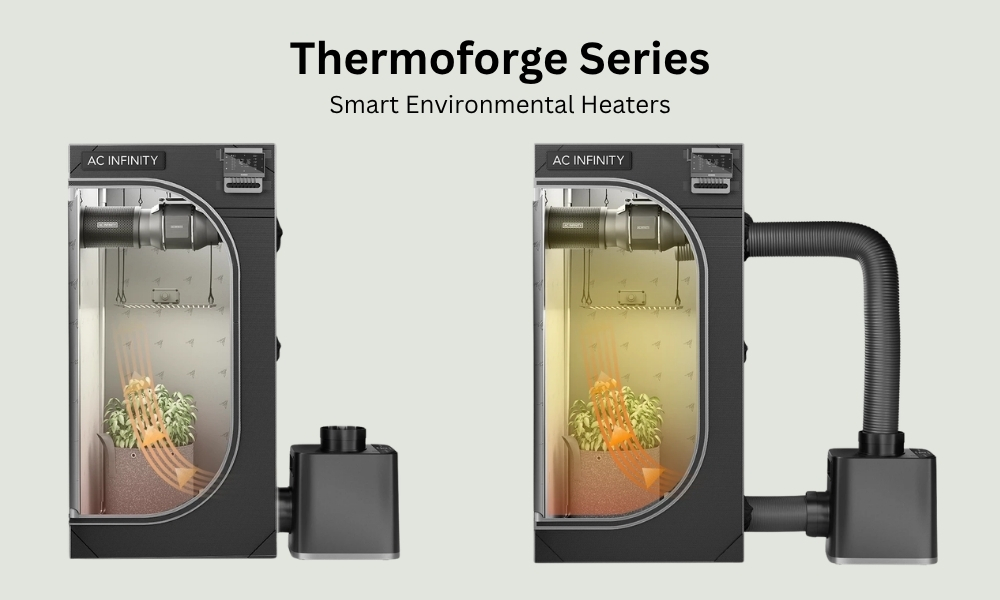
A grow tent heater with a thermostat is the practical tool that keeps the temperature within the range plants need across the full day and night cycle, across seasons, and across the variable conditions that an indoor growing environment faces. This article covers why temperature control matters, how temperature and humidity interact, what to look for when selecting a thermostat-controlled heater, and how to use one effectively.
Quick Takeaways: Grow Tent Heaters with Thermostat
- Stable temperatures are essential for healthy plant growth, efficient nutrient uptake, and strong photosynthesis.
- A thermostat-controlled grow tent heater automatically maintains optimal temperatures, preventing harmful fluctuations.
- Temperature and humidity work together; keeping nighttime temperatures stable helps reduce humidity spikes and lowers the risk of mould and mildew.
- Choose a heater based on your tent size, thermostat accuracy, heating capacity, and essential safety features like overheat and tip-over protection.
- Place the temperature sensor at canopy level and position the heater to distribute warmth evenly without blowing directly onto plants.
- Pair your heater with circulation fans and monitoring tools to maintain a consistent growing environment throughout every stage of plant development.
- Regularly monitor temperature and humidity to fine-tune your setup and achieve healthier, more productive indoor grows.
Why Temperature Control Matters
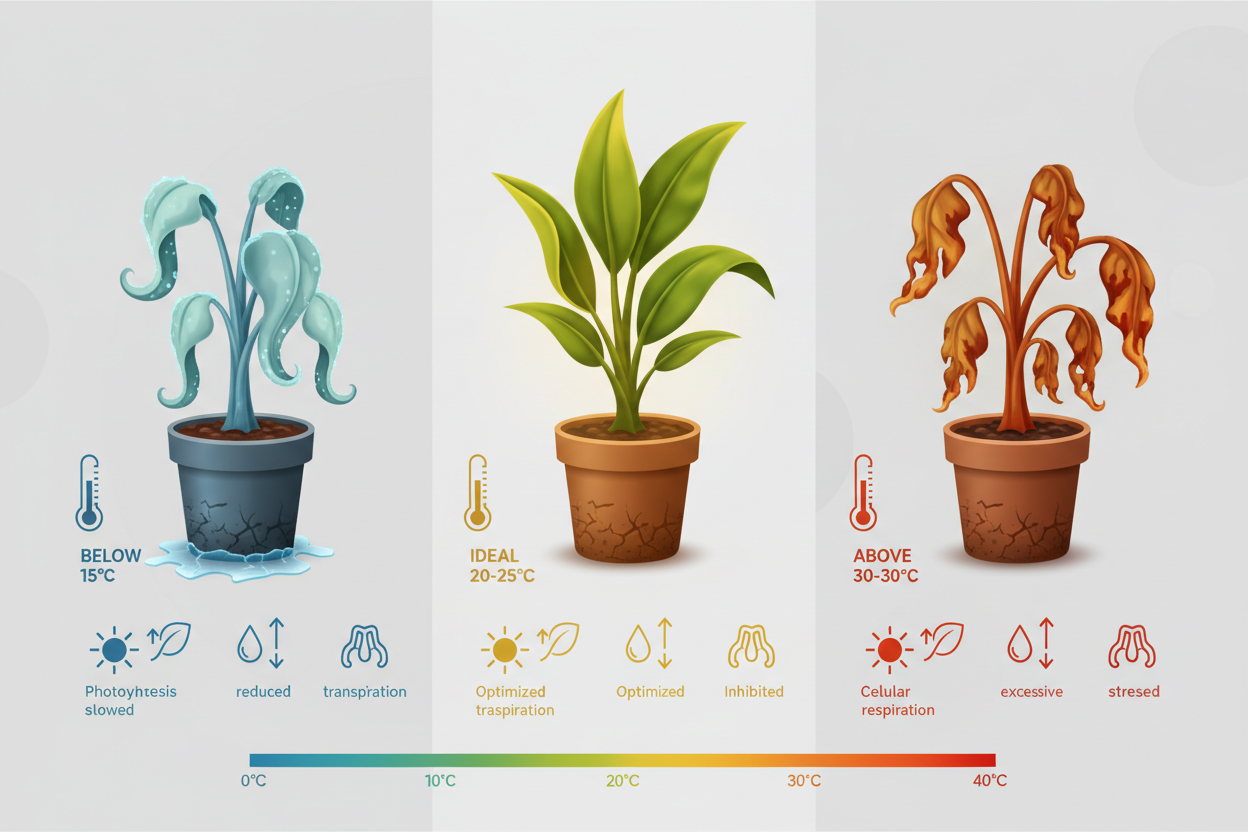
Plants are not thermally neutral. Every biochemical process that drives growth- photosynthesis, nutrient uptake, enzyme activation, transpiration, and cellular respiration which operates within a temperature range. Outside that range, the processes slow, stop, or reverse. The plant does not simply pause when temperatures fall out of range. It actively deteriorates.
The optimal temperature range for most hydroponic crops sits between 18 and 28 degrees Celsius during the light period and 15 to 20 degrees Celsius during the dark period. Within this range, the plant's metabolic processes run efficiently. The enzyme systems that drive nutrient uptake function at their design capacity. Photosynthesis converts light energy at a high rate. Growth is rapid and healthy.
Outside this range, the problems compound quickly. Understanding each temperature extreme helps growers intervene at the right point rather than responding to visible symptoms that may already indicate several days of stress.
Cold Stress: Below 15°C
Root zone activity slows significantly when temperatures fall below 15°C, causing nutrient uptake to drop even when the solution is correctly formulated. Growth stalls as enzyme systems lose efficiency. Sustained cold stress causes cell damage and makes plants vulnerable to root pathogens that thrive in cold, wet conditions. Pythium and other water moulds establish readily in cold root zones, compounding the nutrient deficiency with active disease pressure.
Heat Stress: Above 30°C
When temperatures rise above 30°C, transpiration rate increases faster than the plant can manage. Stomata close to conserve water, reducing the gas exchange that drives photosynthesis. The photosynthesis rate drops, and heat stress begins affecting cellular processes throughout the plant. Beneficial microbes in the root zone are disrupted, and dissolved oxygen levels in the nutrient solution fall. This creates the conditions for anaerobic pathogens to establish.
Night Temperature Drops
A drop of more than 10°C between day and night temperatures stresses most crops and can trigger premature flowering in some varieties. The sharp temperature drop also drives humidity to problematic levels, creating disease pressure that compounds the physiological stress the plant is already experiencing. Maintaining a controlled minimum night temperature is one of the most impactful environmental interventions available to indoor growers.
Automatic temperature control through a thermostat-controlled heater addresses these risks by maintaining the root zone and air temperature within the optimal range regardless of what is happening in the external environment. Across seasons, overnight cold drops, and variable ambient conditions.
How Temperature Affects Humidity
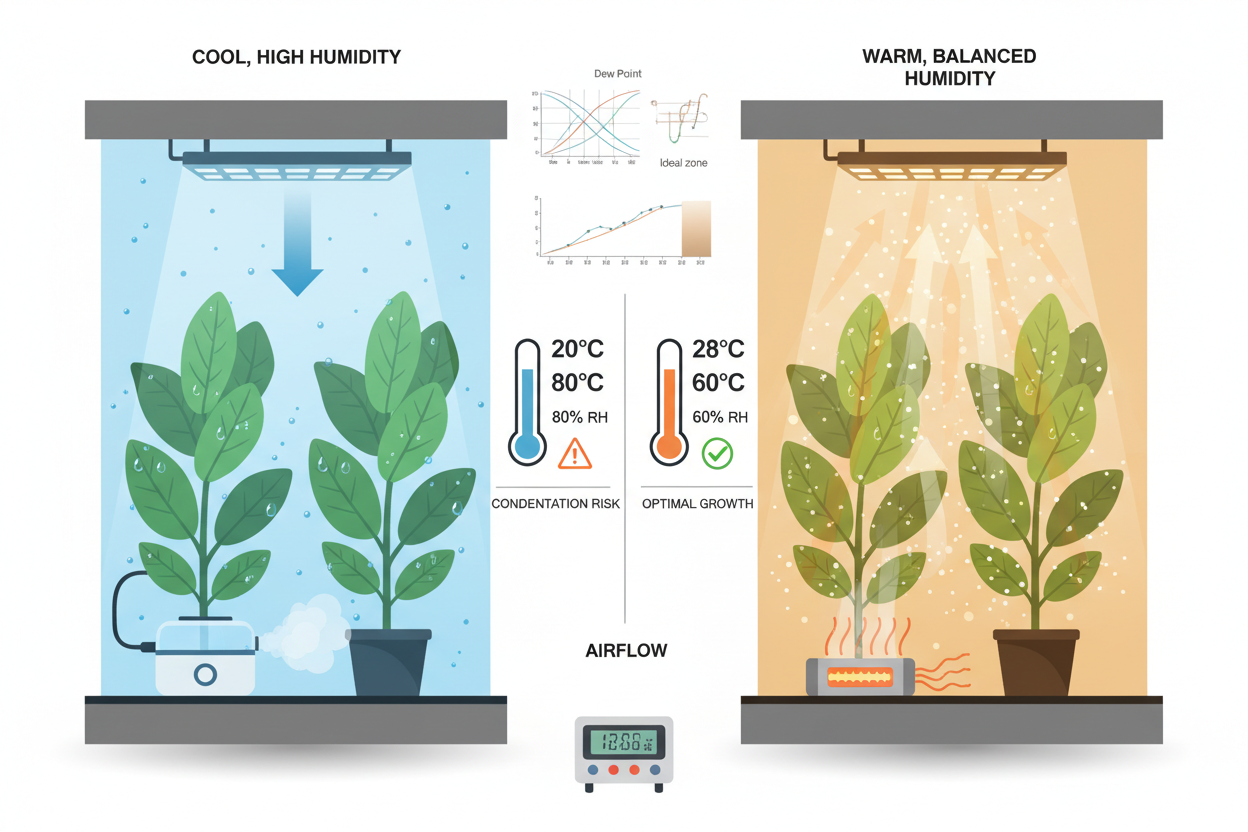
This is the connection that many growers understand in principle but underestimate in practice. Temperature and humidity are not independent variables in a grow tent. They are directly linked through a physical relationship that has significant consequences for plant health and for the disease pressure the growing environment carries.
Relative humidity is the amount of water vapour in the air expressed as a percentage of the maximum water vapour that air at that temperature can hold. The keyword is at that temperature. Warm air holds significantly more water vapour than cold air. When the temperature in a grow tent drops, the air's capacity to hold moisture drops with it and relative humidity rises even though no additional water has been added to the environment.
This is the mechanism behind condensation in grow tents. When the temperature drops at night or during a cold period, the relative humidity climbs, often into the range where mould and powdery mildew begin to establish. The grower who wakes to find condensation on tent walls and grey mould on lower leaves is often dealing with a temperature management problem rather than a humidity management problem specifically.
| Scenario | Temperature | Relative Humidity | Disease Risk |
|---|---|---|---|
| Light period (stable) | 25°C | 60% RH | Low |
| Dark period (unheated) | 18°C | 80%+ RH | High; mould and mildew range |
| Dark period (thermostat-controlled) | 18–20°C (maintained) | 60–65% RH | Low; stable conditions |
| Severe cold drop (unheated) | 12–15°C | 90%+ RH | Very high; Botrytis risk |
A grow tent heater with a thermostat that maintains a minimum temperature during the dark period is one of the most effective humidity management tools available. Precisely because it addresses the root cause of humidity spikes rather than treating the symptom with a dehumidifier running against an uncontrolled environment.
What to Look for in a Grow Tent Heater with Thermostat
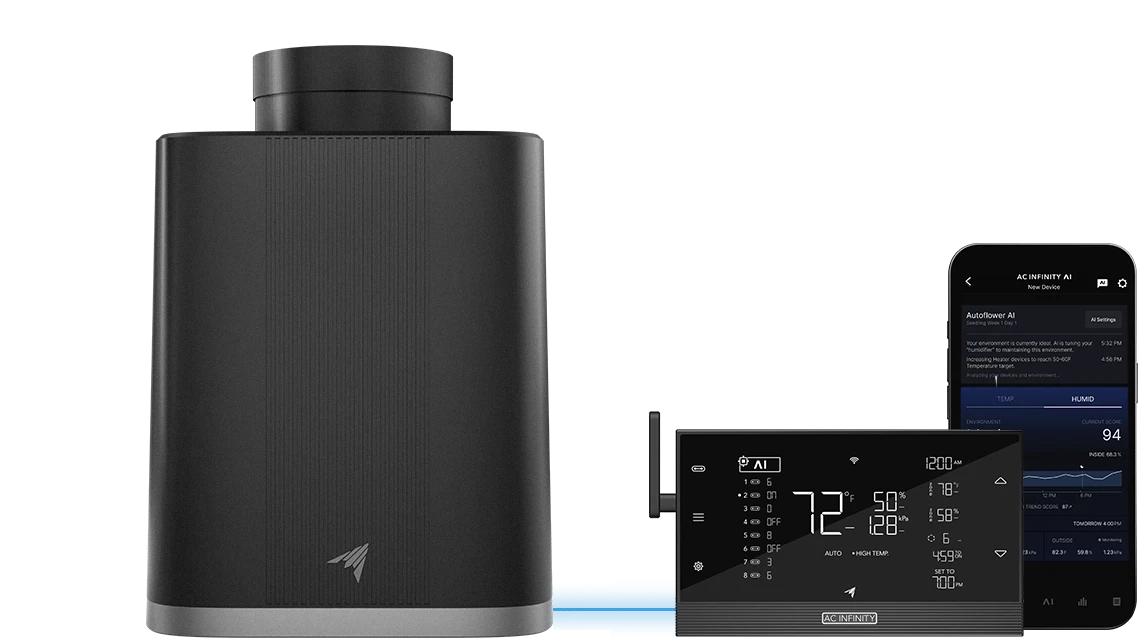
Not all thermostat-controlled heaters are suited to grow tent environments. The enclosed space, proximity to water, electrical equipment, and the need for precise temperature regulation mean that the selection criteria go beyond simple wattage. The following are the key considerations for selecting a unit that performs reliably in a hydroponic setting.
Thermostat Accuracy and Response Time
The thermostat is the functional core of the unit. A thermostat that reads accurately and responds quickly maintains temperature within a narrow band. A thermostat with poor calibration or slow response allows significant temperature swings before the heater activates, defeating the purpose of automatic control. Digital thermostats with a display provide readable feedback on current temperature and setpoint. Look for units offering control accuracy of plus or minus 1 degree Celsius or better. Programmable day and night setpoints add significant value for growers managing a full light cycle.
Heating Capacity vs Tent Volume
Heater capacity is rated in watts or kilowatts, and the capacity required depends on the tent volume, the ambient temperature of the space the tent sits in, and the heat already generated by the lighting system. As a general guide: small tents up to 1m x 1m require 250W to 500W in a room-temperature environment; medium tents from 1.2m x 1.2m to 1.5m x 1.5m require 500W to 1000W depending on ambient conditions; large tents at 2.4m x 1.2m and above require 1000W to 2000W, particularly in cold climates or unheated external spaces. Oversizing a heater is preferable to undersizing. A larger heater cycling on and off spends less time at full output, while an undersized heater runs continuously without achieving the set temperature.
Safety Features
Grow tents are enclosed spaces with flammable material, carbon filters, and electrical equipment in close proximity. Safety features are not optional considerations. Essential features to look for include tip-over protection that cuts power if the unit is knocked over, overheat protection that shuts the unit down if internal temperature exceeds safe limits, cool-touch housing that reduces fire risk if the unit contacts the tent walls or plant material, and a waterproof or splash-resistant rating. This is particularly relevant near reservoir areas. Fan-forced heaters distribute heat more evenly throughout the tent than radiant heaters, reducing hot and cold spots that create uneven growing conditions across the canopy.
External Thermostat Compatibility
Some growers prefer to use a separate environmental controller rather than the heater's built-in thermostat. A heater with a standard plug-in connection can be plugged into an external thermostat controller, which measures temperature at the sensor location and switches the heater on and off at the set points. This approach allows more precise sensor placement, integration with humidity control, and the ability to control multiple environmental devices from a single controller. Hydro Experts carries compatible environmental controllers from Inkbird and other manufacturers suited to this application.
Setting Up Thermostat Grow Tent Heating Correctly
Selecting the right heater is only part of the process. Correct placement, sensor positioning, and setpoint configuration determine whether the unit actually delivers the stable environment it is capable of providing. The following setup principles apply across heater models and tent sizes.
Sensor Placement
The temperature sensor should be positioned at canopy level, in the breathing zone where the plant's exchange of gas and moisture with the air is most active. Placing the sensor near the tent floor measures a colder zone than where the plant is actually living. Placing it near the light measures a warmer zone inflated by radiant heat from the fixture. Neither gives an accurate reading of the environment the plant is experiencing. Canopy-level placement gives the thermostat accurate data to work with and produces a stable canopy environment rather than a stable floor or ceiling temperature.
Day and Night Setpoints
Most digital thermostat heaters allow separate day and night temperature setpoints. Using this function to maintain a slightly cooler night temperature, targeting 18 to 20°C while the lights are off, replicates the natural day-night temperature differential that many crops benefit from while preventing the sharp drops that cause humidity spikes and cold stress. The differential between day and night temperatures should not exceed 10°C for most crops. A controlled 5–8°C differential supports healthy development without triggering the stress responses associated with sharp overnight drops.
Positioning the Heater
Position the heater to distribute warm air across the tent floor and lower canopy rather than directing heat at the plant canopy directly. Hot air directed onto plant foliage accelerates transpiration and can cause localised heat stress even when the average tent temperature is within range. Combining the heater with a small circulation fan ensures the heat distributes evenly rather than stratifying with warm air accumulating at the top and cold air settling at the base of the tent. A common pattern in still-air growing environments.
Monitoring and Adjustment
A separate thermometer and hygrometer placed at canopy level provides an independent verification of the conditions the plants are actually experiencing, rather than relying solely on the heater's built-in display. Logging temperature and humidity readings over several days allows the grower to identify patterns, specifically the overnight humidity rise that indicates the minimum temperature setpoint needs adjustment upward. Most temperature and humidity issues in grow tents follow predictable patterns that become visible quickly once data is being recorded consistently.
Root zone temperature is an often-overlooked factor in nutrient uptake. Maintaining nutrient solution temperature between 18 and 22°C through aquarium heaters or heat mats under reservoirs complements air temperature management and ensures the root system is operating efficiently even when ambient conditions fluctuate.
Temperature Management at Hydro Experts
Hydro Experts carries a range of grow tent heaters with thermostat controls suited to different tent sizes and growing environments, alongside environmental controllers, thermometers and hygrometers, and circulation fans that complement a complete temperature management setup. The team can advise on the right heater capacity for specific tent dimensions and ambient conditions, and help growers build an environmental control system that keeps every variable working together rather than in isolation.
FAQs
When the temperature drops at night, the air's capacity to hold water vapour decreases, and relative humidity rises even though the absolute moisture content of the air has not changed. A grow tent running at 25°C and 60% RH during the day can easily reach 80% RH or higher when temperatures fall to 18°C overnight, with no change to watering, ventilation, or any other variable. Maintaining a minimum night temperature with a thermostat-controlled heater is the most direct solution to this pattern.
During the light period, target 22 to 26°C at canopy level for most crops. During the dark period, set the minimum temperature to 18 to 20°C to prevent the cold stress and humidity spikes that occur when temperatures drop sharply. The differential between day and night temperatures should not exceed 10°C for most varieties. Using separate day and night setpoints on a programmable thermostat heater allows precise control of both periods without manual adjustment.
Yes, provided the heater has a standard plug-in connection. An external thermostat controller plugs between the heater and the power outlet, measuring temperature at the sensor location and switching the heater on and off at the programmed set points. This approach provides more precise sensor placement and can integrate with humidity controllers for full environmental automation. Hydro Experts carries compatible environmental controllers from Inkbird and other manufacturers suited to this application.
Root zone temperature directly affects the activity of the root system and the plant's ability to absorb nutrients from the solution. Below approximately 18°C, root zone activity slows and nutrient uptake drops even when the nutrient solution is correctly formulated and the air temperature is within range. Cold roots in a warm tent are a common hidden problem that presents as nutrient deficiency symptoms without an obvious environmental cause. Maintaining nutrient solution temperature between 18 and 22°C through the use of aquarium heaters or heat mats under reservoirs complements air temperature management.
Heater sizing depends on tent volume, ambient room temperature, and the heat contribution from the lighting system. As a general guide, small tents up to 1m x 1m require 250W to 500W, medium tents up to 1.5m x 1.5m require 500W to 1000W, and large tents above 2.4m x 1.2m require 1000W to 2000W in cool or unheated spaces. Oversizing is preferable to undersizing since a larger heater cycling on and off runs more efficiently than an undersized unit running at full output continuously. The Hydro Experts team can advise on the appropriate heater capacity for specific tent dimensions and environmental conditions.