
Grow Tent Climate Control Guide: Temperature & Humidity
By Hydro Experts | 3 July 2026
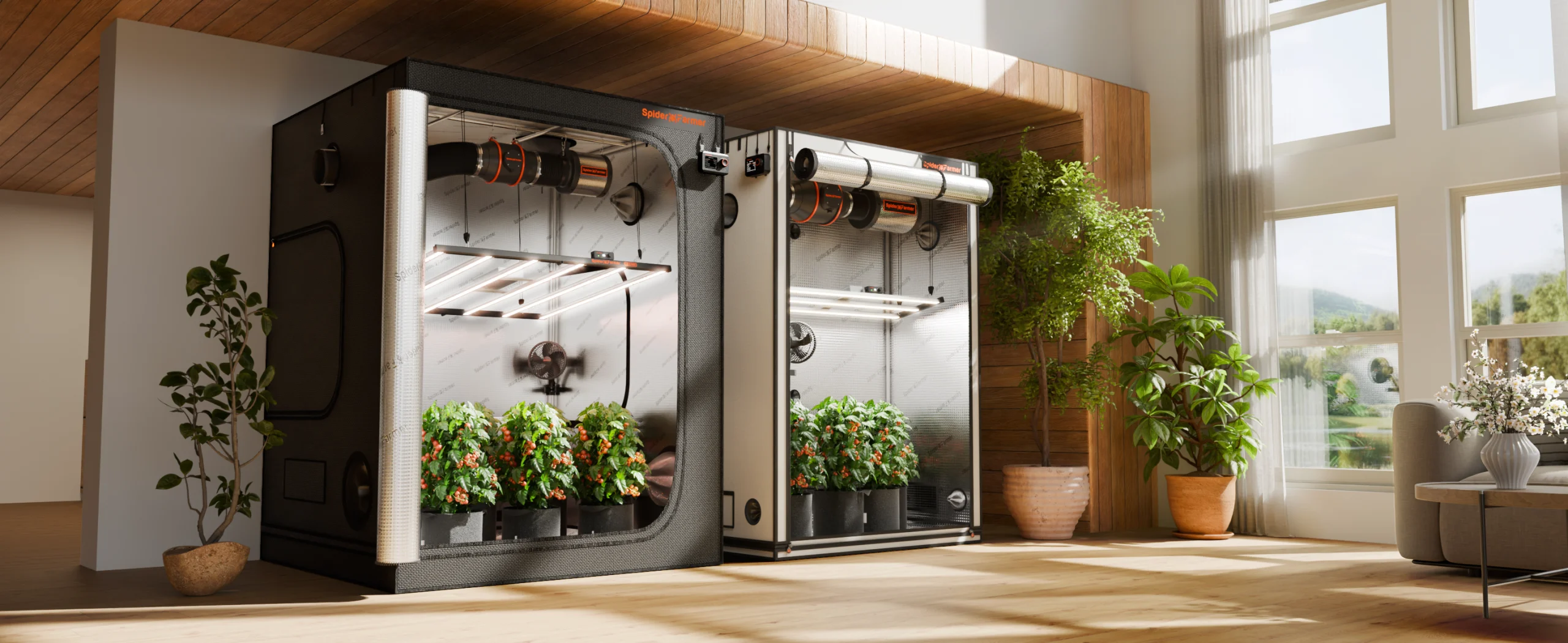
A grow tent is a controlled environment in name. Whether it actually functions as one depends on how well the climate equipment inside it works together. Temperature, humidity, and airflow are not independent variables, each affects the others, and managing one without accounting for the remaining two produces a system that oscillates between problems rather than maintaining stable conditions. A heater that runs without coordinated fan operation creates hot zones and cold zones. A humidity management strategy that ignores temperature produces vapour pressure deficit readings that do not reflect what plants are actually experiencing at the canopy.
Getting climate control right in a grow tent means understanding these relationships and building a system where the components respond to each other rather than operating in isolation. This guide covers the interactions between temperature, humidity, and airflow, and how to build a coordinated climate system that maintains stable growing conditions across the full day and night cycle.
Quick Summary: Grow Tent Climate Control
- Temperature, humidity, and airflow work together; managing one without the others leads to unstable growing conditions.
- Aim for 22–28°C during lights-on and 18–22°C during lights-off, keeping temperature swings within 4–8°C.
- Use circulation fans alongside heaters to prevent hot and cold spots and maintain even canopy temperatures.
- Control humidity using VPD (Vapour Pressure Deficit) rather than relative humidity alone for healthier plant growth.
- Reduce lights-off humidity spikes by maintaining stable temperatures with a heater and using a dehumidifier when needed.
- A complete climate setup should include an inline extraction fan, circulation fans, heater, humidifier/dehumidifier as required, and a temperature/humidity controller for consistent results.
The Climate Triangle: Temperature, Humidity, and Airflow
.png)
Every climate decision in a grow tent affects the other two variables. This is not a conceptual point, it is the practical reason why managing tent climate with a single-variable approach consistently fails. Understanding how these three variables interact is the foundation for building a system that maintains stable conditions rather than constantly chasing individual readings that shift in response to changes elsewhere in the system.
Temperature Affects Humidity
Warm air holds more water vapour than cool air. When the tent temperature drops overnight, the relative humidity rises even if the absolute moisture content of the air has not changed. A tent running at 60 percent RH at 26 degrees Celsius will read above 80 percent RH at 18 degrees Celsius with the same amount of moisture in the air. Temperature drops during lights-off periods are the most common trigger for humidity excursions that growers attribute to inadequate extraction, when the actual cause is temperature management. Treating the humidity reading without addressing the temperature drop that caused it produces a response that does not solve the underlying problem.
Humidity Affects Plant Function
Vapour pressure deficit (VPD) is the measure of the evaporative demand the air places on the plant. High VPD, dry air at moderate temperature, drives faster transpiration and nutrient uptake. Low VPD, humid air or cool air, slows transpiration and creates conditions where moisture sits on leaf surfaces and pathogen pressure increases. Managing VPD rather than relative humidity alone requires controlling both temperature and humidity as a coordinated pair. The same relative humidity reading at 20 degrees Celsius and at 28 degrees Celsius produces very different plant responses because the VPD values at those two combinations are substantially different.
Airflow Affects Both
Stagnant air creates microclimates within the tent where temperature and humidity readings at the sensor do not reflect conditions at the canopy. Hot air stratifies toward the top. Humidity accumulates in dense canopy regions where air movement is restricted. Circulation fans break up these microclimates, forcing the tent's air mass toward homogeneity and making the sensor readings meaningful as guides to actual plant conditions. Without adequate circulation, accurate sensors and well-calibrated equipment still produce unreliable information about what the plants are actually experiencing.
Temperature Management in a Grow Tent
Temperature management in a grow tent requires distinct strategies for the lights-on and lights-off periods, because the heat contribution from the lighting system changes the dynamics of each period substantially. The lights-on period typically requires heat removal; the lights-off period in most climates and seasons requires heat addition. Building a system that handles both without manual intervention is the operational goal.
Lights-On Temperature Targets
The lights-on temperature target for most crops sits between 22 and 28 degrees Celsius at the canopy. The lower end of this range suits seedlings and early vegetative growth. The upper end suits established vegetative and early flowering stages with adequate CO2 and strong airflow across the canopy. Above 30 degrees Celsius, enzymatic processes in the plant begin to slow. the stomata close to reduce water loss, which also reduces CO2 uptake and slows photosynthesis. Sustained temperatures above 32 degrees Celsius cause visible heat stress symptoms including leaf curl, bleaching near the light source, and wilting despite adequate water and nutrient supply. Below 18 degrees Celsius, metabolic processes slow and cold stress risk increases, with root zone temperature having a separate effect from canopy temperature that can slow nutrient uptake independently of canopy conditions.
Lights-Off Temperature Targets
The lights-off period introduces the temperature drop that creates most of the humidity management challenges in grow tents. A 4 to 8 degree Celsius differential between lights-on and lights-off temperatures is standard for most crops. A differential larger than 10 degrees Celsius creates condensation risk as surfaces within the tent, particularly the tent walls, cool below the dew point of the humid air inside. Managing the lights-off temperature drop requires either a heater that maintains minimum temperature during the dark period, a lighting schedule that runs lights at night when ambient temperatures are lower, or insulation of the tent or the room it sits in to reduce the heat loss rate during the dark period. In Australian climates, the need for heating varies substantially by season and location, a tent in a heated indoor space in Sydney may not require supplemental heating for most of the year, while a tent in an unheated garage in Melbourne or Canberra requires reliable heating management through winter months.
Heater Selection for Grow Tents
The two heater types most commonly used in grow tents each suit different applications. Matching the heater type to the temperature management requirement produces a more efficient and reliable outcome than selecting on wattage alone.
Ceramic Fan Heaters
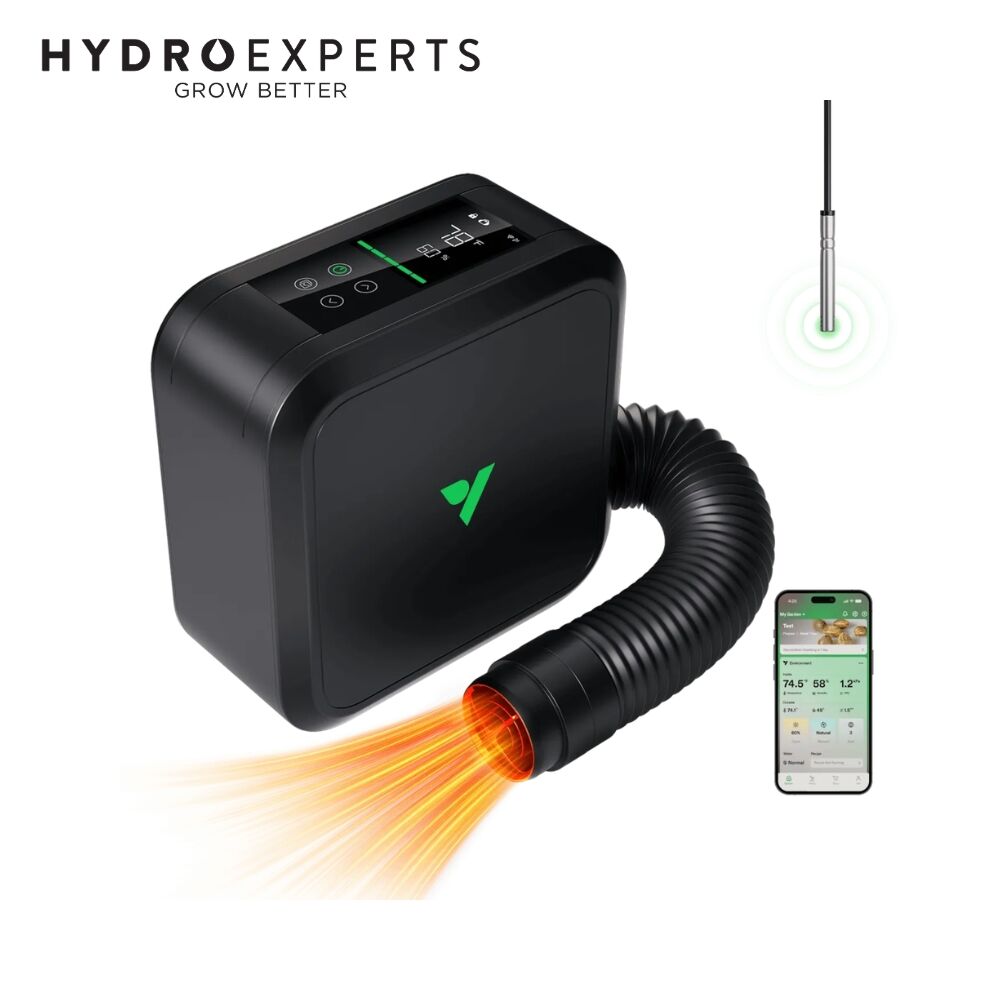
Ceramic fan heaters use a ceramic heating element with a built-in fan to distribute warm air actively through the tent. These are the most practical choice for most tent applications; they heat quickly, distribute heat by forced convection rather than relying on natural air movement, and are available in wattages suited to tent volumes from 250W for small tents through to 2000W for large-format rooms. Most include a thermostat that cycles the heater on and off to maintain a set temperature. Position a ceramic fan heater at floor level with its output directed across the tent floor to take advantage of the natural tendency of warm air to rise, distributing heat through the full tent volume. Never position a heater directly below the canopy where concentrated heat output contacts plant tissue.
Tubular Greenhouse Heaters
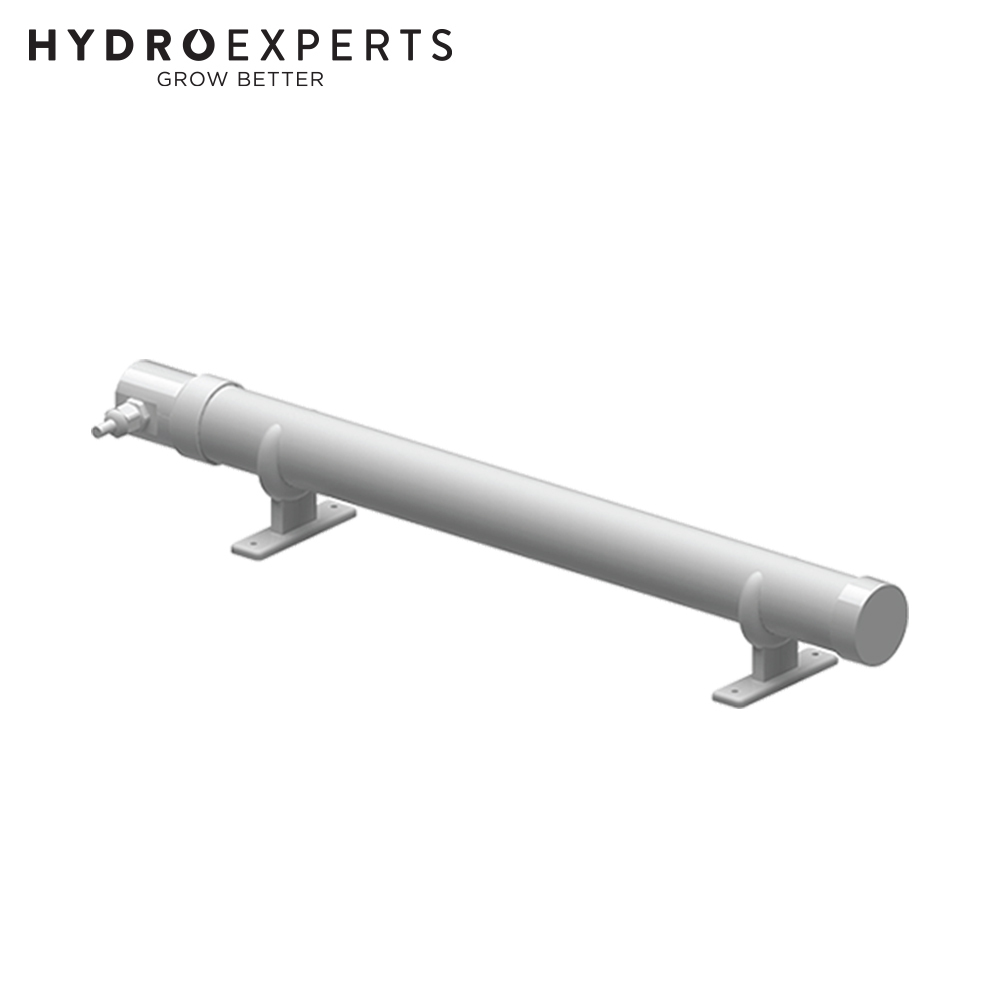
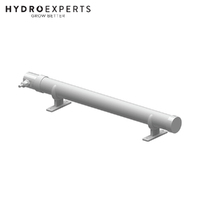
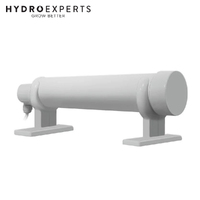
Tubular greenhouse heaters provide gentle background heat through a low-wattage element running continuously. These suit applications where a small amount of supplemental heat prevents temperature from dropping below a minimum threshold rather than actively maintaining a target temperature across variable ambient conditions. They draw less power than ceramic fan heaters and operate more quietly, but they do not distribute heat actively and rely on circulation fans to move warmth through the tent. They are most appropriate as a frost protection measure in marginally cool environments rather than as the primary temperature management tool in cold climates or unheated external spaces.
Pairing Heaters With Fans: The Operational Logic
A heater running without coordinated fan operation in a grow tent creates temperature stratification. Warm air from the heater rises. Cool air stays low. The sensor, typically mounted at canopy height, reads the temperature of the layer it sits in rather than the average tent temperature. The heater cycles based on a reading that does not represent conditions across the full growing volume. Circulation fans running continuously break up this stratification by mixing the air mass, producing more uniform temperature distribution and more meaningful sensor readings.
The interaction between the extraction fan and the heater requires specific management. Extraction removes heated air from the tent continuously, which increases the heat load the heater must replace. Running extraction at full speed during a cold lights-off period in winter may require the heater to run almost continuously to maintain minimum temperature, creating a situation where extraction and heating are working against each other rather than toward a shared environmental target.
A variable speed controller on the extraction fan allows the extraction rate to be reduced during the lights-off period when heat generation from the light is absent. Reducing extraction speed during this period reduces heat loss from the tent, lowers the load on the heater, and allows a more stable temperature to be maintained with less energy consumption overall.
| Period | Extraction Fan | Heater | Primary Objective |
|---|---|---|---|
| Lights-on | Higher speed; manage heat from the light | Standby or cycling to maintain upper limit | Heat removal, CO2 supply |
| Lights-off | Reduced; minimum for humidity and CO2 | Active; maintain minimum temperature target | Temperature floor, humidity management |
| Humidity trigger (lights-off) | Briefly increased to reduce humidity spike | Compensates for temperature drop from increased extraction | Humidity ceiling protection |
A climate controller that manages both the extraction fan speed and the heater from a single interface with temperature and humidity inputs makes this coordination automatic. Without a controller, managing the interaction manually across a 12-hour lights cycle and seasonal temperature changes is operationally demanding and produces less consistent results.
Humidity Management: Tools and Strategy
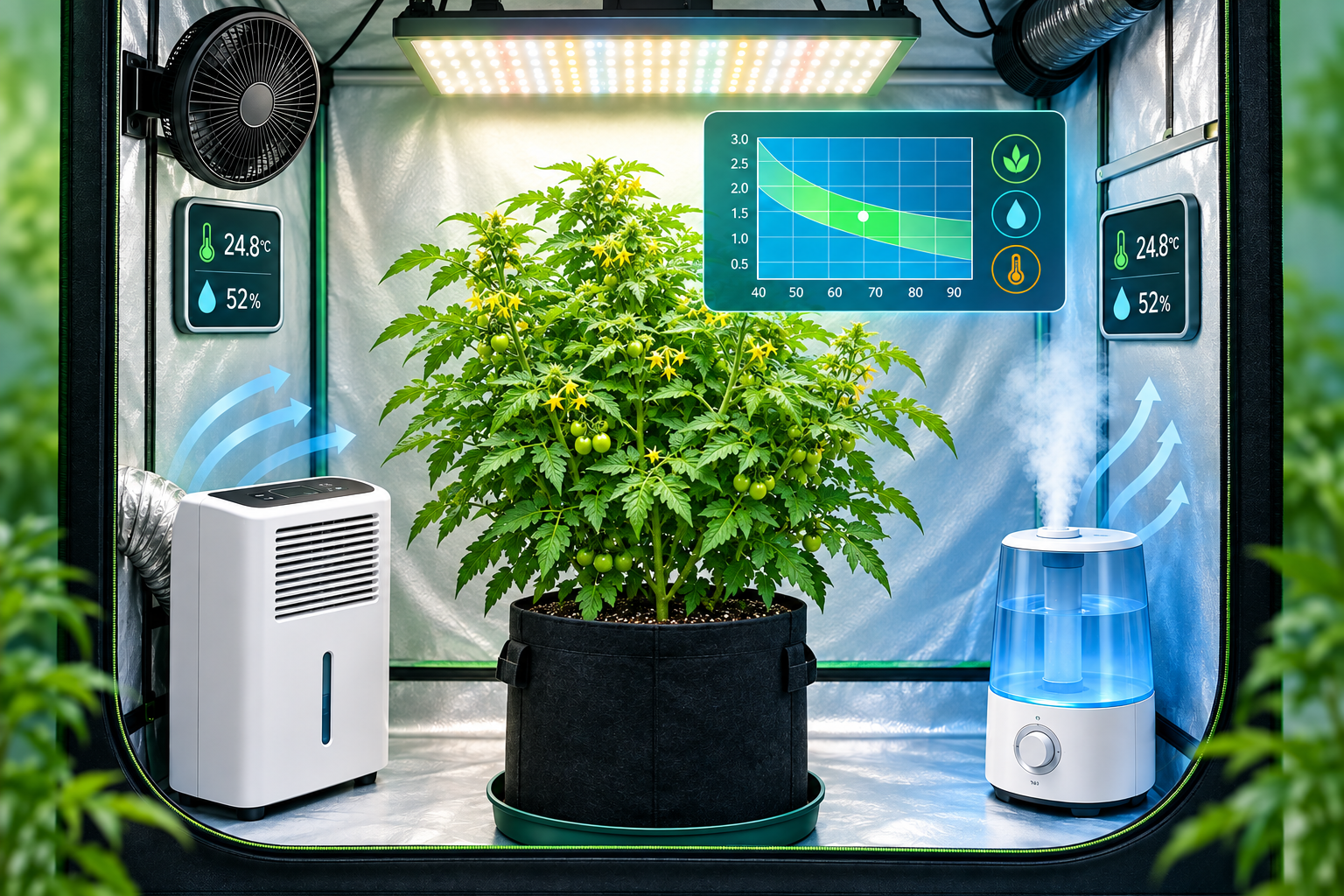
Humidity management in a grow tent is most effective when approached through the VPD framework rather than through relative humidity targets alone. Understanding the relationship between temperature, humidity, and plant function allows adjustments to be made that actually improve plant performance rather than simply moving a number toward an arbitrary target.
The VPD Framework
Vapour pressure deficit management gives more precise control over plant transpiration than relative humidity targets alone. VPD is calculated from temperature and relative humidity combined; the same relative humidity reading at different temperatures produces very different VPD values and very different plant responses. Target VPD ranges by growth stage: seedlings and clones require 0.4 to 0.8 kPa with high humidity to reduce transpiration stress while roots are undeveloped; early vegetative growth targets 0.8 to 1.0 kPa; late vegetative and early flowering targets 1.0 to 1.2 kPa; and late flowering targets 1.2 to 1.6 kPa with reduced humidity to limit pathogen pressure on dense flower development. Managing VPD means adjusting both temperature and humidity together when the VPD reading deviates from the target range, rather than adjusting humidity alone.
Dehumidification
Excess humidity is the more common problem in grow tents than low humidity, particularly during flowering when plant transpiration is high and dense canopy structure restricts airflow. A dehumidifier running inside the tent or in the room containing the tent extracts moisture from the air independently of the extraction system. Sizing a dehumidifier for a tent grow requires accounting for the moisture load from plant transpiration, the hydroponic water surface area contributing to evaporation, and the baseline humidity of the ambient air entering through the intake. Manufacturers rate dehumidifiers under specific test conditions that rarely match the warm, moist conditions of an active grow tent; sizing up from the calculated requirement is the practical approach. Note that a dehumidifier running inside the tent adds heat as a byproduct of its operation, which can raise tent temperature above target range in summer months or warm climates and requires increased extraction to compensate.
Humidification
Low humidity is most problematic during the seedling and clone stage, particularly in winter when ambient air is dry and the extraction system is continuously bringing in low-humidity outdoor air. A small ultrasonic humidifier running inside the tent maintains humidity during this phase. Ultrasonic humidifiers produce a cool mist that can carry mineral deposits from tap water into the tent air, leaving white residue on leaves and surfaces; using distilled or reverse osmosis water in the humidifier eliminates this problem. Evaporative humidifiers avoid the mineral deposit issue but produce less output per unit of energy consumed and suit applications where output demand is modest.
Putting the System Together
A functional grow tent climate control system combines equipment that addresses each variable with the coordination layer that allows them to respond to each other. The individual components are effective only to the degree that they are configured to work together rather than independently.
| Component | Function | Key Selection Criteria |
|---|---|---|
| Variable speed inline extraction fan | Heat removal, humidity exhaust, CO2 supply | Sized to tent volume; EC motor preferred for variable speed operation |
| Circulation fans | Break up temperature stratification and humidity pockets | Low noise, positioned to move air through canopy without direct foliage blast |
| Ceramic fan heater with thermostat | Maintain minimum temperature during lights-off | Wattage matched to tent volume and ambient conditions; tip-over and overheat protection |
| Dehumidifier | Reduce humidity during flowering and lights-off periods | Sized above calculated moisture load; accounts for heat addition to tent |
| Climate controller | Coordinate extraction fan and heater from single temperature/humidity input | Dual setpoints for day/night; fan speed output preferred over on/off switching |
| VPD chart or calculator | Cross-reference temperature and humidity to actual plant demand | Growth-stage specific targets; used to guide controller setpoint decisions |
Climate Control Equipment at Hydro Experts
Hydro Experts stocks climate control equipment for grow tents across heaters and thermostats, dehumidifiers, humidifiers, inline and circulation fans, speed controllers, and combined climate controllers suited to Australian growing conditions. Visit hydroexperts.com.au to match climate equipment to your tent size, crop type, and ambient conditions.
FAQs
Maintain a lights-off temperature between 18 and 22 degrees Celsius for most crops. The differential between lights-on and lights-off temperature should stay within 4 to 8 degrees Celsius. A differential larger than 10 degrees Celsius creates condensation risk as surfaces within the tent cool below the dew point of the humid air inside, and drives relative humidity into the range where mould and powdery mildew establish readily. A thermostat-controlled heater maintaining the minimum temperature during the dark period is the most direct way to keep the differential within the target range.
Yes, but at a reduced rate in most cases. Extraction needs to continue during the dark period to manage humidity and maintain CO2 levels from passive intake. Running extraction at full lights-on speed during cold nights removes heated air faster than necessary and increases the load on the heater — creating a situation where extraction and heating are working against each other. A variable speed controller set to a lower speed during lights-off reduces heat loss from the tent while still providing adequate ventilation for humidity and CO2 management. A climate controller that automatically adjusts fan speed in response to temperature and humidity readings manages this transition without manual intervention.
The humidity spike during lights-off is primarily a temperature effect. As the tent cools without heat from the light, relative humidity rises even without additional moisture entering the air, because cooler air holds less water vapour and the same moisture content produces a higher relative humidity reading. Managing the temperature drop with a heater reduces the magnitude of this spike by maintaining the air's capacity to hold moisture. Additional dehumidification capacity handles the moisture that remains above target despite stable temperature, particularly during the flowering stage when plant transpiration is high.
Relative humidity measures the proportion of moisture in the air relative to its maximum holding capacity at the current temperature. VPD measures the difference between the moisture the air holds and the maximum it could hold, which directly represents the evaporative demand the air places on the plant. Two readings of 60 percent RH at 20 degrees Celsius and 60 percent RH at 28 degrees Celsius produce very different VPD values and very different plant transpiration rates. Managing VPD by adjusting both temperature and humidity together gives more precise control over plant function than chasing a relative humidity target in isolation, it ensures the plant's transpiration rate and nutrient uptake are where they need to be at each stage of development rather than simply keeping a single number within a range.
Hydro Experts stocks the full range of grow tent climate control equipment including ceramic fan heaters and thermostats, dehumidifiers, humidifiers, inline and circulation fans, and combined climate controllers suited to Australian indoor growing conditions. The team can advise on matching equipment to your specific tent size, crop type, and ambient environment.
Related Products
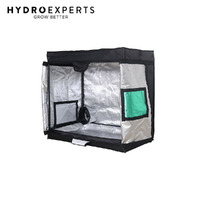
BudBox Pro Silver (Mylar) Indoor Grow Tent - 85 x 50 x 80CM | Propagation Tent
CLEARANCE