

Carbon Filter Lifespan | How Long Do Filters Last | Hydro Experts
By Hydro Experts | 7 June 2026
Carbon filters are one of those consumables that growers replace reactively rather than proactively. The filter works until it does not, odour starts escaping when it previously did not, and the replacement happens after the problem is already visible rather than before it. For a piece of equipment that is central to odour control and air quality in a grow room, that reactive approach is more expensive and more disruptive than a managed replacement cycle.
Understanding what determines carbon filter lifespan, what shortens it, and how to read the signs of a filter approaching the end of its useful life changes the way growers manage this part of their system. It also changes some operational decisions that seem unrelated to the filter but directly affect how long it lasts.
How Carbon Filters Work and Why They Stop Working
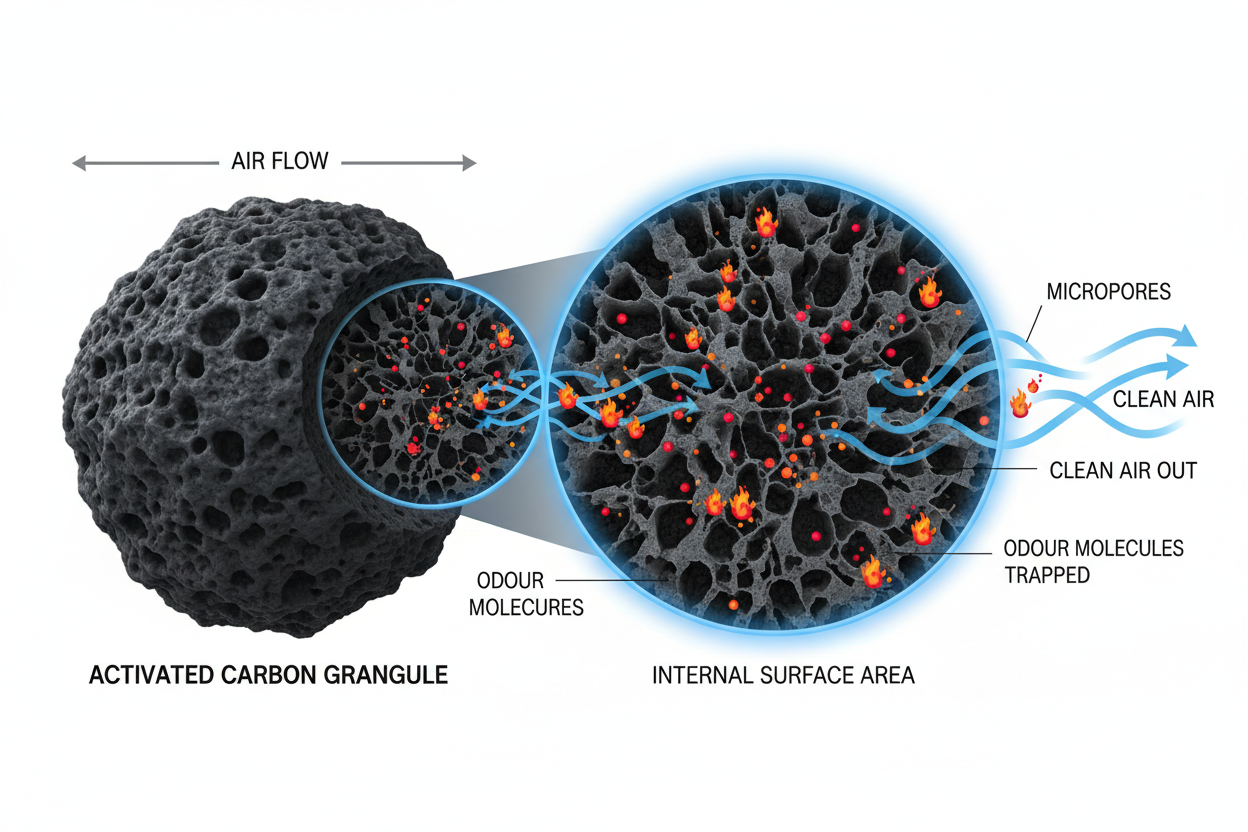
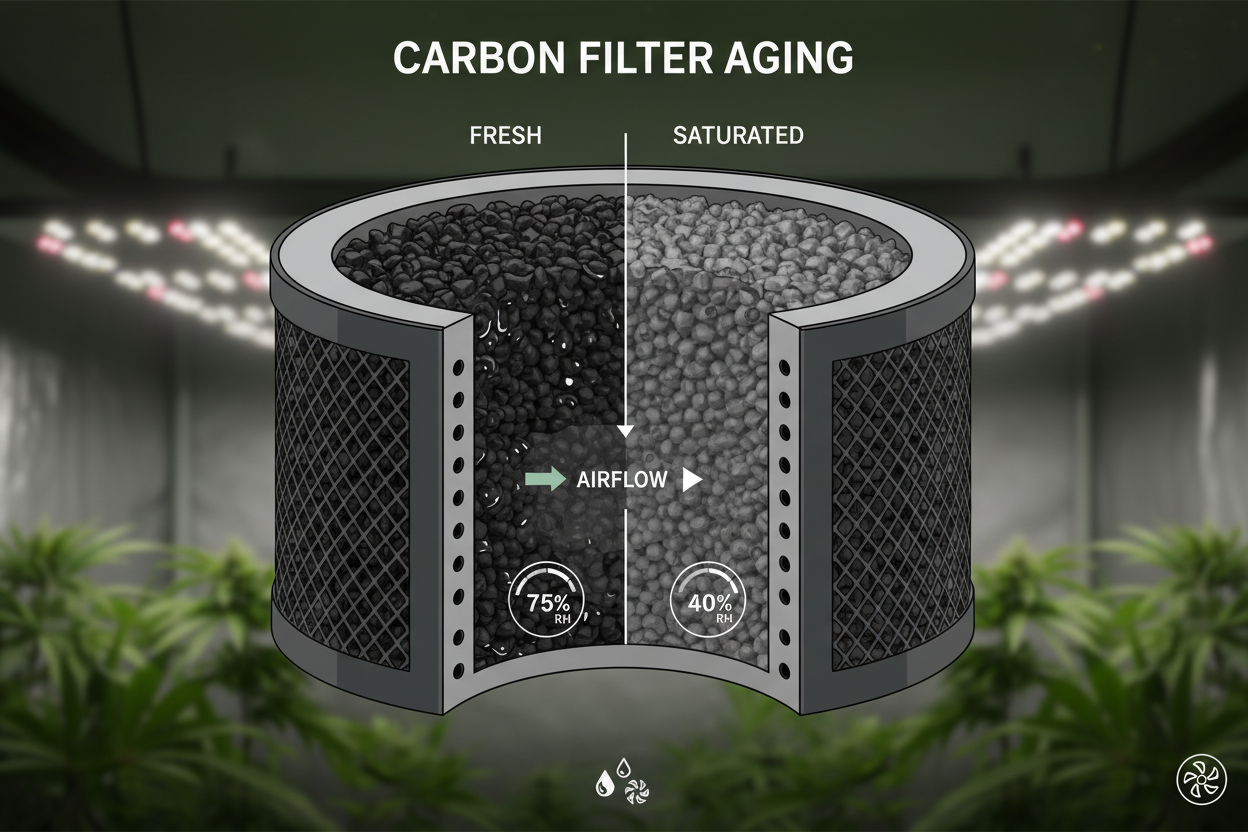
A carbon filter contains activated carbon, a form of carbon processed to create an enormous internal surface area through a network of microscopic pores. A single gram of activated carbon contains hundreds of square metres of internal surface area. Odour molecules passing through the filter adsorb onto this surface, bonding to the carbon and being removed from the airstream. The clean air passes through. The odour compounds stay behind, trapped in the carbon's pore structure.
The filter stops working when the available adsorption sites on the carbon surface are saturated. Once every available pore is occupied by an adsorbed molecule, there is nowhere for new odour compounds to bond. They pass straight through the filter as if it were not there. This saturation process is irreversible with standard activated carbon.
Unlike some filtration media that can be regenerated by cleaning, saturated activated carbon cannot be meaningfully restored by washing, drying, or any practical field procedure. The filter needs replacing. The rate at which adsorption sites saturate determines filter lifespan. Everything that affects that rate either extends or shortens the useful life of the filter.
What the Manufacturers Say vs What Growers Experience
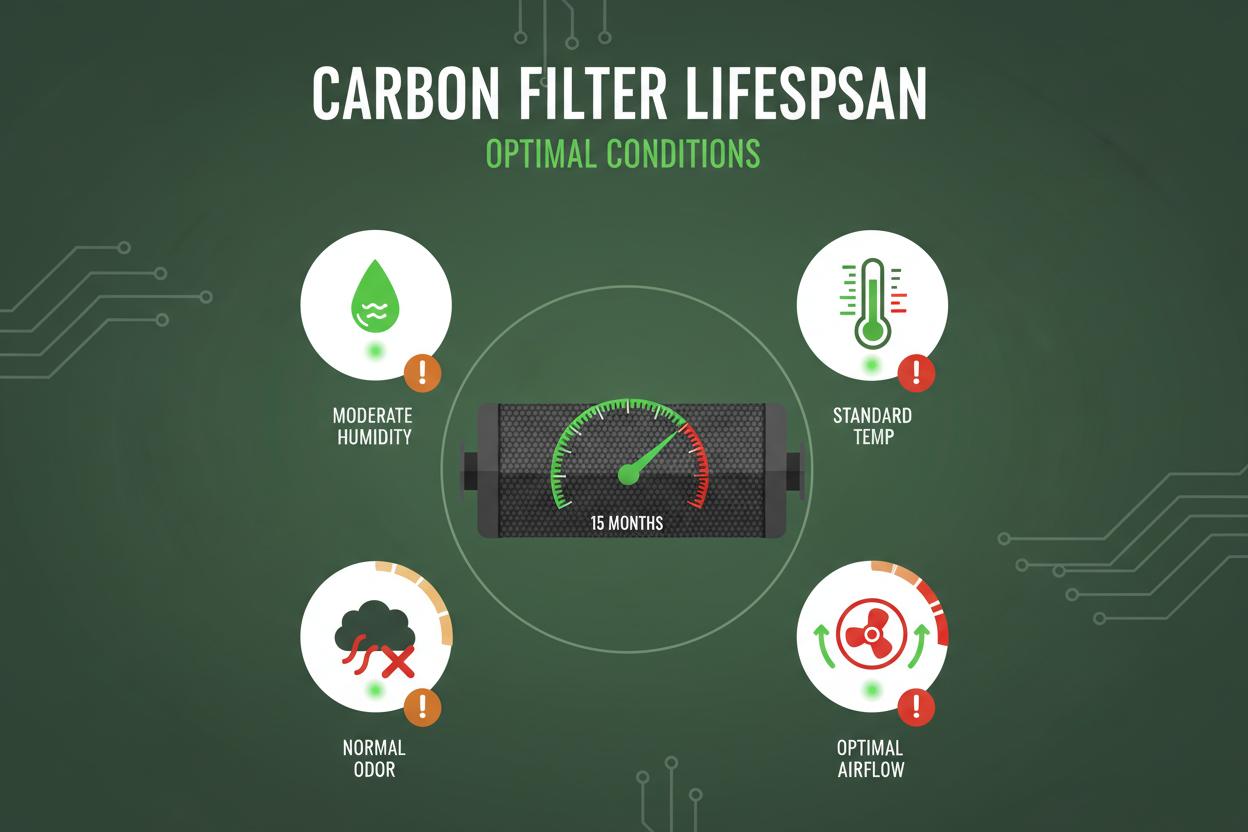
Most carbon filter manufacturers rate their products at 12 to 18 months of continuous use under standard conditions. That figure is the starting point for expectations, not a guarantee. Standard conditions in a manufacturer's rating typically assume moderate humidity, moderate temperature, a consistent airflow rate matched to the filter's rated capacity, and air that contains odour compounds at typical grow room concentrations.
Real grow rooms deviate from these conditions in ways that consistently shorten filter life below the rated figure. Growers who report filter lifespans well below 12 months are almost always operating in conditions that accelerate saturation. Growers who report lifespans at or above the rated figure are managing their environment in ways that protect the filter's capacity. The variables are controllable once you understand them.
The Key Factors That Determine Carbon Filter Lifespan
Humidity: The Primary Lifespan Killer
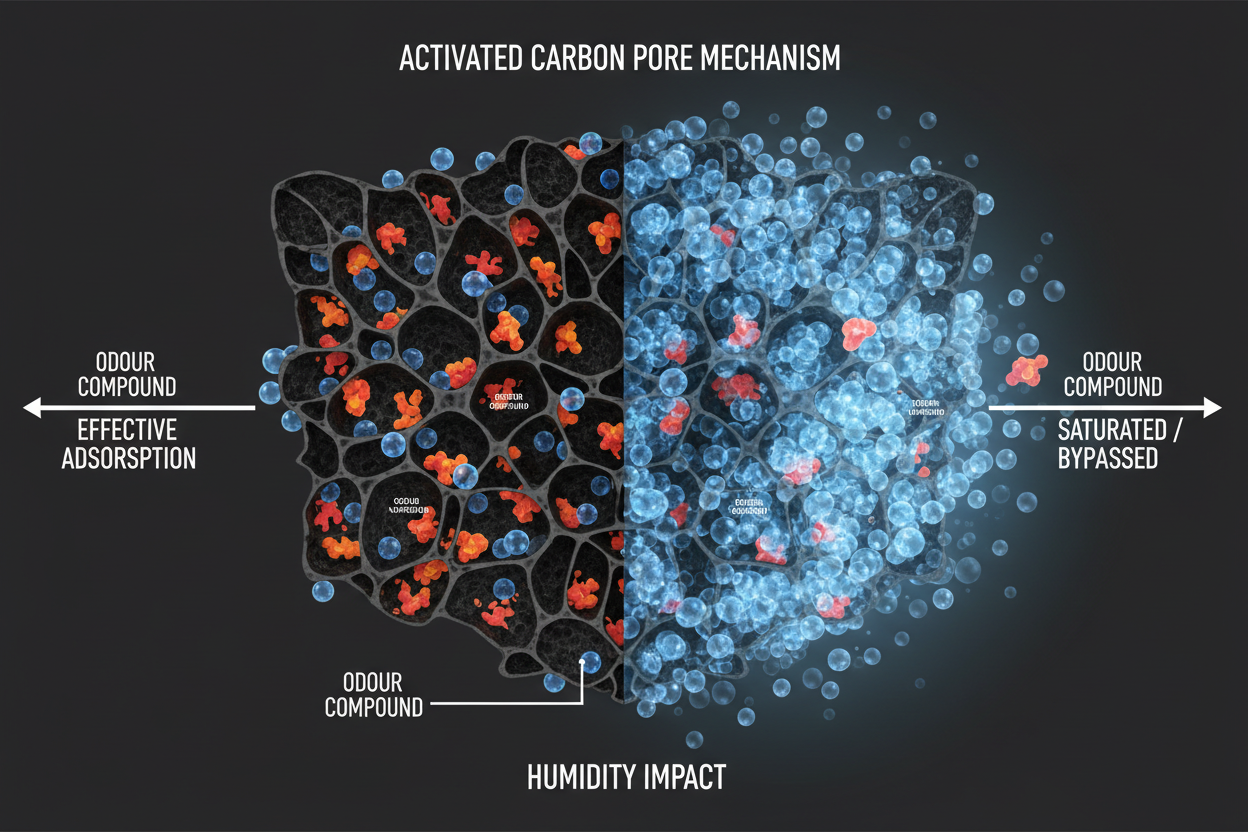
High humidity is the single most damaging environmental factor for carbon filter lifespan. Water vapour molecules compete with odour compounds for adsorption sites on the carbon surface. In high humidity conditions, a significant proportion of the carbon's available adsorption capacity is occupied by water molecules rather than odour compounds, effectively reducing the functional capacity of the filter from the moment it enters a humid environment.
Prolonged exposure to high humidity does additional damage beyond simply occupying adsorption sites. Moisture in the carbon pore structure can cause physical degradation of the carbon granules over time, reducing the total surface area available for adsorption and permanently reducing capacity. The practical target for grow room relative humidity from a filter protection standpoint is below 70%. Filters operating in environments where humidity regularly exceeds 70 to 80% will degrade significantly faster than the rated lifespan suggests.
Positioning the carbon filter on the fan inlet, which draws air through the carbon before it reaches the fan, is the standard configuration for most grow room exhaust setups. In this position, the filter is exposed to the grow room air at its ambient humidity. Some growers in very high humidity environments route the air through a dehumidification stage before the filter intake, which extends filter life but adds system complexity.
Temperature: The Secondary Environmental Factor
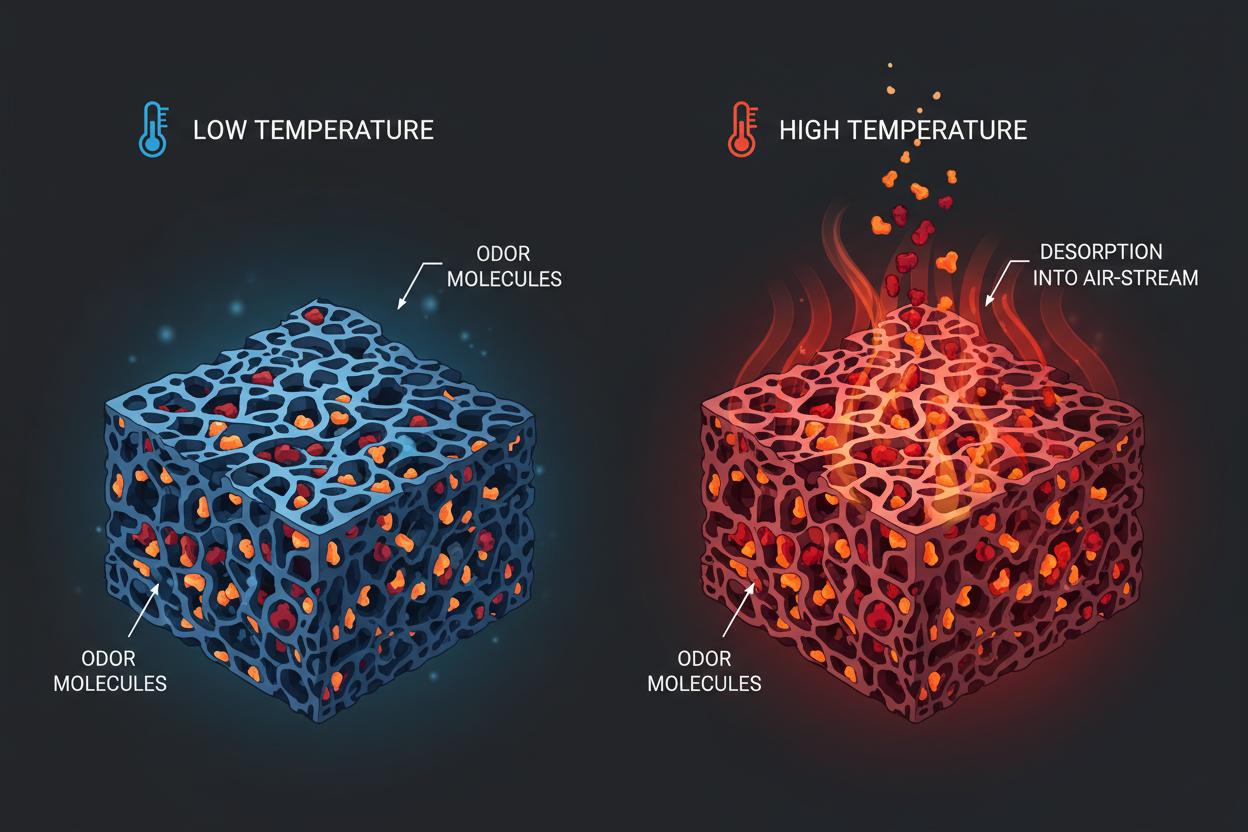
Elevated temperatures reduce the adsorption efficiency of activated carbon. The adsorption process is exothermic and temperature-sensitive. As air temperature increases, previously adsorbed molecules have more thermal energy available to desorb from the carbon surface and re-enter the airstream. In very high temperature grow rooms, the effective filtration efficiency drops and the apparent lifespan of the filter shortens.
For most grow rooms operating within normal temperature ranges of 20 to 30 degrees Celsius, temperature is a secondary concern compared to humidity. In environments where temperatures regularly exceed 35 degrees, particularly in hot Australian summers where grow room temperatures in inadequately cooled spaces can spike significantly, temperature becomes a meaningful contributor to reduced filter performance.
Airflow Rate and Filter Sizing
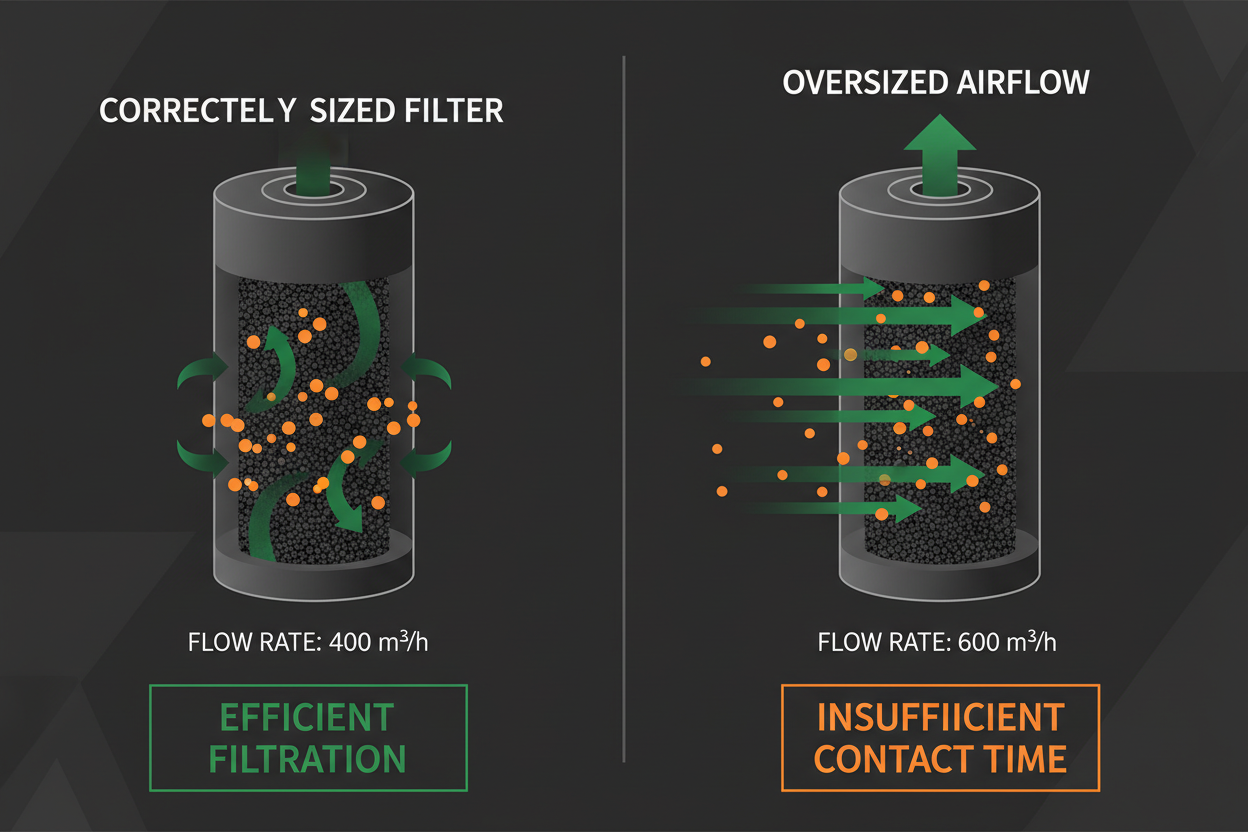
The relationship between airflow rate and filter lifespan is straightforward. A filter rated for 400 m³/h of airflow that is being pushed at 600 m³/h has air passing through its carbon bed faster than it was designed for. Contact time between the air and the carbon surface is reduced. Adsorption efficiency drops because there is insufficient time for odour molecules to bond to available sites as the air moves through. The filter passes odour compounds that a correctly loaded filter at the right airflow rate would capture.
Running an undersized filter at high airflow does not just reduce efficiency in the moment. It accelerates apparent saturation because the carbon bed is processing more air volume per unit time and accumulating adsorbed compounds faster than the rated load assumes. Matching the filter's rated capacity to the fan's actual output is the most practical protection against this problem. A filter that is the same rated capacity as the fan or one size larger will always outperform one that is undersized for the airflow it is processing.
Contaminants Beyond Odour
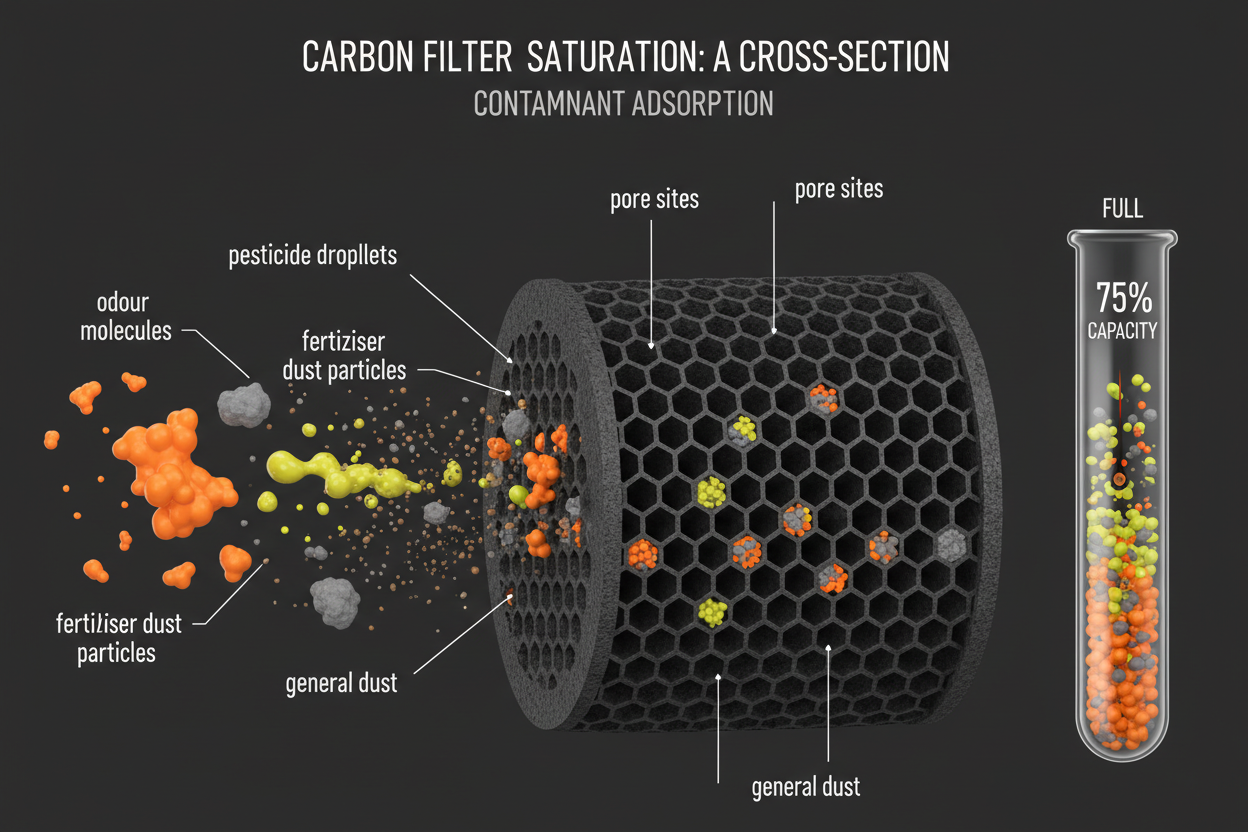
Carbon filters in grow rooms are primarily used for odour control, but the carbon adsorbs other compounds alongside odour molecules. Pesticides, fertiliser particulates carried in the airflow, dust, and other airborne compounds all compete for adsorption sites. Grow rooms where pesticides are applied through spray or fogger methods introduce a significant additional contaminant load into the air that the carbon filter then processes. Each pesticide application adds to the saturation load in a way that is not accounted for in standard manufacturer lifespan ratings based on odour alone.
Pre-filters, the fabric sleeves that fit over the outside of carbon filters, address the particulate issue by capturing dust and larger particles before they enter the carbon bed. A clean pre-filter maintained through regular washing meaningfully extends the life of the carbon underneath by preventing physical clogging of the outer carbon layer. Pre-filter maintenance is one of the simplest and most overlooked carbon filter maintenance practices.
Physical Damage and Carbon Settlement
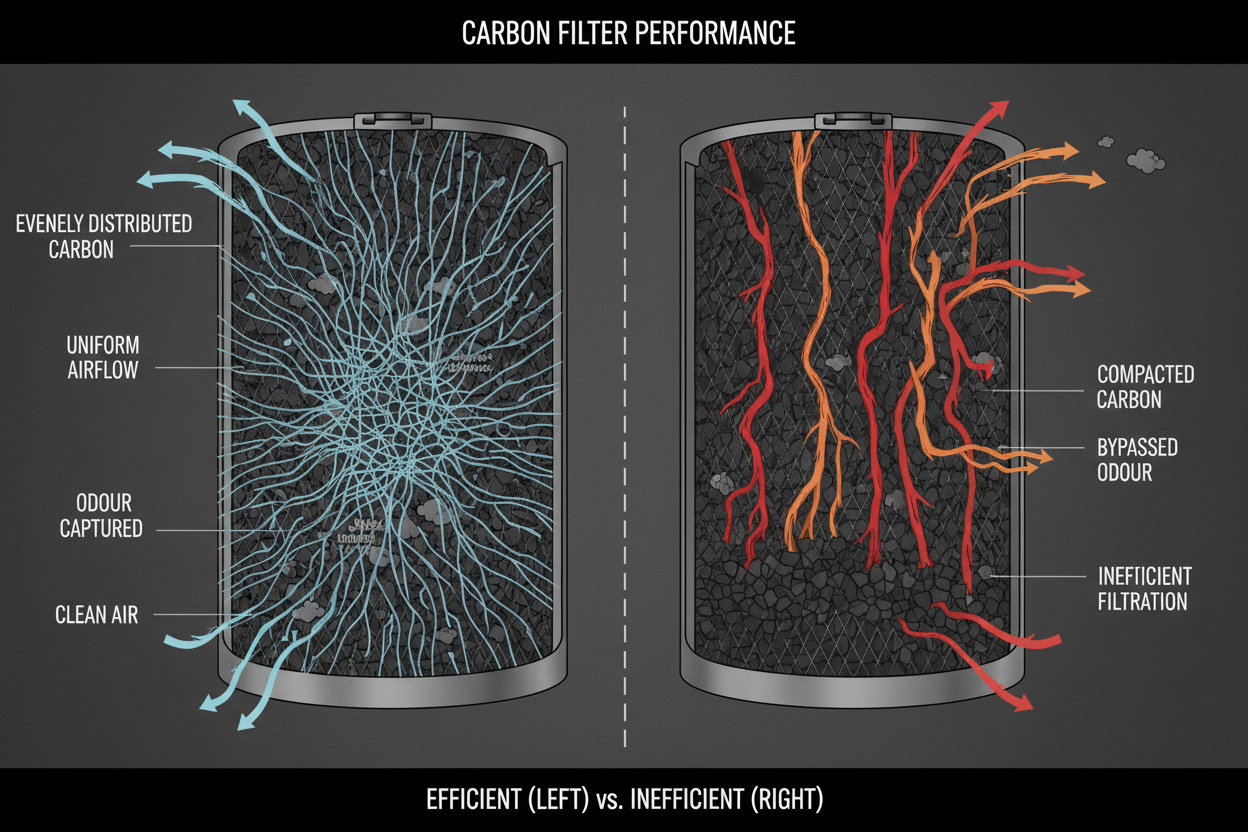
Carbon filters contain granulated or pelletised activated carbon packed within the filter housing. Over time and with physical handling, the carbon granules can settle and compact, creating channels within the carbon bed where air preferentially flows through areas of lower resistance rather than distributing evenly through the full carbon volume. Channelling reduces the effective carbon bed that air contacts and produces early breakthrough of odour compounds even when significant unused carbon capacity remains.
Filters that are mounted in variable orientations, knocked during room maintenance, or subjected to vibration from poorly isolated fans are more susceptible to carbon settlement. Mounting the filter securely and using anti-vibration hangers on the fan reduces the vibration transferred to the filter body and the settlement it causes.
Factors That Shorten Carbon Filter Lifespan at a Glance
| Factor | Risk Level | Impact on Lifespan | Mitigation |
|---|---|---|---|
| Humidity above 70% | High | Significantly reduced; can halve rated life | Maintain RH below 70%; dehumidify before filter intake |
| Temperature above 35°C | Medium | Reduced adsorption efficiency and capacity | Adequate room cooling; avoid heat spikes in summer |
| Oversized airflow through filter | High | Reduced contact time; faster saturation | Match or oversize filter to fan rated output |
| Pesticide and particulate load | Medium | Competes with odour for adsorption sites | Use and regularly wash pre-filter sleeves |
| Vibration and carbon settlement | Low–Medium | Channelling reduces effective carbon bed | Secure mounting; anti-vibration hangers on fan |
Reading the Signs of a Failing Filter
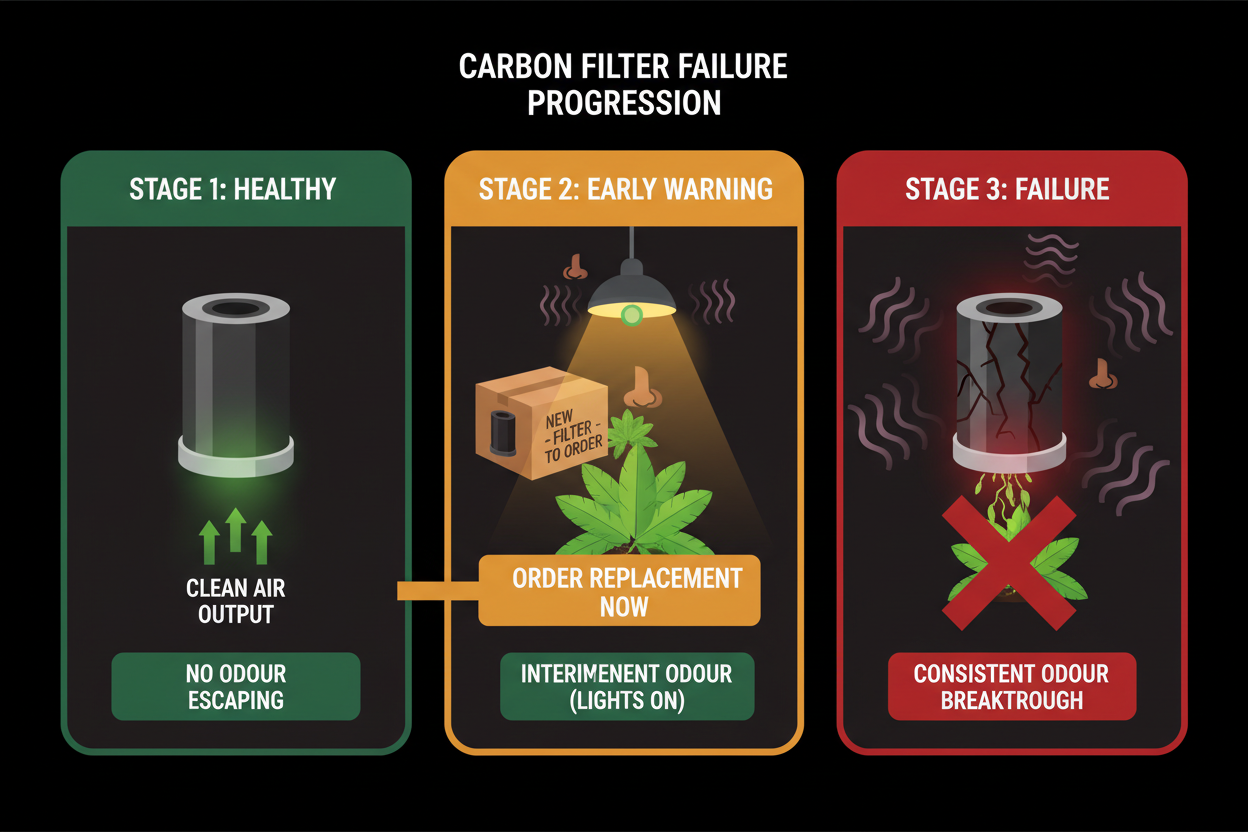
A carbon filter approaching the end of its useful life gives signals that are recognisable before complete failure if you are paying attention.
Intermittent odour detection, smell present after lights-on or at peak plant activity but absent at other times, is the first warning sign. Order a replacement at this stage, not when consistent breakthrough occurs.
Intermittent odour detection, where the smell is present after lights-on or at peak plant activity but not at other times, indicates a filter that still has residual capacity but is operating near saturation. The filter clears lighter odour loads but cannot handle peak load conditions. This is the appropriate point to order a replacement rather than waiting for consistent odour breakthrough.
Odour present only at high fan speeds but not at lower speeds suggests the filter is undersized for the current airflow or is approaching saturation. Reducing the fan speed temporarily masks the problem by increasing contact time in the carbon bed, but the underlying issue requires either a replacement filter or a correctly sized one. Consistent odour breakthrough at any fan speed indicates the filter has reached saturation; replacement is immediate at this point.
Practical Replacement Planning
For most grow rooms running standard conditions, planning a filter replacement every 12 months is a reasonable baseline. Adjust that interval downward for high-humidity environments, heavy pesticide use, or filters that have been operating at or above their rated airflow capacity. Adjust upward only if conditions are genuinely optimal and the filter is showing no early saturation signs.
Keeping a replacement filter in stock before the current one shows signs of failure is a more practical approach than ordering reactively when odour becomes a problem. A reactive replacement means days of odour issues while the replacement ships and arrives.
A simple rule: when you install a new carbon filter, note the date. Set a calendar reminder at 10 months to inspect for early saturation signs and order a replacement if any are present, before the 12-month mark.
Complete Your Exhaust System with Hydro Experts
Hydro Experts stocks the full range of carbon filters alongside pre-filter replacement sleeves and the inline fans and fan controllers that the full exhaust system requires. Whether you are replacing an end-of-life filter or building a new exhaust setup matched correctly from the start, the team at Hydro Experts can advise on the right filter size for your fan output and grow room volume.
FAQs
Under standard conditions the manufacturer-rated lifespan is 12 to 18 months. In practice, high humidity above 70%, elevated temperatures, oversized airflow rates, and heavy pesticide use all shorten that figure. Growers managing humidity carefully and running correctly matched filter and fan combinations consistently achieve the rated lifespan. Those operating in less controlled conditions often find filters need replacement at 8 to 12 months.
No practical field regeneration method exists for saturated activated carbon. Washing the filter damages the carbon and removes the activated properties. Heating to the temperatures required for true regeneration is not achievable in a home or commercial grow room setting. When the carbon is saturated, the filter needs replacing. Pre-filter sleeves can be washed and reused, which extends the life of the carbon underneath by reducing particulate clogging.
Yes. Water vapour occupies adsorption sites on the carbon surface in competition with odour compounds, reducing the functional capacity available for odour control. Sustained exposure to high humidity above 70 to 80% also causes physical degradation of the carbon over time. Humidity management is the single most effective environmental factor a grower can control to extend filter lifespan.
The first sign is intermittent odour detection during peak plant activity when the filter previously controlled odour completely. This indicates the filter is near saturation but not fully spent. Consistent odour breakthrough at normal fan speeds indicates full saturation. Order a replacement at the intermittent odour stage rather than waiting for consistent breakthrough to avoid days of uncontrolled odour while a replacement is sourced.
Yes. A filter undersized for the fan's actual airflow output processes more air per unit time than it was designed for, reducing contact time and adsorption efficiency while accumulating saturation faster. Matching the filter's rated capacity to the fan output or running one size larger extends lifespan and maintains filtration efficiency throughout the filter's life. Hydro Experts can advise on the correct filter sizing for specific fan models and grow room volumes.